
Can you calibrate a tape measure? Yes, you can, and it’s crucial for accurate measurements. This guide will walk you through the essential steps to ensure your tape measure is always correct.
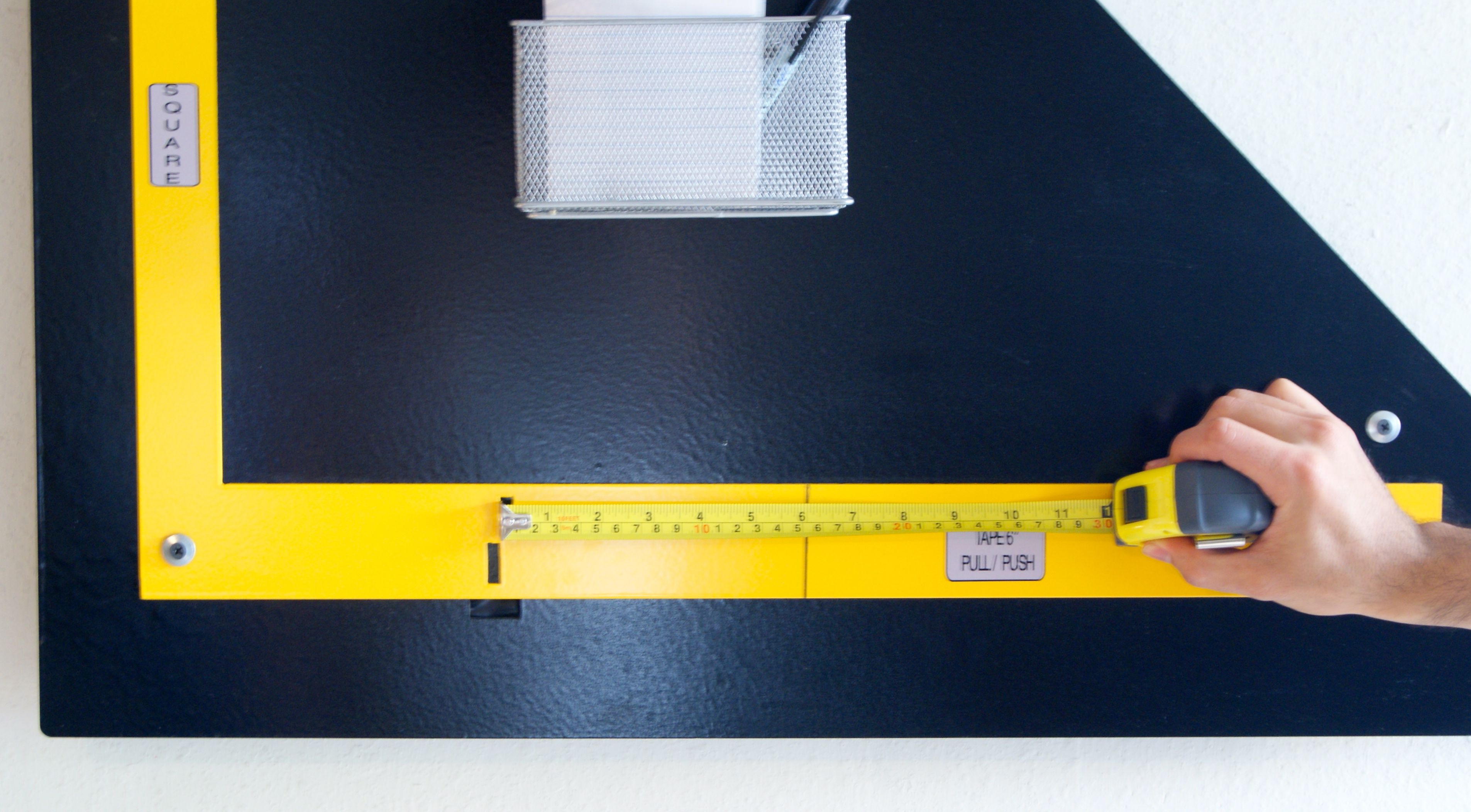
Image Source: thecalibrationstation.com
Why Tape Measure Accuracy Matters
Measuring accurately is fundamental to many tasks, from DIY projects and woodworking to construction and professional trades. A tape measure that isn’t accurate can lead to costly mistakes, wasted materials, and frustration. Ensuring your tape measure is calibrated means you can verify tape measure readings with confidence. This guide focuses on tape measure calibration methods to help you ensure tape measure correctness.
The Importance of a Reliable Measuring Tool
When you’re building, cutting, or fitting, even a small discrepancy in measurement can have significant ripple effects. If your tape measure reads slightly long or short, every measurement you take will be off by that same margin. This can result in:
- Mismatched parts: Components won’t fit together as intended.
- Incorrect cuts: Wood, metal, or fabric might be cut too short or too long.
- Structural instability: In construction, inaccurate measurements can compromise the integrity of a building.
- Wasted materials: You might end up throwing away incorrectly sized pieces.
- Time delays: Reworking mistakes takes time and effort.
Therefore, performing a tape measure accuracy check is not just a good idea; it’s a necessary practice for anyone who relies on precise measurements.
Common Issues Affecting Tape Measure Accuracy
Several factors can cause a tape measure to become inaccurate over time. Knowing these issues helps in performing a thorough tape measure accuracy check.
Wear and Tear
The most common reason for inaccuracy is simple wear and tear.
* Stretching: Over time and with repeated use, the metal tape can stretch slightly, especially near the hook.
* Damage to the hook: The hook at the end of the tape is designed to grip edges. If it bends, breaks, or loosens, it won’t sit flush against the surface, affecting your initial measurement.
* Kinks and bends: If the tape is accidentally stepped on, bent sharply, or jammed, it can develop permanent kinks. These kinks disrupt the tape’s straightness, leading to inaccurate readings.
* Debris: Dirt, dust, or paint can accumulate on the tape or in the casing, potentially interfering with the retraction mechanism or causing the tape to not lie flat.
Environmental Factors
While less common for standard metal tape measures, extreme temperatures or humidity can, in rare cases, affect the materials over very long periods.
Manufacturing Defects
Though less frequent, a tape measure might have a slight defect from the manufacturing process. This is why it’s always good practice to verify tape measure readings, especially with a new tool.
How to Perform a Tape Measure Accuracy Check
You don’t need specialized equipment to perform a basic tape measure accuracy check. You can use a known, accurate length or a precision measuring tool. Here’s how:
Method 1: Using a Known Accurate Length
This method relies on having a reference length that you trust is accurate.
Step 1: Find a Reference Standard
Look for a straight, flat surface with a known, precise length. Good options include:
- A workbench or sturdy table: Many workbenches are manufactured to specific, standard lengths or have edges you can trust.
- A large, flat floor: A smooth concrete floor in a garage or workshop might be a good reference.
- Another measuring tool: If you have a high-quality steel ruler or a digital caliper that you trust, you can use its known length as your standard.
- A certified measuring stick: Some specialized industries use certified measuring sticks that are guaranteed to be accurate.
Step 2: Measure the Reference Length
- Lay your tape measure flat along the known accurate length.
- Ensure the hook is firmly seated at the starting point of your reference.
- Extend the tape measure to the end of the reference length.
- Carefully read the measurement on the tape measure.
Step 3: Compare Readings
Compare the measurement on your tape measure to the known accurate length of your reference.
* If they match perfectly, your tape measure is likely accurate for that length.
* If there’s a discrepancy, note the difference. For example, if your reference is exactly 36 inches (1 yard) and your tape measure reads 36 ¼ inches, your tape measure is reading long by ¼ inch.
Method 2: Measuring Against Itself (for Tape Measure Linearity Test)
This method helps check for consistency across the entire length of the tape.
Step 1: Mark the Tape
- Extend your tape measure to a specific, easy-to-read mark. A good starting point is the 12-inch (1-foot) mark or the 100 cm (1-meter) mark.
- Make a clear mark on the tape at this point with a fine-tip marker or a pencil. Do not damage the tape itself; a light mark is sufficient.
Step 2: Measure From the Hook to the Mark
- Place the hook of the tape measure firmly at the very beginning (zero point).
- Extend the tape measure until the hook reaches your marked point.
- Read the measurement on the tape measure at the hook. This should ideally be very close to the first mark you made.
Step 3: Evaluate Consistency
If your tape measure is accurate and linear, the measurement from the hook to your marked point should be the same as the initial marked point. For example, if you marked the 12-inch point and then measured from the hook to that mark, it should read 12 inches.
This tape measure linearity test helps identify if the tape has stretched unevenly.
Method 3: Using a Master Measuring Tool
For the highest degree of accuracy, you can use a master measuring tool that has been calibrated by an accredited laboratory.
- Steel Rulers: High-quality steel rulers are often manufactured to very tight tolerances.
- Calibrated Measuring Wheels: For longer distances on flat surfaces.
- Laser Measures: While not a tape measure, they can be used as a reference for longer lengths if their accuracy is certified.
If you are in a profession where extreme precision is critical, investing in or having access to a certified calibration service for your measuring tools is recommended.
Recalibrate Measuring Tape: Adjusting for Inaccuracies
Unfortunately, most standard tape measures cannot be “recalibrated” in the same way a precision instrument can. The usual approach when a tape measure is found to be inaccurate is to either:
- Discard and Replace: If the inaccuracy is significant or the tape is damaged, it’s best to buy a new one.
- Account for the Error: If the inaccuracy is slight and consistent, you can learn to compensate for it.
When to Consider Recalibration (or Replacement)
If your tape measure accuracy check reveals a discrepancy, consider these factors:
- Magnitude of Error: A small error (e.g., 1/32nd of an inch over 12 inches) might be acceptable for some tasks, but a larger error (e.g., 1/4 inch over 12 inches) is unacceptable for most.
- Type of Error: Is the tape stretched evenly, or does it have kinks and bends? Kinked tapes are much harder to use accurately.
- Hook Condition: Is the hook loose or damaged? A loose hook is a common cause of initial measurement errors.
- Frequency of Use: If you use your tape measure daily for critical work, frequent checks and a lower tolerance for error are necessary.
Adjusting for Minor Inaccuracies
If your tape measure has a minor, consistent stretch (e.g., reads ½ inch long at 10 feet), you can adapt:
- Add or Subtract: When you measure something, simply add or subtract the known error. For example, if your tape reads long by ½ inch at 10 feet, and you measure an item at 10 feet, you know the actual length is ½ inch less.
- Mark Correction Points: You could even make small marks on your tape at corrected lengths if you’re very careful. However, this can get confusing.
This is not true recalibration but a practical way to work with a slightly off tool. For tasks requiring high precision, however, it’s always best to recalibrate measuring tape by replacing it with an accurate one.
Calibrating a Metal Tape Measure: The Hook Adjustment
The hook at the end of a metal tape measure is designed to be slightly flexible. This flexibility is intentional and allows it to be used in two ways:
- Measuring from the Outside: When hooked onto an edge, the hook slides slightly outward.
- Measuring from the Inside: When butted against a surface, the hook retracts slightly inward.
This design means the hook itself accounts for its own thickness when you use it correctly.
Checking the Hook’s Play
To check tape measure measurement accuracy related to the hook:
- Measure to an Edge: Hook the tape onto a straight edge and pull it taut. Read the measurement at the edge.
- Measure to a Surface: But the hook firmly against a flat surface and pull the tape taut. Read the measurement on the tape where it meets the surface.
- Compare: The readings should be identical if the hook is functioning correctly and the tape has no stretch.
If the hook is bent, loose, or damaged, it won’t provide this consistent zero point.
Adjusting a Loose Hook
If the hook feels loose and wobbly, you might be able to tighten it, though this is rare for most tape measures. Some hooks are riveted and cannot be adjusted. If yours has small screws, you might be able to tighten them. However, be cautious not to over-tighten, which could prevent it from sliding properly.
Most often, a damaged or loose hook means it’s time to replace the tape measure to ensure tape measure correctness.
Advanced Tape Measure Precision Adjustment Techniques
While true precision adjustment is not typically possible with standard tape measures, there are practices that enhance your tape measure precision adjustment capabilities.
Understanding Tape Measure Linearity
A tape measure is considered linear if its accuracy remains consistent across its entire length. A tape measure linearity test helps identify issues like stretching that might be more pronounced at one end than the other.
Using a Steel Rule as a Reference
For very precise checks, a high-quality steel rule (e.g., a machinist’s ruler) is an excellent reference.
1. Lay the steel rule on a flat surface.
2. Align the zero mark of your tape measure precisely with the zero mark of the steel rule.
3. Extend your tape measure alongside the steel rule, reading measurements at specific intervals (e.g., every 6 inches, 1 foot, or 10 cm, 20 cm).
4. Compare the readings. Any deviation indicates a problem with the tape measure.
Maintaining Your Tape Measure
Proper care and maintenance are key to prolonging your tape measure’s accuracy.
Storage
- Keep it Clean: Wipe the tape clean after each use, especially if exposed to dirt, oil, or moisture.
- Retract Carefully: Allow the tape to retract smoothly. Don’t let it snap back, as this can damage the tape and the internal mechanism. Guide it back into the case.
- Store in a Dry Place: Avoid storing your tape measure in excessively damp environments, which can lead to rust on the tape or casing.
- Protect the Hook: Avoid dropping the tape measure, as this can damage the hook.
Handling
- Avoid Kinking: Do not bend the tape sharply. Metal tapes are designed to be rigid when extended but can kink if bent excessively.
- Don’t Step On It: Avoid stepping on the tape, as this can cause permanent damage.
- Use the Right Tool: For very heavy-duty applications or rough environments, consider tape measures designed for those conditions.
When to Replace Your Tape Measure
Knowing when to recalibrate measuring tape by replacing it is as important as knowing how to check it.
Signs Your Tape Measure Needs Replacement
- Visible Damage: Kinks, dents, or bends in the tape itself.
- Damaged Hook: A hook that is bent, cracked, loose, or missing its tip.
- Inconsistent Readings: If your tape measure accuracy check consistently shows significant errors.
- Stiff or Damaged Retraction: If the tape doesn’t retract smoothly or gets stuck.
- Worn Markings: If the measurement markings are so worn that they are difficult to read accurately.
- Loose Casing: If the outer casing is cracked or the tape is not properly housed.
If you’re undertaking important projects, especially those requiring a measuring tape standard for precision, investing in a new, accurate tape measure is often the most cost-effective solution in the long run.
Frequently Asked Questions (FAQ)
Q1: How often should I check my tape measure for accuracy?
A1: It depends on how often you use it and the criticality of the measurements. For frequent use in professional settings, checking monthly is a good practice. For occasional DIY use, checking before a major project is usually sufficient.
Q2: Can I fix a stretched tape measure?
A2: No, a stretched metal tape measure cannot be fixed. The metal has permanently deformed. You will need to replace it.
Q3: What is the standard for tape measure accuracy?
A3: While there isn’t a single universal standard for consumer tape measures, manufacturers aim for high precision. Professional and industrial tape measures adhere to specific metrology standards (e.g., Class I or Class II). For most practical purposes, ensuring your tape measure reads within 1/64th of an inch over a foot is generally acceptable.
Q4: My tape measure hook feels loose. What should I do?
A4: Check if the hook is riveted or screwed in. If it has screws, try tightening them gently. If it’s riveted, and the hook is significantly loose, it’s best to replace the tape measure, as this will affect its accuracy.
Q5: Can I trust a cheap tape measure?
A5: While some inexpensive tape measures can be surprisingly accurate, they may not hold their accuracy over time as well as higher-quality ones. It’s always a good idea to verify tape measure readings, regardless of cost, especially for important work.
Q6: How do I check a fiberglass tape measure accuracy?
A6: The methods are similar. Ensure the tape is fully extended and taut. Check for kinks or damage. Use a known accurate length for comparison. Fiberglass tapes can also stretch over time, although they are less prone to kinking than metal tapes.
By following these guidelines, you can maintain and verify the accuracy of your tape measures, ensuring your projects are built with precision.