
What is philosophizing with a hammer and sickle? It means using the core principles of Marxist philosophy to critically examine the world, particularly its social, economic, and political structures, to foster social justice. Can you philosophize with a hammer and sickle if you’re not a communist? Yes, the analytical tools and perspectives derived from this approach can be applied by anyone seeking a deeper understanding of societal dynamics and power relations, regardless of their personal political affiliation. Who is this approach for? It’s for anyone interested in challenging the status quo, analyzing systemic inequalities, and contributing to a more just and equitable society.
The phrase “philosophize with a hammer and sickle” is a provocative invitation to engage with the world through the lens of Marxist philosophy. It’s not about literally wielding tools, but about adopting a specific intellectual toolkit forged in the crucible of historical struggle and critical analysis. At its heart, this method of philosophizing is about uncovering the hidden mechanisms of power, understanding how societies are organized, and envisioning pathways towards a more just and equitable future. It’s a call to arms for the mind, urging us to move beyond superficial appearances and delve into the underlying material conditions that shape human experience.
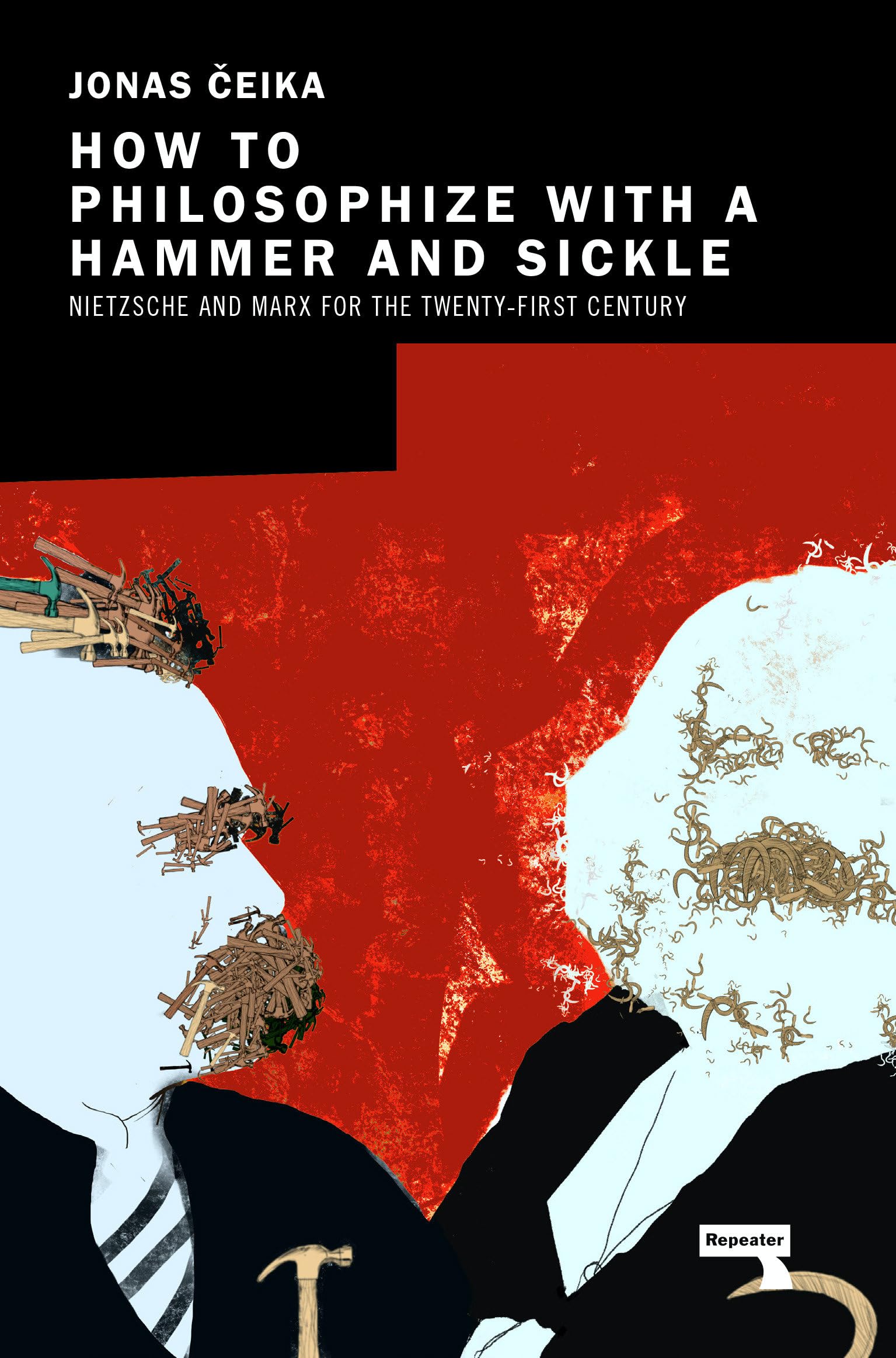
Image Source: m.media-amazon.com
Grasping the Core: Dialectical Materialism
The foundation of philosophizing with a hammer and sickle rests upon dialectical materialism. This isn’t just an abstract theory; it’s a dynamic way of viewing the world. It posits that reality is material, meaning that physical and economic conditions are the primary drivers of history and society, not abstract ideas or divine will.
The Nature of Material Reality
- Everything is Connected: Dialectical materialism emphasizes that nothing exists in isolation. Everything is interconnected and constantly influencing everything else.
- Change is Constant: The world is not static. It is in perpetual motion and development, driven by internal contradictions.
- Quantity to Quality: Small, gradual changes (quantity) can eventually lead to significant, fundamental shifts (quality). Think of water heated slowly until it boils and becomes steam – a qualitative leap.
The Role of Contradiction
This is where the “dialectical” part comes in, heavily influenced by Hegelian dialectics but reoriented towards material reality. Hegel saw the movement of ideas as dialectical (thesis, antithesis, synthesis). Marx and Engels adapted this, arguing that the fundamental contradictions driving history are found in material conditions, especially within economic systems.
- Thesis: An existing state of affairs (e.g., feudalism).
- Antithesis: The opposing force or contradiction within that state (e.g., the burgeoning merchant class).
- Synthesis: A new state that emerges from the conflict between thesis and antithesis (e.g., capitalism). This new synthesis then becomes a new thesis, and the process continues.
This constant push and pull, this inherent conflict within systems, is what drives historical progression.
Historical Materialism: The Engine of History
Closely intertwined with dialectical materialism is historical materialism. This perspective argues that the primary force shaping human history and societies is the way humans organize themselves to produce the necessities of life. This means focusing on the political economy – the relationship between political power and economic systems.
The Base and the Superstructure
Marx famously described this as the “base and superstructure” model:
- The Base: This refers to the forces and relations of production.
- Forces of Production: The tools, technology, raw materials, and labor power used in production.
- Relations of Production: The social relationships people enter into to produce – primarily ownership of the means of production (e.g., who owns the factories, land, etc.). This is where class struggle arises.
- The Superstructure: This encompasses all other aspects of society – laws, politics, culture, religion, philosophy, art, etc. The superstructure is seen as being shaped and influenced by the economic base.
Table 1: The Base and Superstructure
| Component | Description | Examples |
|---|---|---|
| Base | The economic foundation of society. | |
| Forces of Prod. | How we produce. | Factories, machines, scientific knowledge, labor skills. |
| Relations of Prod. | How society is organized for production (ownership). | Landlords and serfs, factory owners and workers, intellectual property rights. |
| Superstructure | The non-economic institutions and ideas that arise from and support the base. | |
| Political | Government structures, laws, state apparatus. | Democracies, monarchies, legal systems, police forces. |
| Ideological | Belief systems, values, cultural norms. | Religion, art, education, media, dominant philosophies. |
The Driving Force: Class Struggle
Class struggle is the engine of historical change within historical materialism. Every society, after primitive communism, has been characterized by the conflict between different social classes based on their relationship to the means of production.
- Feudalism: Lords (owners of land) vs. Serfs (laborers).
- Capitalism: Bourgeoisie (owners of capital/means of production) vs. Proletariat (wage laborers).
This struggle isn’t always overt warfare; it manifests in political movements, economic disputes, and cultural battles. The dominant ideas in any society, according to this view, are the ideas of the ruling class, serving to legitimize their power.
The Critique of Ideology
One of the most powerful tools in philosophizing with a hammer and sickle is the critique of ideology. Ideology, in the Marxist sense, refers to the system of beliefs, values, and ideas that serve to legitimize the existing power structures and social order. It’s often presented as common sense or natural, masking the underlying exploitative relationships.
How Ideology Works
- Masking Exploitation: Ideology can make it seem normal for a few to own vast wealth while many struggle. For example, the idea that poverty is purely an individual failing, rather than a systemic issue, is ideological.
- False Consciousness: It can create a false consciousness among the oppressed, where they internalize the values and beliefs of their oppressors, leading them to accept their subordinate position.
- Naturalizing Inequality: Concepts like “natural hierarchy” or the “invisible hand” of the market, when presented without critical analysis of their origins and effects, can function ideologically.
Unmasking the System
A critique of ideology involves stripping away these layers of mystification to reveal the material realities and power dynamics at play. It asks:
- Who benefits from this belief system?
- Whose interests does this idea serve?
- How does this idea maintain the existing power structure?
By exposing ideology, we can begin to see that what appears natural is often socially constructed and serves specific class interests. This is a crucial aspect of developing critical theory, which aims to question and challenge existing social structures.
Deeper Dive: Key Concepts in Action
To truly philosophize with a hammer and sickle, we need to engage with more nuanced concepts that illuminate the human experience within these material and ideological frameworks.
Alienation in Capitalism
Alienation is a central concept for understanding the human cost of capitalist production. Marx argued that under capitalism, workers become alienated from:
- The Product of Their Labor: Workers create goods they do not own or control. The more they produce, the richer the capitalist becomes, while the worker’s own conditions may not improve.
- The Process of Labor: Work is often monotonous, repetitive, and dictated by the employer, rather than being a creative or fulfilling expression of the worker’s self.
- Their Species-Being (Human Potential): Humans are naturally creative, social beings. Alienated labor reduces them to cogs in a machine, preventing them from realizing their full potential.
- Other Humans: Competition between workers, and the division between owners and laborers, can foster social estrangement rather than solidarity.
Table 2: Forms of Alienation
| Type of Alienation | Description | Example |
|---|---|---|
| From the Product | The worker is separated from the goods they produce; these goods belong to the capitalist. | A factory worker assembling cars they can never afford to buy. |
| From the Process | Labor is not intrinsically rewarding; it’s a means to an end, often dull and dehumanizing. | An assembly line worker performing the same task repeatedly for hours. |
| From Species-Being | Work prevents the worker from expressing their creative, social, and intellectual potential. | A programmer whose creative problem-solving is reduced to coding mundane updates. |
| From Other Humans | Competition and class divisions create estrangement between people. | Colleagues vying for limited promotions, or the divide between boss and employee. |
The Role of the State
From a Marxist perspective, the state is not a neutral arbiter of society. Instead, it generally acts as an instrument of the ruling class, protecting its interests and maintaining the existing mode of production. Laws, policing, and the military are often seen as tools to suppress dissent and enforce the relations of production.
Social Justice and Revolution
The ultimate aim of philosophizing with a hammer and sickle is the pursuit of social justice. This involves overcoming the systemic inequalities and exploitative practices inherent in class-divided societies. While reformist approaches are possible, the more radical implication of this philosophy often points towards a fundamental transformation of society – a revolution – to dismantle the existing power structures and establish a more equitable system. This doesn’t necessarily mean violent overthrow, but a profound, systemic change in how society is organized.
Applying the Tools: Practicing Philosophy with a Hammer and Sickle
So, how does one actually do this? It’s about adopting a critical mindset and applying these analytical lenses to the world around you.
Analyzing Everyday Life
- Observe Power Dynamics: Look at your workplace, your community, or even your family. Who holds power? How is that power maintained? What are the underlying economic or social structures at play?
- Question the “Common Sense”: When you hear widely accepted ideas, ask yourself who benefits from them and why they are considered “common sense.” For instance, the idea that relentless economic growth is always good might be subject to this critique.
- Identify Exploitation: Look for instances where one group profits from the labor or disadvantage of another. This isn’t just about overt oppression; it can be subtle, embedded in economic transactions or social policies.
Engaging with Media and Culture
- Deconstruct Media Narratives: Media often reflects and reinforces dominant ideologies. Analyze news reports, advertisements, and popular entertainment to identify underlying messages about class, power, and economics.
- Examine Cultural Products: How do films, music, and art portray social relations? Do they challenge or reinforce existing power structures? Do they reflect alienation or offer visions of solidarity?
Political and Economic Analysis
- Study Political Economy: Read about how economic systems function, not just in terms of abstract markets, but in terms of how they shape people’s lives and create social hierarchies.
- Research Social Movements: Learn about the history of class struggle and movements advocating for social justice. What were their goals? What were their successes and failures?
Building Solidarity
Philosophizing with a hammer and sickle is not just an individualistic intellectual exercise. It’s often about recognizing shared interests and working with others to effect change. Building solidarity among those who are similarly disadvantaged or exploited is a key component of challenging existing power structures.
Frequently Asked Questions (FAQ)
Is this philosophy only for communists?
No. While originating from Marxist philosophy, the analytical tools such as dialectical materialism, historical materialism, and critique of ideology can be used by anyone interested in critically examining social structures, power dynamics, and economic systems to achieve greater social justice.
Does this philosophy always lead to revolution?
Not necessarily. While the analysis of class struggle and systemic inequality can point towards revolutionary change as a potential outcome, the core philosophical approach focuses on critical analysis and the pursuit of social justice. The methods can inform reformist efforts as well as more radical transformations.
How does this differ from other forms of philosophy?
Unlike philosophies that might focus solely on abstract ideas or individual consciousness, philosophizing with a hammer and sickle prioritizes material conditions, economic structures, and the social relations of production as the primary drivers of history and human experience. It emphasizes a critique of ideology and the systemic nature of alienation.
Can I use these ideas to improve my own life?
Yes. By applying the critique of ideology and the concept of alienation, you can gain a deeper insight into your own work experiences and societal pressures. Recognizing how economic systems might be contributing to your dissatisfaction can be a first step towards seeking more fulfilling work or advocating for better conditions, fostering a sense of agency and contributing to broader social justice movements.