
What is the maximum number of outlets you can put on a single circuit breaker? Generally, there isn’t a strict “maximum number” of outlets per circuit breaker; instead, the limit is based on the total circuit breaker load and the outlet amperage rating. The key is to ensure the total power drawn by devices plugged into those outlets doesn’t exceed the breaker’s capacity. This guide will help you navigate the intricacies of household wiring and power distribution to ensure safe electrical practices.
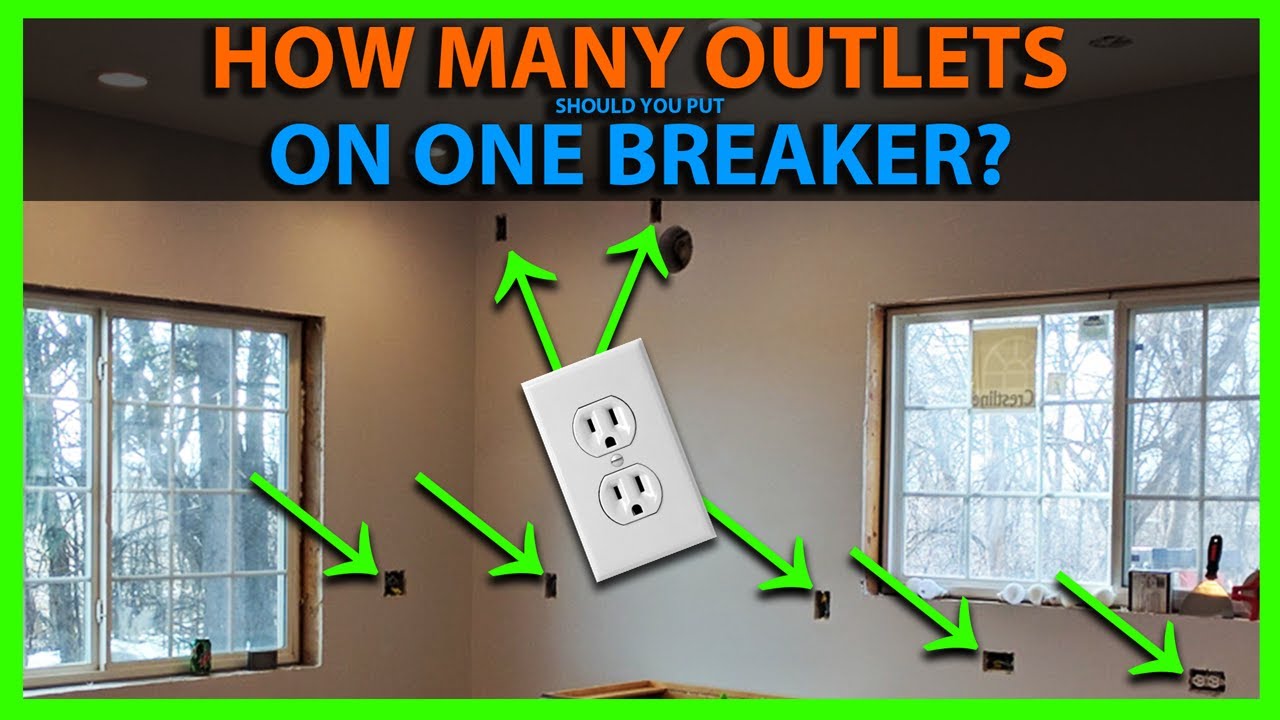
Image Source: i.ytimg.com
Deciphering Circuit Breaker Capacity
Your home’s electrical system is a complex network designed for safety and efficiency. At its core are circuit breakers, acting as automatic safety switches. Each breaker is rated for a specific amperage, commonly 15 amps or 20 amps in residential settings. This rating is crucial for determining outlet capacity. It tells you how much electrical current the circuit can handle before the breaker trips, interrupting the flow of electricity to prevent overheating and potential fires.
The Role of Amperage
Every electrical device you plug in draws a certain amount of amperage. Small appliances like lamps and phone chargers use very little. Larger appliances such as microwaves, toasters, or hair dryers consume significantly more. When you have multiple devices running simultaneously on the same circuit, their individual amperages add up. This combined load must stay below the circuit breaker’s rating.
Common Breaker Ratings
- 15-Amp Breakers: These are the most common for general lighting and standard outlets in living areas, bedrooms, and hallways.
- 20-Amp Breakers: Typically used for kitchens, bathrooms, garages, and basements where higher-power appliances are frequently used. Some modern homes also use 20-amp circuits for general living spaces.
Calculating Circuit Load
To figure out how many outlets can safely be on one circuit, you need to estimate the total wattage of devices you might use at once. Here’s a simple way to think about it:
Power (Watts) = Voltage (Volts) × Current (Amps)
In North America, standard household voltage is 120 volts.
- For a 15-amp circuit: The maximum power capacity is 120 volts × 15 amps = 1800 watts.
- For a 20-amp circuit: The maximum power capacity is 120 volts × 20 amps = 2400 watts.
It’s important to note that you shouldn’t operate a circuit at its absolute maximum capacity for extended periods. To maintain safe electrical practices and ensure longevity, it’s generally recommended to keep the load at around 80% of the breaker’s rating.
- 80% of a 15-amp circuit: 1800 watts × 0.80 = 1440 watts.
- 80% of a 20-amp circuit: 2400 watts × 0.80 = 1920 watts.
This 80% rule provides a buffer and prevents the breaker from tripping unnecessarily during normal operation.
Factors Influencing Number of Outlets Per Circuit
Several factors determine the practical number of outlets per circuit, going beyond just the breaker’s amperage.
Device Usage Patterns
The most significant factor is how you intend to use the outlets. A circuit powering general lighting and a few low-draw devices will comfortably support more outlets than a circuit intended for kitchen appliances.
Kitchen Circuits
Kitchens are a prime example of areas with high power demands. Electrical code often requires dedicated circuits for major appliances like refrigerators, dishwashers, and ovens. Other general-use outlets in the kitchen are typically on 20-amp circuits due to the high likelihood of multiple appliances running simultaneously (e.g., toaster, coffee maker, blender).
Bedroom and Living Room Circuits
In living rooms and bedrooms, outlets might power lamps, TVs, computers, and phone chargers. While individual items might have low wattage, many can be plugged in. It’s still wise to group these on 15-amp circuits unless you anticipate heavy usage of high-power items like electric heaters.
Bathroom Circuits
Bathrooms often have specific electrical code requirements for GFCI (Ground Fault Circuit Interrupter) protection, especially outlets near water sources. While they might have fewer outlets than other rooms, the devices used (hair dryers, curling irons) are high-wattage, so 20-amp circuits are common.
Outlet Amperage Rating vs. Device Demand
It’s crucial to match the outlet amperage rating to the circuit’s capacity and the expected load. Standard outlets are typically rated for 15 amps. However, you can install 20-amp outlets on a 15-amp or 20-amp circuit. If you install a 20-amp outlet on a 15-amp circuit, the circuit is still limited to 15 amps by the breaker. Conversely, a 15-amp outlet on a 20-amp circuit is limited to 15 amps by the outlet’s rating. For dedicated high-draw appliances, you’ll often see specialized outlets that match the appliance’s plug type and amperage (e.g., 20-amp, 30-amp, or even 50-amp).
Wire Gauge and Circuit Protection
The thickness of the wire used in your household wiring is directly related to the amperage it can safely carry. This is where circuit protection truly begins.
- 14-gauge wire: Typically used for 15-amp circuits.
- 12-gauge wire: Typically used for 20-amp circuits.
- 10-gauge wire (or thicker): Used for higher-amperage circuits (30-amp, 50-amp) often found for major appliances like ovens, dryers, or air conditioners.
Using the wrong wire gauge is a serious safety hazard. Undersized wire can overheat, leading to insulation damage and fire. The circuit breaker is designed to protect the wire, but if the wire is too thin for the breaker’s rating, the breaker might not trip before the wire reaches a dangerous temperature. Always ensure the wire gauge matches or exceeds the breaker’s amperage rating.
Electrical Code and Regulations
Electrical code, such as the National Electrical Code (NEC) in the United States, provides the framework for safe electrical installations. While the NEC doesn’t specify a hard limit on the number of general-purpose outlets per circuit, it does mandate specific requirements for different areas and types of circuits.
Key Code Considerations
- General Purpose Receptacle Outlet Spacing: The NEC requires that general-purpose receptacle outlets be installed so that no point measured horizontally along the floor line in any wall space is more than 6 feet (1.8 meters) from an outlet. This often means you’ll naturally have several outlets on a circuit in a typical room.
- Dedicated Circuits: As mentioned, high-draw appliances (refrigerators, microwaves, dishwashers, washing machines, electric dryers, electric ovens, central air conditioners) almost always require their own dedicated circuits. This prevents them from overloading shared circuits.
- Kitchen and Dining Area Requirements: The NEC has specific rules for kitchens and dining areas, often requiring at least two dedicated 20-amp small-appliance branch circuits to serve countertop receptacles and other appliances in these spaces.
- Bathroom Requirements: At least one 20-amp branch circuit is required to supply bathroom receptacle outlets. This circuit can serve only bathroom receptacles, or it can also supply the lighting fixture(s) and other equipment within the bathroom.
- GFCI Protection: GFCI protection is mandated for outlets in damp or wet locations, including bathrooms, kitchens (near sinks), garages, unfinished basements, and outdoors. This is a critical circuit protection feature.
- AFCI Protection: Arc-Fault Circuit Interrupter (AFCI) protection is required for outlets in many living areas, including bedrooms, family rooms, dining rooms, and hallways, to protect against arcing faults that can cause fires.
Residential Electrical Systems: A Snapshot
Residential electrical systems are designed with these codes in mind. When electricians wire a home, they plan the power distribution to meet these requirements, ensuring that circuits are not overloaded and that critical areas have the necessary power. The number of outlets on a circuit is therefore a result of balancing the physical wiring, the breaker’s capacity, the expected load, and adherence to electrical code.
Practical Examples and Scenarios
Let’s look at some common scenarios to illustrate how the number of outlets per circuit plays out.
Scenario 1: A Standard Living Room
- Circuit Breaker: 15-amp
- Wire Gauge: 14-gauge
- Estimated Load: A few lamps (60W each), a TV (150W), a game console (50W), a phone charger (10W). Total = 350W.
- Number of Outlets: Potentially 6-8 general-purpose outlets.
- Analysis: Even with 6 outlets, if you only plug in devices totaling 350W, you are well within the 80% safety margin (1440W). This circuit can easily handle several outlets.
Scenario 2: A Kitchen Countertop Circuit
- Circuit Breaker: 20-amp
- Wire Gauge: 12-gauge
- Estimated Load: Toaster (1000W), coffee maker (800W), blender (500W). Total = 2300W.
- Number of Outlets: Typically 2-4 outlets dedicated to countertop use.
- Analysis: If you run a toaster and coffee maker simultaneously, you’re at 1800W, which is the 80% limit for a 20-amp circuit (1920W). Plugging in a third high-draw appliance would likely trip the breaker. Even though you might physically install 4 outlets, the practical outlet capacity is limited by the simultaneous usage of high-power devices.
Scenario 3: A Bedroom Circuit
- Circuit Breaker: 15-amp
- Wire Gauge: 14-gauge
- Estimated Load: A desk lamp (60W), a laptop (75W), a phone charger (10W), a ceiling fan (75W). Total = 220W.
- Number of Outlets: Could be 4-6 outlets.
- Analysis: This circuit is unlikely to be heavily loaded, allowing for a reasonable number of outlets to accommodate various devices.
Safety First: Best Practices
When dealing with household wiring and circuit breakers, prioritizing safe electrical practices is paramount.
What NOT to Do
- Overloading Circuits: Never plug in more devices than a circuit can safely handle. This is the most common cause of breaker trips and potential fires.
- Using the Wrong Breaker: Never replace a tripped breaker with one of a higher amperage. The breaker is sized to protect the wiring; changing it negates that protection.
- Ignoring Tripped Breakers: If a breaker trips repeatedly, investigate the cause. It’s a warning sign that something is wrong.
- DIY Electrical Work Without Knowledge: Unless you are qualified and knowledgeable about residential electrical systems and electrical code, it’s best to hire a licensed electrician for any wiring or modifications.
What TO Do
- Label Your Breaker Panel: Clearly label each circuit breaker so you know which outlets and areas it controls. This is essential for troubleshooting.
- Use Appropriately Rated Extension Cords: Ensure extension cords are rated for the amperage of the devices you plug into them. Heavy-duty appliances require heavy-duty cords.
- Minimize Daisy-Chaining: Avoid plugging multiple power strips into each other. Each connection point is a potential failure point and adds to the load.
- Distribute Loads Evenly: When possible, spread high-draw devices across different circuits to avoid overloading any single one.
- Regular Inspections: Periodically check outlets and switches for signs of damage, discoloration, or overheating.
Frequently Asked Questions (FAQ)
Q1: Can I put 10 outlets on a 15-amp circuit?
A: You can physically install 10 outlets on a 15-amp circuit, but whether it’s safe depends entirely on the total amperage drawn by the devices plugged into those outlets. If you only use low-draw items (like LED lamps and phone chargers), it might be fine. However, if you plug in a toaster, microwave, or hair dryer, you’ll likely exceed the circuit’s capacity and trip the breaker. The electrical code focuses more on load than a strict outlet count for general circuits.
Q2: What is the difference between a 15-amp and a 20-amp outlet?
A: A 15-amp outlet has two vertical slots and a round ground pin. It’s designed for circuits protected by a 15-amp breaker and can handle up to 15 amps of current. A 20-amp outlet typically has one vertical slot and one that is T-shaped (a “T-slot”). This T-slot allows it to accept both 15-amp plugs and 20-amp plugs (which have one horizontal blade). A 20-amp outlet on a 20-amp circuit can safely handle up to 20 amps.
Q3: Do I need a dedicated circuit for my microwave?
A: Yes, it is highly recommended, and often required by electrical code, to have a dedicated 20-amp circuit for a microwave oven. Microwaves draw a significant amount of power, and they should not share a circuit with other appliances or general lighting, especially in kitchens where multiple appliances are common.
Q4: How can I tell what amperage my circuit breaker is?
A: The amperage rating is usually printed directly on the circuit breaker handle or on the side of the breaker itself. It will be a number followed by “A” (e.g., 15A or 20A). You can also consult your home’s electrical panel diagram or the breaker panel manufacturer’s information.
Q5: What happens if I overload a circuit?
A: If you overload a circuit, the excess current will cause the circuit breaker to heat up. Once it reaches a predetermined temperature or current level, a mechanism inside the breaker will trip, interrupting the flow of electricity to that circuit. This prevents wires from overheating and potentially starting a fire. If it’s a fuse, the fuse will blow.
Q6: Can I replace a 15-amp breaker with a 20-amp breaker to increase capacity?
A: Absolutely not. This is extremely dangerous. Circuit breakers are designed to protect the wiring in your walls. If you replace a 15-amp breaker with a 20-amp breaker, the wiring (likely 14-gauge) is still only rated for 15 amps. The breaker will not trip until 20 amps are drawn, allowing the thinner wires to overheat and potentially cause a fire before the breaker intervenes. Always match the breaker to the wire gauge and the circuit’s intended use.
By following these guidelines and respecting the limits of your residential electrical systems, you can ensure safe and reliable power distribution throughout your home.