
Can you tune a chainsaw carburetor without special tools? Yes, you can tune a chainsaw carburetor using basic tools like a flathead screwdriver, but having a tachometer makes it much easier and more accurate. This guide will walk you through the essential steps for chainsaw carburetor adjustment to ensure your saw runs smoothly and efficiently.
A well-tuned chainsaw carburetor is key to optimal performance. It ensures the right amount of fuel mixes with air for combustion. If your chainsaw is sputtering, stalling, or not reaching full power, the chainsaw carb settings might be off. This guide provides a straightforward approach to getting your carburetor dialed in, covering idle speed adjustment, high-speed adjustment, and low-speed adjustment. We’ll also delve into the function of the carburetor mixture screws, what a lean condition and a rich condition mean, and how to address issues related to the carburetor diaphragm.
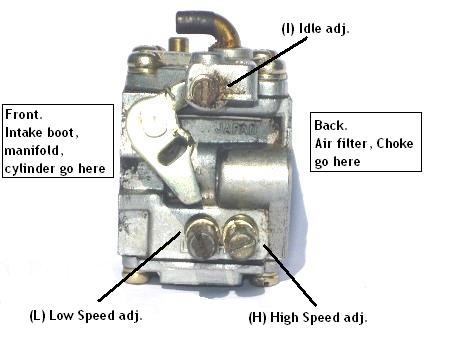
Image Source: cdn.shopify.com
Why Tuning Your Chainsaw Carburetor Matters
Tuning your chainsaw’s carburetor is crucial for several reasons:
- Optimal Power: A correctly tuned carburetor ensures your chainsaw delivers maximum power.
- Fuel Efficiency: It helps your saw use fuel efficiently, saving you money and reducing emissions.
- Engine Longevity: Proper tuning prevents engine damage caused by running too lean (too much air, not enough fuel) or too rich (too much fuel, not enough air).
- Smooth Operation: It eliminates sputtering, stalling, and hesitation, making the saw easier and safer to use.
Essential Tools You’ll Need
Before you start, gather these basic tools:
- Flathead Screwdriver: For adjusting the mixture screws. Some carburetors have recessed adjustment screws that require a specific size.
- Tachometer (Optional but Recommended): A digital or analog tachometer helps you set the engine speed accurately. Without one, you’ll be relying on sound, which is less precise.
- Cleaning Supplies: Compressed air, carburetor cleaner, and clean rags.
- Owner’s Manual: Always refer to your chainsaw’s specific manual for recommended chainsaw carb settings.
Identifying the Carburetor Adjustment Screws
Most common chainsaw carburetors have two main adjustment screws:
- Low-Speed Adjustment Screw (L-Screw): This screw controls the fuel-air mixture at idle and at low throttle speeds.
- High-Speed Adjustment Screw (H-Screw): This screw regulates the fuel-air mixture at higher engine speeds and under load.
Some carburetors may also have a separate idle speed adjustment screw, often a small brass screw that physically stops the throttle linkage. This screw doesn’t directly adjust the fuel mixture but sets the minimum engine RPM when the throttle is released.
Step-by-Step Chainsaw Carburetor Tuning
Step 1: Safety First!
- Turn off the chainsaw: Make sure the engine is completely cool.
- Work in a well-ventilated area: The carburetor cleaner and fuel fumes can be strong.
- Wear safety glasses: Protect your eyes from debris and cleaning fluids.
- Secure the chainsaw: Place it on a stable, flat surface.
Step 2: Locate and Inspect the Carburetor
The carburetor is usually a small metal or plastic component located between the engine’s intake manifold and the air filter. It often has fuel lines connected to it. Give it a quick visual inspection for any obvious damage, loose connections, or debris.
Step 3: Initial Carburetor Mixture Screw Settings (The “Reset”)
A good starting point for chainsaw carb settings is to gently turn both the L and H screws inwards until they lightly seat. Do not overtighten, as this can damage the screws or the carburetor itself. Once seated, back each screw out 1.5 turns. This is a general guideline; your owner’s manual might provide more specific starting points.
Step 4: Starting the Engine and Basic Warm-up
- Ensure the fuel tank is full of the correct chainsaw fuel mixture (usually gasoline mixed with a specific ratio of 2-stroke oil).
- Start the chainsaw and let it warm up for a few minutes. It needs to reach normal operating temperature for accurate adjustments.
Step 5: Adjusting the Idle Speed
First, we’ll focus on the idle speed adjustment.
- If your carburetor has a dedicated idle speed screw: Locate it. This screw presses against a stop on the throttle linkage.
- If the engine is idling too slow and stalling, turn the idle speed screw clockwise slightly. This raises the idle.
- If the engine is idling too fast, turn the idle speed screw counter-clockwise slightly. This lowers the idle.
- The goal is a stable idle where the chain doesn’t move.
- If your carburetor relies on the L-screw for idle speed: This is more common. We’ll adjust the idle speed indirectly by setting the L-screw.
Step 6: Adjusting the Low-Speed Mixture (L-Screw)
The L-screw controls the fuel delivery from idle up to about half throttle. Proper adjustment here is critical for smooth acceleration and preventing stalling.
Adjusting the L-Screw with a Tachometer:
- Set Idle Speed: Aim for the RPM recommended in your owner’s manual (typically 2,500-3,000 RPM). Adjust the idle speed screw or the L-screw itself to achieve this stable idle.
- Check for Bogging on Acceleration:
- With the engine idling stably, slowly squeeze the throttle trigger.
- Does the engine hesitate, sputter, or bog down as you accelerate? This often indicates a lean condition at low speeds (not enough fuel).
- To richen the low-speed mixture (add more fuel): Turn the L-screw counter-clockwise in small increments (e.g., 1/8th of a turn).
- After each adjustment, let the engine return to idle and then try accelerating again.
- Does the engine stumble, sound rough, or blow black smoke as you accelerate? This often indicates a rich condition at low speeds (too much fuel).
- To lean the low-speed mixture (reduce fuel): Turn the L-screw clockwise in small increments.
- Again, test acceleration after each adjustment.
- Find the “Sweet Spot”: The ideal setting is when the engine accelerates smoothly and crisply without any hesitation or rough running. You want to avoid the very edge of a rich condition (chugging) or a lean condition (sputtering).
Adjusting the L-Screw without a Tachometer:
This is trickier and requires listening carefully to the engine.
- Start the Engine and Let it Warm Up.
- Adjust for a Stable Idle: Turn the idle speed screw (if present) so the engine idles without stalling but the chain doesn’t spin. If no idle screw, use the L-screw.
- Listen for Smooth Acceleration:
- Slowly open the throttle. If the engine sputters, dies, or bogs down, it’s likely too lean. Turn the L-screw counter-clockwise slightly (richen).
- If the engine sounds rough, “chugs,” or blows dark smoke as you open the throttle, it’s likely too rich. Turn the L-screw clockwise slightly (lean).
- Repeat and Test: Make small adjustments, wait for the engine to settle, and test the throttle response. You’re aiming for the point where the engine revs up cleanly and quickly without any hesitation.
Step 7: Adjusting the High-Speed Mixture (H-Screw)
The H-screw controls the fuel delivery when the engine is running at full throttle, especially under load.
Adjusting the H-Screw with a Tachometer:
- Full Throttle Test: With the engine running at full throttle (without a load, for initial adjustment), observe the RPM. Your owner’s manual will specify the maximum recommended RPM for your saw.
- Lean Condition: If the engine doesn’t reach the recommended RPM, or if it sounds like it’s “choking” or running out of breath at high RPM, it might be too lean.
- To richen the high-speed mixture: Turn the H-screw counter-clockwise slightly.
- Rich Condition: If the engine exceeds the recommended RPM, runs roughly, blows black smoke, or “four-strokes” (a sputtering sound like it’s running on fewer cylinders), it’s too rich.
- To lean the high-speed mixture: Turn the H-screw clockwise slightly.
- “Screaming” RPM: The ideal setting is when the engine reaches its maximum recommended RPM and sounds like it’s “screaming” or revving cleanly.
- Test Under Load: After finding the high-RPM setting, test the saw by cutting a piece of wood. The saw should maintain power without bogging down. If it bogs, it might need a slight richening of the H-screw.
Adjusting the H-Screw without a Tachometer:
This requires listening for the engine’s sound at wide-open throttle.
- Run the Engine at Full Throttle: Engage the throttle fully.
- Listen for the Sound:
- If the engine sounds weak, struggles to reach high RPM, or sounds like it’s starving for fuel, it’s likely too lean. Turn the H-screw counter-clockwise slightly (richen).
- If the engine sounds rough, “chokes,” or makes a sputtering “four-stroke” sound at full throttle, it’s too rich. Turn the H-screw clockwise slightly (lean).
- Test Under Load: The best way to confirm is by cutting wood.
- If the saw cuts powerfully and maintains revs, the H-screw is likely set well.
- If the saw bogs down or struggles during the cut, it might need a slightly richer mixture. Turn the H-screw counter-clockwise a tiny bit.
- If the saw seems to labor and sound rough even when cutting, it might be too rich. Turn the H-screw clockwise a tiny bit.
Step 8: Re-checking and Fine-Tuning
After adjusting the H-screw, go back and check the idle and low-speed performance again. Sometimes adjusting one screw can affect the other. Repeat the process of adjusting the L-screw for smooth acceleration from idle and then re-check the high-speed performance.
Key Signs of Proper Tuning:
- Stable Idle: The engine idles smoothly without stalling or the chain spinning.
- Crisp Acceleration: The engine revs up quickly and smoothly without hesitation when the throttle is applied.
- Strong Full-Throttle Performance: The engine reaches and maintains full power when cutting.
- No Black Smoke: A rich condition can cause black smoke from the exhaust.
- No Sputtering or Bogging: A lean condition causes the engine to run roughly or die under load.
Troubleshooting Common Carburetor Problems
Sometimes, adjusting the screws isn’t enough. The problem might be with the carburetor itself or related components.
Dirty Carburetor
Over time, fuel can leave deposits inside the carburetor, clogging the tiny passages.
- Symptoms: Hard starting, poor idling, stalling, lack of power.
- Solution: Clean the carburetor. This may involve removing it, disassembling it carefully, soaking parts in carburetor cleaner, and blowing out passages with compressed air. Be sure to replace any worn gaskets or O-rings.
Clogged Fuel Filter
A clogged fuel filter restricts fuel flow to the carburetor.
- Symptoms: Similar to a dirty carburetor, especially a lack of power under load.
- Solution: Replace the fuel filter. It’s usually a small inline filter in the fuel line.
Issues with the Carburetor Diaphragm
The carburetor diaphragm is a thin, flexible membrane that pumps fuel. It can become stiff, cracked, or deformed.
- Symptoms: Fuel starvation, engine running poorly or cutting out, especially when tilted.
- Solution: Replace the carburetor diaphragm and any associated gaskets. These are often sold as a kit.
Air Leaks
Leaks in the intake system (gaskets, hoses, crank seals) can introduce unmetered air, creating a lean condition.
- Symptoms: Engine runs fast at idle, poor performance, difficulty tuning.
- Solution: Check all gaskets and seals for cracks or looseness. You can sometimes spray carburetor cleaner or propane around suspected leak points with the engine running; a change in engine speed indicates a leak.
Incorrect Fuel Mixture
Using the wrong ratio of oil to gas in your chainsaw fuel mixture can cause performance issues.
- Symptoms: Fouled spark plug, poor running, excessive smoke, engine damage.
- Solution: Ensure you are using the correct fuel and oil mixture as specified in your owner’s manual.
Advanced Carburetor Tuning Considerations
Temperature Fluctuations
Chainsaw carb settings can be affected by ambient temperature. On very hot days, engines tend to run leaner. On cold days, they tend to run richer. You may need to make minor adjustments accordingly.
Altitude Effects
Altitude also plays a role. At higher altitudes, the air is thinner, which can cause a lean condition. You might need to lean out the carburetor slightly (turn screws clockwise) at higher elevations.
Carburetor Types
There are different types of carburetors, including fixed-jet and adjustable. Most modern chainsaws use adjustable carburetors with L and H screws. Some older or smaller saws might have fixed jets, which cannot be adjusted without replacing internal parts.
What Not to Do When Tuning a Carburetor
- Do not overtighten adjustment screws: This can damage the needle or seat inside the carburetor.
- Do not rely solely on sound without a tachometer: While sound is a guide, a tachometer provides precise RPM readings for accurate adjustments.
- Do not try to tune a carburetor that is visibly damaged or extremely dirty: It might require professional cleaning or replacement.
- Do not make large adjustments at once: Small, incremental adjustments are key to fine-tuning.
Chainsaw Carburetor Settings Summary Table
| Adjustment Type | What it Controls | Symptoms of Lean | Symptoms of Rich | Typical Adjustment Action (if lean) | Typical Adjustment Action (if rich) |
|---|---|---|---|---|---|
| Idle Speed Adjustment | Minimum engine RPM when throttle is released. | Stalling | Engine races | Turn screw clockwise (increase RPM) | Turn screw counter-clockwise (decrease RPM) |
| Low-Speed (L-Screw) | Fuel mixture from idle to ~1/2 throttle. | Hesitation/bogging on acceleration | Rough running, black smoke | Turn L-screw counter-clockwise (richen) | Turn L-screw clockwise (lean) |
| High-Speed (H-Screw) | Fuel mixture from ~1/2 throttle to full throttle. | Loss of power, “choking” sound | “Four-stroking,” excessive RPM | Turn H-screw counter-clockwise (richen) | Turn H-screw clockwise (lean) |
Frequently Asked Questions (FAQ)
Q1: How often should I tune my chainsaw carburetor?
A1: It’s good practice to check and tune your chainsaw carburetor at the beginning of each season, or if you notice any performance issues. Regular maintenance, including cleaning the air filter and ensuring the correct chainsaw fuel mixture, can also prevent the need for frequent adjustments.
Q2: What does it mean if my chainsaw chain spins at idle?
A2: If your chainsaw chain spins at idle, the idle speed adjustment screw is likely set too high, or the idle speed is too high due to an incorrect L-screw setting. Adjust the idle speed screw (if present) counter-clockwise or adjust the L-screw clockwise to lower the idle RPM until the chain stops spinning.
Q3: My chainsaw runs fine when cold but dies when it warms up. What’s wrong?
A3: This often points to a fuel delivery issue or a lean condition exacerbated by heat. It could be a partially clogged fuel filter, a weak fuel pump (in some carburetors), a blocked fuel vent, or a carburetor that needs cleaning. Sometimes, a slightly richer chainsaw carb settings might help temporarily.
Q4: Can I use regular gasoline in my chainsaw?
A4: No, you must use gasoline specifically designed for 2-stroke engines, mixed with the correct ratio of 2-stroke oil. Using straight gasoline can quickly damage your engine. Always refer to your owner’s manual for the recommended chainsaw fuel mixture.
Q5: My chainsaw hesitates when I accelerate. What should I do?
A5: This typically indicates a lean condition at the low speed. You need to adjust the L-screw. Turn it counter-clockwise in small increments (richen the mixture) until the hesitation disappears and the engine accelerates smoothly. Test after each adjustment.
Q6: What is a “four-stroke” sound on a chainsaw?
A6: A “four-stroke” sound (or “chugging”) at full throttle usually means the chainsaw carb settings are too rich, meaning there’s too much fuel and not enough air. The engine isn’t firing efficiently on all cycles. To fix this, you need to lean out the high-speed mixture by turning the H-screw clockwise in small increments.
By following these steps, you can effectively tune your chainsaw carburetor, ensuring it runs reliably and powerfully for all your cutting tasks. Remember to always prioritize safety and consult your owner’s manual for specific details related to your chainsaw model.