
Can you tune a chainsaw carburetor easily? Yes, with a little patience and the right approach, you can successfully tune your chainsaw carburetor. Tuning your chainsaw carburetor is a crucial step in keeping your saw running smoothly and efficiently. This process involves making adjustments to the fuel-to-air mixture to ensure optimal combustion. A well-tuned carburetor means your chainsaw will start easily, idle steadily, and deliver full power when you need it. Let’s dive into how to get your chainsaw running like new.
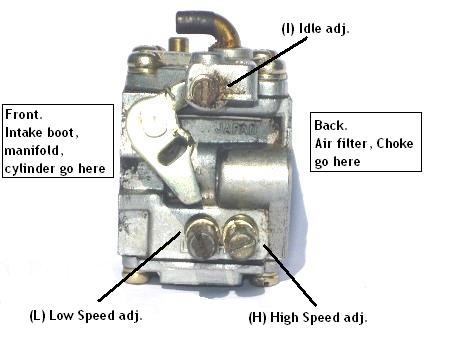
Image Source: cdn.shopify.com
Why Tuning Your Chainsaw Carburetor Matters
A chainsaw carburetor is essentially the brain of your saw’s engine. It mixes fuel and air in the correct ratio for combustion. When this ratio is off, you’ll experience a range of problems.
- Poor Performance: The engine might lack power, hesitate under load, or run rough.
- Starting Difficulties: A poorly tuned carburetor can make your chainsaw difficult to start, especially when cold.
- Engine Damage: Running with an incorrect fuel mixture for too long can lead to overheating, fouled spark plugs, or even piston damage.
- Increased Emissions: An improperly tuned engine burns fuel inefficiently, releasing more pollutants into the air.
Knowing how to perform chainsaw carburetor adjustment is a valuable skill for any homeowner or professional who relies on a chainsaw. It can save you money on repairs and extend the life of your equipment.
Deciphering Your Chainsaw Carburetor: The Basics
Before you start turning screws, it’s helpful to know a bit about how your chainsaw carburetor works. Most chainsaws use a small, diaphragm-style carburetor, often made by brands like Walbro or Zama. These carburetors have a few key adjustable parts.
Key Carburetor Components
- High-Speed (H) Jet: Controls the fuel flow at high engine speeds (wide-open throttle).
- Low-Speed (L) Jet: Controls the fuel flow at low engine speeds (idle and just off idle).
- Idle Speed Screw: This screw adjusts the engine’s idle speed. It doesn’t directly control the fuel mixture but the throttle plate’s opening.
The Chainsaw Fuel Mixture
The chainsaw fuel mixture is critical. Too little fuel (lean) causes the engine to run hot and can damage it. Too much fuel (rich) causes the engine to run roughly, bog down, and foul the spark plug. The goal of tuning is to find that sweet spot where the engine runs at its best.
Signs Your Chainsaw Carburetor Needs Tuning
Several symptoms indicate your carburetor needs attention. Addressing these early can prevent more significant issues.
Common Chainsaw Idling Problems
- Chainsaw High Idle: The engine revs too high even when you’re not pressing the throttle.
- Chainsaw Low Idle: The engine idles too slowly, or the chain might even creep or stall the engine.
- Rough Idle: The engine sounds uneven or unsteady at idle.
Other Performance Issues
- Chainsaw Sputtering: The engine runs unevenly, almost like it’s misfiring, especially under load.
- Hesitation: The engine delays in picking up speed when you accelerate.
- Stalling: The engine dies when you let off the throttle or under load.
- Black Smoke: This often indicates a rich fuel mixture.
- Overheating: A lean mixture can cause the engine to run too hot.
Tools You’ll Need for Carburetor Tuning
To perform chainsaw engine tuning accurately, you’ll need a few specialized tools.
- Screwdriver Set: Specifically, you’ll need carb adjustment tools, which are often small, flat-head or splined screwdrivers designed for the adjustment screws. These are different from standard household screwdrivers.
- Tachometer (Optional but Recommended): A digital or analog tachometer helps you set the idle speed precisely to the manufacturer’s specifications.
- Spark Plug Wrench: To remove and inspect the spark plug.
- Clean Rags: For wiping up any spilled fuel or dirt.
- Compressed Air: For cleaning.
- New Spark Plug: It’s a good idea to have one on hand in case the old one is fouled.
- Safety Glasses: Always protect your eyes.
- Gloves: To keep your hands clean and protected.
Step-by-Step Guide to Tuning Your Chainsaw Carburetor
Tuning a chainsaw carburetor typically involves two main steps: initial adjustment of the H and L screws, and then fine-tuning the idle speed.
Step 1: Preparation and Safety
First and foremost, safety. Always work in a well-ventilated area away from any open flames or sparks. Ensure the chainsaw is on a stable, flat surface.
- Disconnect the Spark Plug: Before doing any work on the carburetor or engine, disconnect the spark plug wire. This prevents accidental starting.
- Clean the Area: Remove any dirt, leaves, or debris from around the carburetor and engine. This prevents contaminants from entering the engine or carburetor during the process.
Step 2: Inspecting the Spark Plug
A dirty or fouled spark plug can mimic carburetor problems.
- Remove the spark plug using your spark plug wrench.
- Examine the electrode. If it’s black and sooty, it indicates a rich mixture. If it’s white or blistered, it suggests a lean mixture.
- If the spark plug is fouled or worn, replace it with a new one of the correct type specified for your chainsaw.
Step 3: Initial Carburetor Adjustment (Setting the Base)
Most modern chainsaws have limited adjustability on the H and L screws. Some may even have non-adjustable carburetors that require replacement if they’re faulty. However, if yours has adjustment screws:
- Locate the H and L Screws: These are usually small brass screws on the side of the carburetor. They might be marked “H” and “L.”
- Set the Base Position:
- Gently turn both the H and L screws clockwise until they lightly seat. Do not overtighten them, as this can damage the carburetor.
- Once seated, back out both screws counter-clockwise.
- For most Walbro carburetors, back out the L screw 1 to 1.5 turns.
- Back out the H screw 1 to 1.25 turns.
- Note: These are general guidelines. Always consult your chainsaw’s owner’s manual for specific recommended starting points for your model.
Step 4: Adjusting the Low-Speed (L) Screw and Idle Speed
This is where you address chainsaw idling problems and ensure smooth transitions from idle to acceleration.
- Reconnect the Spark Plug Wire: Make sure it’s securely attached.
- Start the Engine: Pull the starter cord to start the chainsaw. It might run rough initially.
- Adjust the Idle Speed Screw:
- If the engine is idling too fast or the chain is moving, turn the idle speed screw (often a larger screw that controls throttle plate opening) counter-clockwise to slow it down.
- If the engine is about to stall or runs very slowly, turn the idle speed screw clockwise to speed it up.
- Adjust the Low-Speed (L) Screw: This requires listening to the engine’s sound.
- Start with the engine at idle.
- Slowly turn the L screw clockwise (leaner mixture) until the engine speed begins to drop or the engine sounds like it’s running rough.
- Then, slowly turn the L screw counter-clockwise (richer mixture) until the engine speed increases slightly and the engine sounds smooth.
- The optimal setting is usually where the engine achieves its highest idle speed smoothly.
- Check for Smooth Transition:
- Blip the throttle quickly. The engine should accelerate smoothly without hesitation or bogging down.
- If it hesitates or sputters, you might need to open the L screw slightly (richer).
- If it seems to bog down as if too much fuel is entering, try closing the L screw slightly (leaner).
- Re-adjust Idle Speed: After adjusting the L screw, the idle speed may have changed. Re-adjust the idle speed screw to the manufacturer’s recommended RPM or to a point where the chain just stops moving.
Step 5: Adjusting the High-Speed (H) Screw
This adjustment is made when the engine is running at full throttle and affects power and how it performs under load.
- Run the Engine at Full Throttle: Let the chainsaw run at full throttle.
- Listen to the Engine:
- If the engine sounds like it’s “four-stroking” (a rough, uneven sound, indicating a rich mixture), slowly turn the H screw clockwise (leaner) in small increments (1/8 to 1/4 turn at a time).
- Listen for the engine to “clean up” and sound smooth and powerful.
- If you turn the H screw too far clockwise (lean), the engine will start to sound like it’s laboring, the RPMs might drop, or you might even hear a “ringing” sound, which is a sign of the engine running too hot and potentially being damaged.
- Find the Sweet Spot: The goal is to find the H screw setting that provides the highest RPM and the smoothest sound without sounding strained or overheated. It should pull strongly.
- Test Under Load: If possible, test the chainsaw under a light load (e.g., cutting through a small log). The engine should maintain power and not bog down. If it does, you may need to richen the H mixture slightly (turn counter-clockwise).
Step 6: Final Idle Speed Check
After adjusting the H and L screws, the idle speed might have changed again.
- Let the engine return to idle.
- Use your tachometer (if you have one) to set the idle RPM according to your chainsaw’s manual.
- If you don’t have a tachometer, adjust the idle speed screw so the engine idles smoothly and the chain just stops moving. You want to avoid the chain creeping.
Advanced Tuning: Troubleshooting Specific Issues
Sometimes, tuning involves more than just a few turns of the screws.
Troubleshooting Chainsaw Sputtering
If your chainsaw is chainsaw sputtering, it often points to an issue with the fuel-air mixture.
- Lean Mixture: If the sputtering happens when accelerating or under load, the L or H screw might be set too lean. Try richening the mixture slightly (turn the relevant screw counter-clockwise).
- Rich Mixture: If sputtering occurs at idle or when you let off the throttle, the mixture might be too rich. Try leaning the mixture slightly (turn the relevant screw clockwise).
- Other Causes: Sputtering can also be caused by a dirty air filter, a fouled spark plug, or problems with the fuel system itself (like a clogged fuel filter or a bad carburetor).
Dealing with Chainsaw High Idle
A chainsaw high idle means the engine is running too fast when the throttle isn’t engaged.
- Idle Speed Screw: The most common fix is to adjust the idle speed screw counter-clockwise to slow the engine down.
- Lean Mixture: If adjusting the idle screw doesn’t work, the L screw might be set too lean, causing the engine to rev up. Try richening the L mixture slightly.
- Air Leak: An air leak in the intake manifold or crankcase can also cause a high idle. If you suspect an air leak, you’ll need to find and seal it.
Correcting Chainsaw Low Idle
A chainsaw low idle or an engine that stalls at idle often requires richening the mixture or adjusting the idle speed.
- Idle Speed Screw: Turn the idle speed screw clockwise to increase the idle RPM.
- Lean Mixture: If the engine stalls after slowing down, the L screw might be set too lean. Try richening the L mixture slightly.
- Clogged Carburetor: A dirty carburetor can restrict fuel flow, leading to a low idle.
When to Consider Carburetor Cleaning or Parts Replacement
Sometimes, adjustment isn’t enough. If you’ve tried tuning and the chainsaw still runs poorly, it might be time for more involved chainsaw carburetor cleaning or replacing chainsaw carburetor parts.
Signs Your Carburetor Needs Cleaning
- The adjustment screws have little to no effect.
- The engine runs erratically despite attempts to tune it.
- You see dirt or gummed-up fuel inside the carburetor.
How to Clean a Chainsaw Carburetor
- Remove the Carburetor: Carefully disconnect fuel lines and any linkage. Take pictures if needed to remember how it goes back together.
- Disassemble (Carefully): Remove the top cover and any diaphragms or gaskets. Note the order and orientation of parts.
- Clean Components: Use carburetor cleaner spray to clean all passages, jets, and the throttle bore. Use compressed air to blow out any debris.
- Inspect Diaphragms: Check the fuel pump and metering diaphragms for tears or stiffness. Replace them if they look worn or damaged. These are common chainsaw carburetor parts that fail.
- Reassemble: Put the carburetor back together in the reverse order you took it apart. Ensure gaskets and diaphragms are seated correctly.
- Reinstall and Tune: Reinstall the carburetor and perform the tuning steps outlined above.
Common Carburetor Parts to Replace
- Diaphragms: These are rubber membranes that pump fuel. They can become stiff or brittle with age.
- Gaskets: Worn or damaged gaskets can cause fuel leaks or air leaks.
- Jets: Small passages can become clogged with debris. Sometimes, replacing the jet is easier than cleaning.
- Entire Carburetor: If the carburetor is severely damaged or clogged beyond repair, replacing the entire unit might be the most cost-effective solution.
Understanding Carburetor Settings for Different Conditions
The optimal chainsaw carburetor settings can vary slightly depending on altitude and temperature.
- High Altitude: At higher altitudes, the air is thinner. This means you generally need a leaner mixture. You might need to turn the H and L screws slightly clockwise.
- Cold Weather: In very cold conditions, a slightly richer mixture can sometimes help with starting and smooth running. You might need to turn the H and L screws slightly counter-clockwise.
Always make small adjustments and test the performance after each change.
Frequently Asked Questions (FAQ)
Q: How often should I tune my chainsaw carburetor?
A: It’s a good practice to tune your chainsaw carburetor at least once a year, or whenever you notice a decline in performance, starting issues, or rough running. Regular maintenance is key.
Q: Can I tune my chainsaw without a tachometer?
A: Yes, you can tune your chainsaw without a tachometer, but it’s more challenging to get precise settings. You’ll rely heavily on the sound of the engine and visual cues like the chain stopping at idle. Using a tachometer makes the process much more accurate.
Q: My chainsaw is new, does it need tuning?
A: Most new chainsaws come factory-tuned and should run well out of the box. However, if you experience any of the symptoms mentioned (poor idle, sputtering, etc.) shortly after purchase, it’s worth checking the carburetor settings.
Q: What happens if I turn the H and L screws too much?
A: Turning the screws too far clockwise (leaning the mixture) can cause the engine to run too hot, leading to damage. Turning them too far counter-clockwise (richening the mixture) excessively can cause poor performance, fouling, and potentially flooding the engine. Always make small, incremental adjustments.
Q: What is the best chainsaw fuel mixture ratio?
A: The fuel mixture itself is gasoline and 2-stroke oil, typically a 50:1 ratio (40ml of oil per liter of gasoline). The carburetor adjusts this pre-mixed fuel with air. Do not confuse carburetor tuning with mixing fuel.
Q: My carburetor doesn’t have H and L screws. What now?
A: Many newer or smaller chainsaws have non-adjustable carburetors. If these become faulty, they usually need to be replaced. Consult your chainsaw’s manual to confirm if your carburetor is adjustable.
Conclusion
Tuning a chainsaw carburetor might seem daunting at first, but with this guide, you have the steps to tackle it. By following these instructions, you can resolve common chainsaw idling problems, eliminate chainsaw sputtering, and achieve optimal chainsaw engine tuning. Remember to prioritize safety, use the right tools, and consult your owner’s manual for specific details related to your chainsaw model. A well-tuned chainsaw is a powerful and reliable tool, ready for any task.