
An air hammer, often called a pneumatic hammer or a chipping hammer, operates by using compressed air to drive a piston, which in turn strikes a tool bit. This tool bit then forcefully impacts the material it’s working on, allowing for tasks like breaking concrete, removing stubborn bolts, or cutting metal.
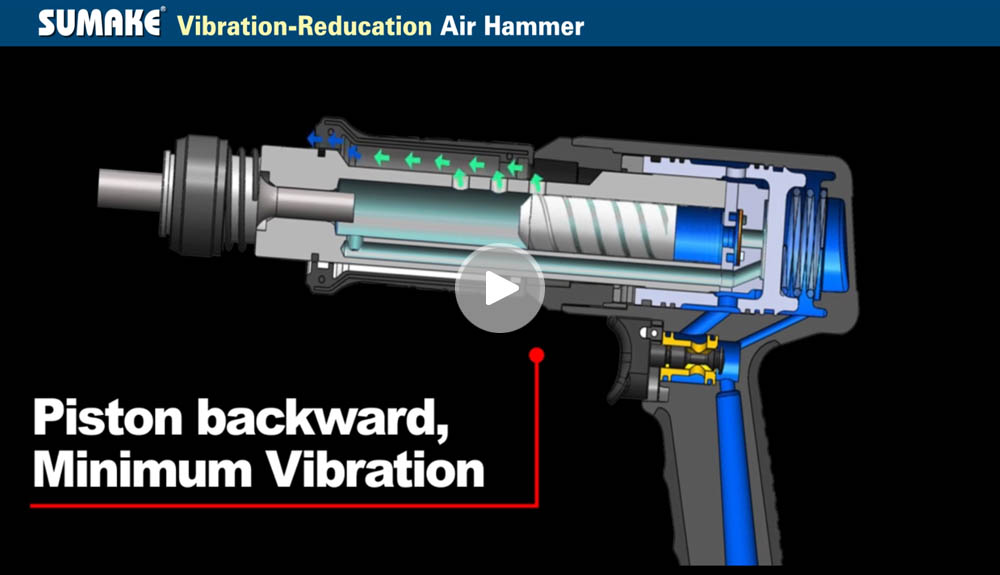
Image Source: www.sumake.com
The Core Components of an Air Hammer
An air hammer, a versatile power tool, is a marvel of mechanical engineering designed to deliver rapid, forceful impacts. Its operation hinges on the controlled release and application of compressed air. At its heart, the device consists of several key components that work in concert to produce its powerful striking action.
The Air Reservoir and Trigger System
Every air hammer begins its journey with a source of power: an air compressor. This compressor generates compressed air, which is then channeled through hoses to the tool. The flow of this compressed air is precisely managed by a trigger mechanism. When the operator pulls the trigger, a valve opens, allowing a measured amount of compressed air to enter the tool’s system. This simple yet effective system dictates the tool’s activation and deactivation.
The Cylinder and Valve Mechanism
Inside the air hammer’s body lies a cylinder. This cylinder is where the magic of the striking action happens. Within this cylinder, a reciprocating piston moves back and forth with great speed. The precise timing and direction of the piston’s movement are controlled by a clever valve system. This valve acts like a gatekeeper for the compressed air, directing it to either push the piston forward or pull it back, ready for the next strike.
The Reciprocating Piston: The Engine of Impact
The reciprocating piston is the central moving part of the air hammer. It’s typically a cylindrical rod that slides within the air hammer’s cylinder. The compressed air is strategically introduced to either side of this piston. When compressed air fills the chamber behind the piston, it forces the piston forward with significant momentum. This forward motion is critical for the striking action.
The Striking Head and Chisel Bit
At the front of the air hammer is the striking head, which holds the chisel bit or other working attachments. As the reciprocating piston is propelled forward, it directly strikes the rear of the chisel bit. This transfer of energy is what allows the chisel bit to break, cut, or chip away at materials. The design of the striking head ensures that the piston’s force is efficiently transferred to the bit, maximizing the tool’s effectiveness. The variety of chisel bit attachments available allows the air hammer to be adapted for a wide range of tasks.
Deciphering the Operational Sequence
The efficient functioning of an air hammer is a testament to a well-orchestrated sequence of events, all driven by compressed air. Let’s break down how the tool operation unfolds, from the initial trigger pull to the final impact.
Step 1: Airflow Initiation
The process begins when the operator squeezes the trigger. This action disengages a valve, allowing compressed air from the air compressor to flow into the tool. This initial rush of air is the catalyst for the entire striking cycle.
Step 2: Piston Acceleration
Once the air enters the cylinder, it applies pressure to the rear of the reciprocating piston. This pressure imbalance forces the piston to accelerate rapidly towards the front of the tool. The speed and force of this acceleration are directly proportional to the air pressure supplied by the compressor and the efficiency of the valve system.
Step 3: Impact with the Chisel Bit
As the piston reaches the end of its forward stroke, it strikes the rear of the chisel bit. This impact delivers a powerful blow to the bit, which is then transmitted to the material being worked on. The sharpness and design of the chisel bit play a crucial role in how effectively this energy is utilized. This is the core of the air hammer’s impact mechanism.
Step 4: Piston Return and Air Cycling
Immediately after the impact, the valve system shifts. This shift redirects compressed air to the front of the piston, or allows the air behind the piston to vent, and simultaneously draws in more compressed air to the rear of the piston. This clever maneuver propels the piston backward, returning it to its starting position. The venting of used air is also critical to prevent back pressure and ensure smooth operation. This continuous cycle of forward and backward motion, driven by precisely controlled air pressure, is what enables the air hammer’s relentless striking action. This creates a vibration tool effect that, while powerful, can require careful handling.
Step 5: Repetitive Striking
The cycle repeats hundreds or even thousands of times per minute. The trigger remains engaged, and the valve system continues to regulate the flow of compressed air, ensuring that the reciprocating piston strikes the chisel bit repeatedly, providing a continuous hammering action. The rate of these impacts is often referred to as the tool’s blow rate.
Key Mechanical Principles at Play
The effectiveness of an air hammer is rooted in several fundamental mechanical principles that govern its tool operation. These principles ensure that the force of the compressed air is converted into rapid, forceful impacts.
Force and Pressure Amplification
While air pressure from the compressor might be relatively moderate, the air hammer’s design amplifies the force applied to the piston. This is achieved through the piston’s surface area and the rapid cycling of air. A larger piston surface area subjected to the same air pressure will experience a greater total force. Furthermore, the speed at which the piston moves and the frequency of its strikes amplify the overall impact force delivered by the chisel bit. This is a crucial aspect of the impact mechanism.
Momentum Transfer
When the reciprocating piston moves forward, it gains momentum. This momentum is then transferred to the chisel bit upon impact. Momentum is the product of mass and velocity. By increasing either the mass of the piston (within practical limits) or its velocity, the momentum transfer to the chisel bit is enhanced, leading to a more powerful strike.
Kinetic Energy
The forward motion of the piston represents kinetic energy, which is the energy of motion. When the piston strikes the chisel bit, this kinetic energy is transferred. This energy is what allows the chisel bit to perform its work, whether it’s breaking stone or driving a rivet. The efficiency of this energy transfer is influenced by the design of the striking head and the secure fitting of the chisel bit.
Bernoulli’s Principle and Airflow Dynamics
While not the primary driver, Bernoulli’s principle can play a subtle role in the efficient operation of the valve system. This principle states that as the speed of a fluid (in this case, air) increases, its pressure decreases. The sophisticated valve mechanisms within an air hammer are designed to create controlled pressure differentials that precisely guide the airflow to the piston, ensuring smooth and efficient cycling. This fine-tuning of airflow is essential for optimal tool operation.
Types of Air Hammers and Their Mechanics
Air hammers are not a monolithic tool; they come in various forms, each tailored for specific applications. The fundamental principles remain the same, but subtle design variations influence their power and intended use.
Light-Duty Air Hammers (Rivet Hammers)
These smaller, lighter air hammers are often used for tasks like removing rivets or light-duty chipping. Their reciprocating piston is smaller, and they operate at higher frequencies but with less force per blow. They typically use smaller chisel bit attachments. The air pressure requirements are usually lower, making them suitable for a wider range of air compressor sizes. Their design prioritizes speed and precision over raw power.
Medium-Duty Air Hammers (Chipping Hammers)
This is perhaps the most common type of air hammer. They are designed for general-purpose demolition, such as removing tiles, mortar, or light concrete. They feature a more robust reciprocating piston and a stronger impact mechanism. The chisel bit can vary in shape and size to suit different materials. These tools often require moderate to high air pressure from the air compressor to achieve their full potential.
Heavy-Duty Air Hammers (Demolition Hammers)
These powerful tools are built for serious demolition work, like breaking up thick concrete slabs or asphalt. They have larger, heavier pistons and cylinders, capable of delivering immense force with each strike. The chisel bit attachments for these are substantial. They demand a high volume of compressed air and significant air pressure from a powerful air compressor. Their operation can be quite loud and generate considerable vibration, making them a demanding vibration tool to handle.
Specialized Air Hammers
Beyond these broad categories, there are specialized air hammers designed for niche applications:
- Air Hammers for Sheet Metal Fabrication: These might have rounded or forming attachments instead of sharp chisels, used for shaping and flanging sheet metal.
- Rock Drills (a type of air hammer): While distinct, they share the fundamental principle of using compressed air to drive a hammering mechanism. They use a rotation mechanism in addition to the hammering action.
The choice of air hammer depends heavily on the nature of the work, the material being processed, and the available air compressor capacity.
Factors Affecting Air Hammer Performance
Several factors can influence how effectively an air hammer performs its tasks. Ensuring these elements are optimized is key to maximizing efficiency and tool longevity.
Air Pressure
The most critical factor is air pressure. An air hammer is rated for a specific operating pressure (e.g., 90 PSI). Operating below this pressure will result in reduced power and slower blow rates. Conversely, operating significantly above the recommended pressure can damage the tool. A consistent and adequate air pressure supply from the air compressor is paramount.
Airflow (CFM)
Beyond pressure, the volume of air the air compressor can deliver (measured in cubic feet per minute or CFM) is also crucial. An air hammer, especially a larger one, can consume a significant amount of air. If the compressor cannot supply enough CFM, the air hammer will not operate at its full potential, leading to weak blows and reduced efficiency.
Hose Diameter and Length
The diameter and length of the air hose connecting the compressor to the tool matter. A hose that is too narrow or too long can restrict airflow, causing a drop in air pressure at the tool. Using hoses with the recommended diameter (often 3/8″ or 1/2″) and keeping them as short as practical ensures optimal air delivery.
Lubrication
Proper lubrication is vital for the longevity and smooth operation of the reciprocating piston and valve mechanisms. Most air hammers require inline lubricators or oil to be added to the air supply. Insufficient lubrication can lead to increased friction, premature wear, and eventual tool failure.
Chisel Bit Condition and Fit
The sharpness and condition of the chisel bit are critical. A dull or damaged bit will not transfer energy effectively, reducing the tool’s cutting or breaking power. Equally important is a snug fit of the bit in the tool holder. A loose bit can lead to reduced impact force and potential damage to the tool’s striking head.
Operator Technique
While the mechanics are automated, operator technique plays a role. Applying the correct angle and pressure to the material can optimize the impact mechanism. Holding the tool firmly and allowing it to do the work, rather than forcing it, often yields better results and reduces strain on both the operator and the tool.
Maintenance and Safety Considerations
Proper maintenance and adherence to safety protocols are essential for the safe and effective use of any power tool, including air hammers.
Regular Maintenance
- Lubrication: As mentioned, ensuring a consistent supply of lubricant is crucial. Check and refill inline lubricators or add oil to the air line as recommended by the manufacturer.
- Cleaning: Keep the air hammer clean, especially the chuck where the chisel bit is inserted. Debris can interfere with bit seating and operation.
- Inspection: Regularly inspect the tool for any signs of damage, loose parts, or worn components. Check hoses for leaks.
- Bit Replacement: Replace dull or damaged chisel bit attachments promptly.
Safety Precautions
- Eye Protection: Always wear safety glasses or a face shield. Flying debris is a significant hazard.
- Hearing Protection: Air hammers are noisy tools. Use earplugs or earmuffs to protect your hearing.
- Hand Protection: Wear sturdy gloves to protect your hands from vibration and potential impacts.
- Dust Mask/Respirator: If working with materials that produce dust (like concrete or masonry), wear a dust mask or respirator.
- Secure Grip: Maintain a firm grip on the tool at all times.
- Work Area: Ensure the work area is clear of obstructions and other people.
- Proper Air Pressure: Never exceed the manufacturer’s recommended air pressure for the tool.
By following these maintenance and safety guidelines, users can ensure they get the most out of their air hammer while minimizing risks.
Frequently Asked Questions (FAQ)
Here are some common questions about air hammers:
Q1: What is the primary power source for an air hammer?
A1: The primary power source for an air hammer is compressed air, supplied by an air compressor.
Q2: Can I use a standard air compressor for an air hammer?
A2: Yes, you can use a standard air compressor, but it must be capable of supplying the required air pressure and CFM (cubic feet per minute) for the specific air hammer model. Check the tool’s specifications.
Q3: How does an air hammer differ from an electric hammer drill?
A3: An air hammer uses compressed air to drive a piston for a hammering action, while an electric hammer drill uses an electric motor to create a rotational and often percussive action. Air hammers generally deliver more force per blow.
Q4: How do I change the chisel bit on an air hammer?
A4: Typically, you’ll need a spring retainer or a quick-change chuck. You might need to slide a collar back or tap the end of the tool on a solid surface (carefully) to release the bit. Always ensure the air pressure is disconnected before changing bits.
Q5: What maintenance is most important for an air hammer?
A5: Regular lubrication of the reciprocating piston and valve mechanism is the most crucial maintenance task to ensure longevity and performance.
Q6: Is an air hammer a type of vibration tool?
A6: Yes, due to the rapid striking action of the reciprocating piston and chisel bit, air hammers are considered a type of vibration tool, and operators should take precautions against vibration-related injuries.
Q7: What does CFM mean in relation to an air compressor for an air hammer?
A7: CFM stands for Cubic Feet per Minute. It represents the volume of air an air compressor can deliver. An air hammer requires a specific CFM output to operate effectively; insufficient CFM will lead to poor performance.
Q8: What is the key component that strikes the chisel bit in an air hammer?
A8: The key component that strikes the chisel bit is the reciprocating piston.
This detailed exploration of how an air hammer works, from its fundamental mechanics to its operational sequence and maintenance needs, should provide a comprehensive grasp of this powerful power tool.