
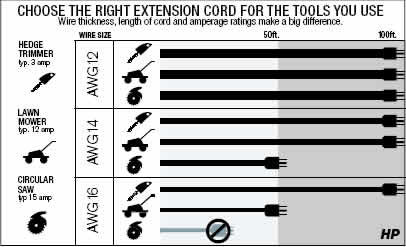
Image Source: copper.org
How Long Of An Extension Cord Can I Use Safely: Max Length & Voltage Drop Guide
You can use an extension cord up to 100 feet (30.5 meters) safely for most common household tasks with the correct gauge, but longer lengths increase the risk of voltage drop and overheating. Choosing the right extension cord length is crucial for both safety and performance.
Fathoming Extension Cord Lengths and Safety
Extension cords are invaluable tools, extending the reach of our electrical devices to where we need them. However, their usefulness comes with a responsibility to use them safely. Using an extension cord that is too long, or one that is the wrong gauge for the task, can lead to a host of problems, from reduced power to fire hazards. This guide will delve into the specifics of cord length limitations, helping you determine the maximum extension cord length you can safely employ and how to avoid common pitfalls.
The Importance of Extension Cord Gauge and Length
The gauge of an extension cord refers to the thickness of the wire inside. This is perhaps the most critical factor when considering extension cord gauge and length. Thicker wires (lower gauge numbers) can carry more electrical current with less resistance.
- Lower Gauge Numbers = Thicker Wire = Higher Capacity
- Higher Gauge Numbers = Thinner Wire = Lower Capacity
When you extend the length of an extension cord, you are essentially adding more wire for the electricity to travel through. This increased length, especially with thinner wires, leads to voltage drop extension cord issues.
Understanding Voltage Drop
Voltage drop is the reduction in electrical potential along the length of a conductor. Think of it like water flowing through a long, narrow hose. The further the water travels, the more pressure is lost due to friction. Similarly, in an extension cord, the electrical current experiences resistance as it travels through the wire.
What causes voltage drop?
- Wire Gauge: Thinner wires (higher gauge numbers) have more resistance.
- Cord Length: Longer cords mean more wire, thus more resistance.
- Amperage (Current): Devices that draw more power (higher amperage) create more resistance and thus a greater voltage drop.
Why is voltage drop a problem?
- Reduced Performance: Devices might not receive enough power to operate at their intended capacity. A motor might run slower, a light might be dimmer, or sensitive electronics could malfunction.
- Overheating: When the voltage drops, the current has to increase to compensate for the power demand. This increased current flowing through a wire that isn’t thick enough for the length can cause the wire to heat up. This is a significant fire hazard.
- Damage to Devices: Consistently under-powering sensitive electronics can lead to premature wear and tear or permanent damage.
Factors Affecting Safe Extension Cord Length
Several key factors dictate the safe extension cord length for any given application:
- Amperage of the Device: The power draw of the appliance or tool you are using is paramount. High-amperage devices, like power tools or heaters, require thicker cords and shorter lengths than low-amperage devices like lamps or phone chargers.
- Wire Gauge: As discussed, the thickness of the wire is crucial. A 16-gauge cord can safely handle less current over a longer distance than a 12-gauge cord.
- Cord Material: While less impactful than gauge and length, the conductivity of the copper wire can play a minor role.
- Environmental Conditions: Extreme temperatures can exacerbate overheating issues.
Maximum Extension Cord Lengths by Gauge and Amperage
To simplify, we can look at general guidelines for extension cord capacity by length. These are approximations, and it’s always best to err on the side of caution.
Common Wire Gauges and Their Capabilities
| Gauge (AWG) | Diameter (mm) | Typical Use | Max Safe Length (Amps) | Max Safe Length (Amps) | Max Safe Length (Amps) |
|---|---|---|---|---|---|
| 10 Amps | 15 Amps | 20 Amps | |||
| 18 AWG | 1.024 | Light duty: Lamps, clocks, small electronics | 25 ft (7.6m) | 50 ft (15.2m) | N/A |
| 16 AWG | 1.291 | Medium duty: Portable power tools, fans, radios | 50 ft (15.2m) | 100 ft (30.5m) | N/A |
| 14 AWG | 1.628 | Heavy duty: Lawnmowers, holiday lights, washers | 100 ft (30.5m) | 150 ft (45.7m) | 200 ft (61m) |
| 12 AWG | 2.053 | Extra-heavy duty: Power tools, construction | 150 ft (45.7m) | 200 ft (61m) | 250 ft (76.2m) |
| 10 AWG | 2.581 | Industrial/Temporary Power: Welders, large saws | 200 ft (61m) | 300 ft (91.4m) | 400 ft (122m) |
Important Notes for the Table:
- AWG (American Wire Gauge): Lower numbers mean thicker wire.
- Amperage (Amps): This is the amount of electrical current the device draws. Check your device’s label or manual.
- Feet (ft) / Meters (m): These are approximate maximum lengths to keep voltage drop within a safe and acceptable 3-5% range for most applications.
- N/A: Indicates that this gauge is generally not recommended for this amperage or length due to significant safety concerns.
Heavy-Duty Extension Cord Length Considerations
When dealing with high-power tools or equipment, the term heavy-duty extension cord length becomes critical. For instance, if you’re running a circular saw or a powerful air compressor, you’ll likely need a 12-gauge or even 10-gauge cord. Using a thinner gauge cord for these applications, even if the length is within the “safe” range for lighter loads, can still lead to dangerous voltage drop and overheating.
Example: A 14-gauge cord might be suitable for 100 feet at 15 amps. However, if you’re powering a tool that draws 15 amps intermittently but has high starting surge, you might want to stick to a shorter length or a 12-gauge cord for added safety.
Calculating Voltage Drop for Your Needs
While the table above provides good general guidelines, a more precise approach can be beneficial, especially for critical or long-distance applications. You can use an extension cord distance calculator or the following formula to estimate voltage drop:
Voltage Drop Formula:
Voltage Drop (Volts) = (2 × K × I × L) / CM
Where:
- K: Resistivity constant for the conductor (approximately 12.9 ohm-circular mil/ft for copper).
- I: Current in Amperes (A) that the cord will carry.
- L: Length of the cord in feet (ft).
- CM: Circular Mil area of the conductor (found in wire gauge charts).
Circular Mil Area (CM) for common gauges:
- 18 AWG: 1620 CM
- 16 AWG: 2580 CM
- 14 AWG: 4110 CM
- 12 AWG: 6530 CM
- 10 AWG: 10380 CM
Example Calculation:
Let’s calculate the voltage drop for a 15-amp device using a 100-foot, 14-gauge extension cord.
- K = 12.9
- I = 15 Amps
- L = 100 feet
- CM = 4110 (for 14 AWG)
Voltage Drop = (2 × 12.9 × 15 × 100) / 4110
Voltage Drop = 38700 / 4110
Voltage Drop ≈ 9.41 Volts
If your system voltage is 120V, this is a voltage drop of approximately 7.8% (9.41V / 120V * 100%). While this might be acceptable for some tools, for sensitive electronics or to ensure maximum efficiency, you might opt for a shorter cord or a thicker gauge.
To keep voltage drop within a commonly accepted 3-5% for optimal performance, especially for sensitive equipment:
- For 120V systems, aim for a drop of 3.6V to 6V.
- For 240V systems, aim for a drop of 7.2V to 14.4V.
Interpreting the Calculator and Formula Results
The goal is to minimize voltage drop. A higher voltage drop means less power is reaching your device, and the cord is working harder (and getting hotter). Always use the calculated amperage of your device, not the rating of the outlet or breaker, as this is what the cord will actually be carrying.
The Long Extension Cord Effects
The long extension cord effects extend beyond just voltage drop.
- Physical Wear and Tear: Longer cords are more prone to damage from being run over, stepped on, or snagged. This damage can expose wires, creating a severe shock or fire hazard.
- Tripping Hazard: Longer cords lying across walkways present a tripping hazard.
- Reduced Conductivity: Even with the correct gauge, extremely long cords can still have noticeable performance degradation.
- Overloading: It’s easy to forget the total amperage being drawn when daisy-chaining extension cords or using one long cord for multiple devices. Always add up the amperage requirements of all devices plugged into an extension cord.
Choosing the Right Extension Cord Length for Your Task
Choosing the right extension cord length involves a simple, logical process:
-
Identify Your Device’s Power Needs:
- Check the device’s label for amperage (A), wattage (W), or voltage (V).
- If only wattage is listed, calculate amperage using: Amps = Watts / Volts. (e.g., 1200W / 120V = 10A).
-
Determine the Required Gauge:
- Based on the device’s amperage and the distance you need the cord to cover, consult a gauge chart (like the one provided earlier).
- Always select a gauge that is thicker (lower AWG number) than the minimum requirement for your length and amperage.
-
Measure the Distance Accurately:
- Measure the distance from the power outlet to where your device will be used.
- Add a few extra feet to avoid tension on the cord and to allow for movement of the device.
-
Select the Cord:
- Purchase a cord that meets or exceeds your calculated requirements for gauge, length, and amperage.
- Prioritize cords with a Ground pin (three-prong) for safety, especially when using tools or appliances outdoors or in damp locations.
- Look for cords rated for outdoor use if necessary. They are typically more durable and weather-resistant.
When to Use a Heavy-Duty Extension Cord
A heavy-duty extension cord length is a must for:
- Power Tools: Saws, drills, sanders, grinders, etc.
- Heaters and Air Conditioners: Appliances that draw significant, continuous power.
- Large Appliances: Portable generators, washing machines, dryers (though direct wiring is always preferred).
- Outdoor Equipment: Lawnmowers, snow blowers, leaf blowers.
- Construction Sites: Where durability and consistent power are essential.
Common Mistakes to Avoid
- Using the Wrong Gauge: The most frequent and dangerous mistake. A thin cord for a power-hungry tool is a recipe for disaster.
- “Daisy-Chaining” Cords: Connecting multiple extension cords together significantly increases resistance and the risk of voltage drop and overheating. It also creates more connection points that can fail.
- Damaging the Cord: Never run cords under carpets, through doorways without protection, or where they can be pinched. Inspect cords regularly for nicks, cuts, or frayed wires.
- Using Indoor Cords Outdoors: Indoor cords are not designed to withstand moisture, UV rays, or temperature fluctuations, leading to rapid deterioration and safety hazards.
- Exceeding the Maximum Length: Even with the right gauge, there are limits. Pushing beyond the recommended maximum length for a given gauge will cause problems.
- Ignoring Amperage: Thinking a cord is “long enough” without considering the amperage draw of the device is a common oversight.
Safety First: Extension Cord Best Practices
- Always use the correct gauge for the job. When in doubt, go one gauge thicker (lower number).
- Never exceed the maximum length specified for the cord’s gauge and amperage rating.
- Inspect cords before each use. Look for damage, fraying, or exposed wires.
- Keep cords away from heat sources, water, and traffic areas.
- Do not use extension cords as permanent wiring. They are intended for temporary use only.
- Ensure the extension cord has a grounding pin (three prongs) if your device has one. This is a critical safety feature.
- Unplug extension cords when not in use.
- If an extension cord feels warm or hot to the touch, unplug it immediately. This indicates it’s being overloaded or is not the correct gauge for the application.
- Consider purchasing the shortest extension cord that meets your needs.
Frequently Asked Questions (FAQ)
Q1: Can I use an 18-gauge extension cord for my lawn mower?
A1: Generally, no. Lawnmowers typically draw more amperage than an 18-gauge cord can safely handle, especially over any significant distance. You would likely need at least a 14-gauge cord, preferably 12-gauge, for most electric lawn mowers.
Q2: What is the maximum length for a 12-gauge extension cord?
A2: For a 12-gauge cord, the maximum safe length depends on the amperage. For 15 amps, you can safely go up to about 200 feet. For 20 amps, around 100-150 feet might be more appropriate to minimize voltage drop. Always check the manufacturer’s specifications if available.
Q3: Will a longer extension cord damage my appliance?
A3: Yes, a cord that is too long or too thin can cause voltage drop, which means your appliance receives less power. This can lead to reduced performance and, over time, potential damage to sensitive electronics or motors. It also increases the risk of overheating.
Q4: How do I know what gauge extension cord to buy?
A4: Check the amperage (A) or wattage (W) rating of the appliance you plan to use. Then, consult an extension cord gauge chart that matches the amperage and the distance you need. Always choose a thicker gauge (lower AWG number) than the minimum recommended.
Q5: Is it safe to plug multiple devices into one extension cord?
A5: Yes, but only if the total amperage draw of all the devices does not exceed the extension cord’s rated capacity. You must add up the amperage of each device. For example, if you have two devices that draw 5 amps each, the total draw is 10 amps. Ensure your extension cord is rated for at least 10 amps, and consider the length’s impact on its capacity.
Q6: What does “UL Listed” mean for an extension cord?
A6: “UL Listed” means the product has been tested by Underwriters Laboratories (UL) and meets established safety standards for its intended use. It’s a good indicator of a product’s quality and safety, though it doesn’t guarantee performance.
By carefully considering the gauge, length, and amperage requirements of your tools and appliances, you can make informed decisions about extension cord usage, ensuring both safety and efficiency in your electrical tasks.