
Can you plug multiple power strips into a single outlet? The simple answer is no, you should not plug multiple power strips into a single outlet. This practice, known as daisy-chaining power strips, is a major electrical safety hazard and can lead to overloading outlets, damage to your electronics, and even fires. While it might seem like a convenient way to get more power connections, it’s a dangerous shortcut that circumvents fundamental electrical safety principles.
This article will delve into why this is the case, exploring outlet capacity, surge protector limits, circuit breaker tripping, appliance power draw, and what the rules are for safe electricity use in your home. We’ll also touch on extension cord regulations and the limits of residential wiring to help you make informed decisions about your power needs.
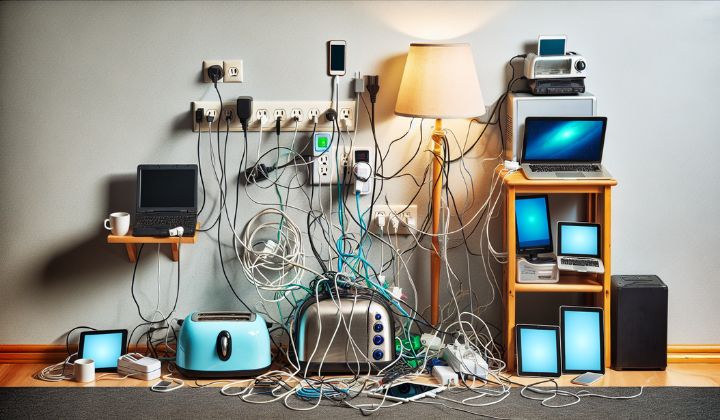
Image Source: clocktowerelectric.com
The Fundamental Limits of Your Home’s Electrical System
Every outlet in your home is connected to a specific electrical circuit. This circuit is designed to handle a certain amount of electrical current, measured in amperes (amps). When you plug devices into an outlet or power strip, you are drawing power from that circuit. Exceeding the circuit’s capacity is where the danger lies.
Outlet Capacity: More Than Just a Hole in the Wall
An electrical outlet itself has a limit, but it’s often the circuit it’s connected to that’s the primary concern. Outlet capacity is typically rated for 15 or 20 amps, corresponding to the circuit breaker or fuse protecting that circuit. This means the wiring and the breaker are designed to safely deliver a maximum amount of electricity.
Maximum Wattage Per Outlet: The Real Limit
While amps are the measure of current, it’s often easier to think about power in watts. The relationship is straightforward: Watts = Volts × Amps. In most homes, the standard voltage is 120 volts.
- 15-amp circuit: Maximum wattage ≈ 120 volts × 15 amps = 1800 watts
- 20-amp circuit: Maximum wattage ≈ 120 volts × 20 amps = 2400 watts
This maximum wattage per outlet is the total power that can be safely drawn from that outlet before the circuit breaker trips or, in older homes, a fuse blows.
Why Daisy-Chaining Power Strips is a Bad Idea
Daisy-chaining power strips is the act of plugging one power strip into another power strip, which is then plugged into the wall outlet. This creates a cascade of connections, exponentially increasing the risk of overloading.
The Cascade of Demand
When you plug devices into a power strip, you’re not just plugging them into the strip itself; you’re plugging them into the circuit that the outlet is connected to. Each power strip, especially those that are also surge protector limits (which offer additional protection but don’t increase the circuit’s capacity), has its own internal wiring and components that can only handle a certain amount of current before overheating.
Imagine each power strip as a small gateway. If you have one gateway, it can handle a certain flow. If you then connect a second gateway to the first, and then a third to the second, the demand for flow passes through each gateway. The earliest gateway in the chain, closest to the outlet, is carrying the total load of all the devices plugged into all subsequent strips.
Appliance Power Draw: The Hidden Culprit
Different appliances and electronics have varying appliance power draw. A simple lamp might draw only a few watts, while a microwave or a space heater can draw over 1000 watts.
Consider this scenario:
- Outlet 1 (on a 15-amp circuit, max 1800 watts):
- Plug in Power Strip A.
- Plug into Power Strip A:
- Laptop (100 watts)
- Monitor (50 watts)
- Desk lamp (50 watts)
- Phone charger (10 watts)
- Total on Strip A: 210 watts
This is perfectly fine. However, if you were to plug Power Strip B into Power Strip A, and then plug more devices into Power Strip B, the total demand on the original outlet and circuit increases.
- Plug Power Strip B into Power Strip A.
- Plug into Power Strip B:
- Small space heater (1500 watts)
- Hair dryer (1800 watts)
Now, the total demand on Power Strip A is 210 watts (from Strip A) + 1500 watts (from Strip B’s heater) + 1800 watts (from Strip B’s hair dryer) = 3510 watts.
This 3510 watts is significantly higher than the 1800-watt limit of the 15-amp circuit. This is a recipe for disaster.
The Dangers of Overloading Outlets
Overloading outlets is the direct consequence of drawing more power than the circuit is designed to handle. This can lead to several dangerous outcomes.
Circuit Breaker Tripping: The Safety Mechanism
Your circuit breaker is a crucial safety device designed to protect your wiring and prevent fires. When the current flowing through the circuit exceeds its safe limit, the breaker “trips,” interrupting the flow of electricity. This is a good thing! It means your safety system is working as intended.
However, if you consistently overload a circuit without the breaker tripping immediately (perhaps because the load is just slightly over the limit, or the breaker is faulty), the wiring can overheat. This is where the real danger of fire begins.
Overheating and Fire Hazards
The wires in your walls have a specific gauge (thickness) that determines how much current they can carry safely. When too much current flows, the wires generate excessive heat due to electrical resistance. This heat can melt the insulation around the wires, leading to:
- Short circuits: Where electricity finds an unintended path, often creating sparks.
- Arcing: A powerful electrical discharge that can ignite surrounding materials like dust, wood, or insulation.
- Fire: Overheated wires and components can ignite nearby flammable materials, starting a fire within the walls.
The plastic housing of power strips and extension cords can also melt and catch fire if subjected to excessive heat from overloading.
Surge Protectors vs. Power Strips: Clarifying the Roles
It’s important to distinguish between basic power strips and surge protectors.
Basic Power Strips
These are essentially multi-outlet adapters. They provide more outlets but offer no protection against power surges or overloads. They simply extend the reach of a single outlet.
Surge Protectors
These devices contain components (like Metal Oxide Varistors or MOVs) that can absorb excess voltage during a power surge. They protect your sensitive electronics from damage caused by sudden voltage spikes. However, surge protectors are not a license to overload circuits. They have their own surge protector limits, meaning they can only absorb a certain amount of energy before they fail. Once they fail, they often stop providing surge protection without a visible indication.
Plugging multiple power strips (even surge-protected ones) into each other does not increase the outlet capacity or the maximum wattage per outlet. It only compounds the risk of overloading the original circuit.
Extension Cord Regulations and Best Practices
Extension cord regulations exist to ensure safety. While not directly about power strips, they highlight the principles of safe electrical connections.
Extension Cord Safety
- Use the right gauge: Thicker gauge extension cords can handle more current safely. Using an undersized cord for a high-power appliance is dangerous.
- Don’t use them as permanent wiring: Extension cords are meant for temporary use.
- Inspect regularly: Check for frayed wires, damaged insulation, or bent prongs.
- Don’t run them under rugs or furniture: This can cause damage and create a fire hazard.
- Never use them to daisy-chain: Just like power strips, plugging one extension cord into another is a major hazard.
Power Strip Safety
- Look for Underwriters Laboratories (UL) certification: This indicates the product has been tested for safety.
- Choose a heavy-duty strip for high-draw appliances: Ensure the strip is rated for the combined wattage of the devices you plan to plug into it.
- Don’t exceed the strip’s rating: Most power strips have a maximum wattage rating.
- Plug them directly into the wall outlet: Avoid plugging them into other power strips or extension cords.
Fathoming Residential Wiring Limits
Residential wiring is designed with specific safety margins, but these are not infinite. Electricians install circuits based on expected loads in different areas of the home.
Circuit Load Balancing
A typical home might have several circuits, each serving different rooms or groups of outlets and lights. The electrical panel (breaker box) is the central point where these circuits originate.
- Kitchens and bathrooms often have 20-amp circuits dedicated to outlets because they are likely to be used for higher-power appliances (toasters, blenders, hair dryers).
- Living rooms and bedrooms might have 15-amp circuits for general use (lamps, electronics).
What If You Need More Outlets?
If you find yourself consistently needing more outlets than your circuits provide, the safe and correct solution is to have a qualified electrician install additional circuits or outlets. Trying to force more power through existing circuits by daisy-chaining is a dangerous workaround.
Interpreting Appliance Labels and Power Needs
To avoid overloading outlets, it’s essential to know the appliance power draw of the devices you are using.
Reading Appliance Labels
Look for labels on the appliance itself or its power adapter. You’ll typically find information like:
- Voltage (V)
- Amperage (A)
- Wattage (W)
If only Volts and Amps are listed, you can calculate the Watts: Watts = Volts × Amps.
Calculating Total Load
When deciding what to plug into a power strip or outlet, sum the wattage of all intended devices.
Example Calculation:
Let’s say you have a 15-amp circuit (maximum 1800 watts).
- Device 1: Desktop Computer (200 watts)
- Device 2: Monitor (50 watts)
- Device 3: Printer (100 watts)
- Device 4: Wi-Fi Router (20 watts)
- Device 5: Desk Lamp (60 watts)
Total Wattage: 200 + 50 + 100 + 20 + 60 = 430 watts
This is well within the 1800-watt limit. However, if you were to add a space heater (1500 watts) to this same circuit, the total would be 430 + 1500 = 1930 watts, exceeding the limit and likely tripping the breaker.
Can I Plug Multiple Power Strips into a Single Power Strip?
Reiterating the core issue: No, you cannot safely plug multiple power strips into a single power strip. This is the definition of daisy-chaining and is a direct violation of electrical safety guidelines. Each connection point adds potential for resistance, heat build-up, and ultimately, failure.
What Happens If You Overload an Outlet?
When an outlet is overloaded:
- Circuit Breaker Trips: The most common and safest outcome. Power is cut off to prevent damage.
- Fuse Blows: In older homes with fuse boxes, the fuse will melt and break the circuit.
- Wiring Overheats: If the breaker doesn’t trip or is bypassed, the wires in the walls heat up, potentially melting insulation.
- Outlet/Power Strip Overheats: The socket or power strip itself can get hot, melt, and pose a fire risk.
- Device Damage: Appliances can be damaged by fluctuations in power or sudden shut-offs.
- Fire: The worst-case scenario, caused by severely overheated wiring or components igniting nearby materials.
The Safe Approach to Power Management
- Direct Connection: Always plug power strips directly into a wall outlet.
- One Level Only: Never plug a power strip into another power strip.
- Know Your Load: Calculate the total wattage of the devices you intend to plug into a single outlet or power strip.
- Distribute the Load: If you have many devices, distribute them across different circuits in your home.
- Use High-Quality Products: Purchase power strips and surge protectors from reputable brands and ensure they are UL certified.
- Consider Dedicated Circuits: For high-power appliances (space heaters, microwaves, hair dryers), it’s often best to plug them directly into the wall outlet without any intermediate devices. If you need multiple outlets for such devices in one area, consult an electrician about installing a dedicated circuit.
- Inspect Regularly: Periodically check your power strips, cords, and outlets for any signs of damage, discoloration, or heat.
Frequently Asked Questions (FAQ)
Q1: Can I plug a surge protector into a power strip?
A1: No, you should not plug a surge protector into a power strip. This is still a form of daisy-chaining and poses the same risks. Both should be plugged directly into the wall outlet.
Q2: How many devices can I plug into one power strip?
A2: It’s not about the number of devices, but their combined power draw. Sum the wattage of all devices you plan to plug in and ensure the total does not exceed the power strip’s rating or the maximum wattage per outlet for the circuit it’s plugged into.
Q3: My power strip has surge protection, so can I plug multiple into it?
A3: No. Surge protection features do not increase the outlet capacity or the ability of the circuit to handle more power. The surge protector limits are independent of the circuit’s capacity.
Q4: Is it safe to plug a space heater into a power strip?
A4: It can be, but only if the power strip is rated for the heater’s wattage and is plugged directly into a wall outlet on a circuit that is not already heavily loaded. Many space heaters draw significant power (1500 watts or more), so they can quickly overload a circuit, especially if other devices are already in use. It’s often safer to plug them directly into the wall.
Q5: What’s the difference between a power strip and an extension cord?
A5: A power strip typically offers multiple outlets and may include surge protection. An extension cord is usually a single cord with a plug on one end and a socket on the other, used to extend the reach of an existing outlet. Both have limits, and neither should be daisy-chained.
Q6: My circuit breaker keeps tripping. What should I do?
A6: If your circuit breaker is repeatedly tripping, it indicates that the circuit is being overloaded or there might be a fault with the breaker itself. Stop plugging more devices into that circuit. Try unplugging some devices to see if the tripping stops. If it continues, or if you suspect a fault, contact a qualified electrician.
By adhering to these safety guidelines and understanding the limits of your electrical system, you can protect your home, your electronics, and most importantly, yourself and your loved ones from the dangers of electrical hazards. Always prioritize safety over convenience.