
A 15 amp circuit breaker can handle a maximum of 1800 watts of continuous power.
Electricity powers our homes, running everything from the lights in our living rooms to the appliances in our kitchens. But how much power can each electrical pathway safely handle? This is where circuit breakers come in, acting as crucial safety devices. Specifically, many homes rely on 15 amp circuit breakers for various circuits. But how many watts on a 15 amp circuit breaker can you safely plug in? Fathoming this is key to preventing electrical hazards and ensuring your home’s wiring is protected.
The fundamental relationship between voltage, current, and power is governed by a simple formula: Power (Watts) = Voltage (Volts) × Current (Amps). This is the core of any circuit breaker wattage calculation. In most of North America, standard household voltage is 120 volts. So, for a 15 amp circuit, the theoretical maximum wattage is 15 amps multiplied by 120 volts, which equals 1800 watts. However, electrical safety standards recommend not exceeding 80% of a circuit breaker’s capacity for continuous loads. This means for a 15 amp breaker, the safe continuous load is 15 amps × 120 volts × 0.80 = 1440 watts.
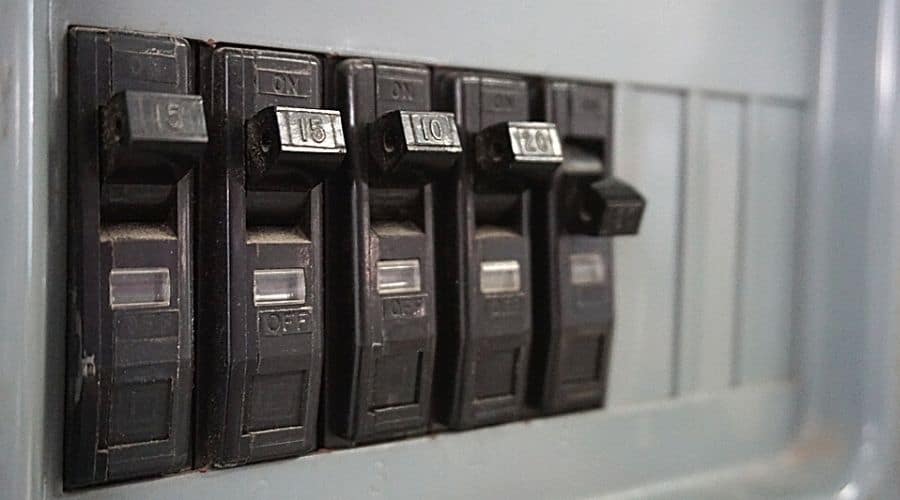
Image Source: us-electric.com
Deciphering the 15 Amp Circuit Breaker Load Capacity
A 15 amp breaker load capacity is more than just a number; it’s a limit designed to protect your household wiring capacity. Think of it as a safety valve. When too much electrical current flows through a wire, it can overheat. This overheating can melt the wire’s insulation, leading to short circuits, sparks, and potentially fires. The circuit breaker’s job is to detect this excessive current (overload) and “trip,” shutting off the flow of electricity before damage occurs.
The Importance of the 80% Rule
The safe electrical load concept is vital. Electrical codes, like the National Electrical Code (NEC) in the United States, mandate that circuits are not continuously loaded to more than 80% of their amperage rating. This is for a good reason. Many appliances and devices don’t draw a constant amount of power. They often have surge loads when they first start up. Even a consistent draw can generate heat over time. The 80% rule provides a buffer, ensuring that the circuit breaker and wiring operate well within their safe limits, even with minor fluctuations in power draw or brief surges.
Therefore, while a 15 amp breaker might theoretically support 1800 watts, the practical and safe continuous limit is 1440 watts. This is a critical piece of information for electrical load calculation.
Calculating Wattage: The Formula and Application
Let’s break down how to perform a watts per amp calculation and apply it to your household needs.
The Fundamental Formula: Watts = Volts x Amps
This formula is the bedrock of electrical power calculations.
- Watts (W): This is the unit of electrical power. It tells you how much energy a device uses per second. For example, a light bulb might be rated at 60 watts, meaning it consumes 60 joules of energy every second.
- Volts (V): This is the unit of electrical potential difference, or “pressure.” It’s what pushes the electricity through the wires. Standard household voltage in many countries is 110-120 volts.
- Amps (A): This is the unit of electrical current. It measures the rate of flow of electrical charge.
Example: If a device draws 5 amps on a 120-volt circuit, its power consumption is:
5 Amps × 120 Volts = 600 Watts
Determining Appliance Wattage
When trying to figure out how many watts on a 15 amp circuit breaker you can use, the first step is determining appliance wattage. Most electrical appliances have a label somewhere on them that lists their power consumption. This label might show:
- Watts (W): Directly states the power consumption.
- Amps (A) and Volts (V): If only amps and volts are listed, you can use the formula above to calculate watts.
- Horsepower (HP) for motors: For devices with motors (like blenders or power tools), you might see horsepower. To convert horsepower to watts, multiply by 746 (since 1 HP ≈ 746 W).
Practical Application: Loading a 15 Amp Circuit
Let’s say you want to run several appliances from a single 15 amp circuit. You need to sum their wattage and compare it to the safe limit.
Scenario: You have a 15 amp circuit in your kitchen.
- Appliance 1: Microwave: Rated at 1200 watts.
- Appliance 2: Coffee Maker: Rated at 800 watts.
- Appliance 3: Toaster: Rated at 1000 watts.
Calculation:
Total wattage = 1200W (Microwave) + 800W (Coffee Maker) + 1000W (Toaster) = 3000 Watts
Analysis:
The total wattage (3000W) significantly exceeds the safe continuous load capacity of a 15 amp circuit (1440 watts). If you tried to run all these appliances simultaneously on this circuit, you would likely trip the breaker. Even running two of the higher-wattage appliances might be pushing it.
Revised Scenario (Aiming for Safe Load):
- Appliance 1: Microwave: 1200 watts (Note: Microwaves often have a higher starting surge and can draw close to their rated wattage continuously while in use).
- Appliance 2: Blender: 500 watts.
- Appliance 3: Laptop Charger: 50 watts.
Calculation:
Total wattage = 1200W (Microwave) + 500W (Blender) + 50W (Laptop Charger) = 1750 Watts
Analysis:
This total (1750W) is still over the 1440-watt continuous load limit. You could probably run the microwave and the laptop charger together. If you wanted to add the blender, it would be advisable to move one of the higher-draw appliances to another circuit.
Maximum Wattage for a 15 Amp Circuit: The Continuous Load Consideration
It’s crucial to reiterate the concept of the maximum wattage for 15 amp circuit and why the 80% rule for continuous loads is paramount.
Continuous vs. Non-Continuous Loads
- Continuous Load: A load that is expected to operate for three hours or more at a time. Examples include lighting in a commercial space, refrigerators, or anything that runs for extended periods.
- Non-Continuous Load: A load that operates for less than three hours at a time. Examples include portable fans, power tools used for short bursts, or a toaster used for a few minutes.
For non-continuous loads, you can technically load a 15 amp circuit up to its full theoretical capacity (1800 watts), as long as you don’t exceed it for prolonged periods. However, it’s generally a good practice to still leave some headroom.
Why the 80% Rule Matters for Continuous Loads
When you have a continuous load, the wires and the breaker itself generate heat over time. The 80% rule accounts for this sustained heat buildup. If a circuit is constantly near its maximum capacity, it’s more likely to overheat, reducing its lifespan and increasing the risk of a fire.
Let’s look at the numbers again:
- Circuit Breaker Rating: 15 Amps
- Household Voltage: 120 Volts
- Theoretical Maximum Wattage: 15 Amps × 120 Volts = 1800 Watts
- Safe Continuous Load (80% Rule): 1800 Watts × 0.80 = 1440 Watts
This means that for appliances you expect to run for three hours or more, you should aim to keep the total wattage on the circuit below 1440 watts.
Understanding Household Wiring Capacity and Circuit Breakers
Your home’s electrical system is a complex network designed to deliver power safely. The household wiring capacity is determined by the thickness of the wires used and the rating of the circuit breakers protecting them.
Wire Gauge and Amperage Rating
Electrical wires are manufactured in different gauges, indicated by a number (e.g., AWG – American Wire Gauge). A lower AWG number means a thicker wire. Thicker wires can carry more current (amperage) without overheating.
- 14 AWG wire: Typically used for 15 amp circuits. It can safely handle up to 15 amps.
- 12 AWG wire: Typically used for 20 amp circuits. It can safely handle up to 20 amps.
- 10 AWG wire: Typically used for 30 amp circuits. It can safely handle up to 30 amps.
It’s critical that the wire gauge used for a circuit matches or exceeds the amperage rating of the circuit breaker. Putting a 20 amp breaker on a circuit with 14 AWG wire is extremely dangerous because the wire could overheat and cause a fire before the breaker trips.
How Circuit Breakers Protect Your Home
Circuit breakers are essentially automatic switches. They are designed to interrupt the flow of electricity when the current exceeds a safe level.
- Thermal Trip: Many breakers use a bimetallic strip. When current flows, it generates heat. If the current is too high for too long, the bimetallic strip heats up and bends, tripping the breaker mechanism. This is how they handle sustained overloads.
- Magnetic Trip: For sudden, very high surges of current (like those caused by a short circuit), a magnetic coil in the breaker can instantly trigger the trip mechanism.
The circuit breaker amperage limit is the maximum current it’s designed to allow before tripping. For a 15 amp breaker, this limit is 15 amps.
Common Appliances and Their Power Consumption
To effectively manage your electrical loads, it’s helpful to know the appliance power consumption of common household items.
| Appliance | Typical Wattage Range | Notes |
|---|---|---|
| LED Light Bulb | 5-15 W | Very efficient |
| Incandescent Bulb | 40-100 W | Inefficient, generates heat |
| Laptop | 50-100 W | Varies with usage |
| Desktop Computer | 100-300 W | Includes monitor |
| Television (LED/LCD) | 50-200 W | Larger screens use more power |
| Refrigerator | 100-200 W (running) | Higher wattage on startup |
| Microwave Oven | 800-1500 W | High wattage, often short duration |
| Toaster | 800-1500 W | High wattage, short duration |
| Coffee Maker | 700-1200 W | |
| Blender | 300-1000 W | Higher wattage for more powerful motors |
| Vacuum Cleaner | 700-1500 W | |
| Hair Dryer | 1200-1875 W | High wattage, used for short periods |
| Space Heater | 1000-1500 W | Significant load, often requires dedicated circuit |
| Washing Machine | 300-800 W | Higher wattage during heating cycle (if applicable) |
| Clothes Dryer (Elec.) | 4000-5000 W | Requires a dedicated 240V, 30 Amp circuit |
| Electric Range/Oven | 1500-4000 W | Typically requires a dedicated 240V circuit |
Important Note: Always check the appliance’s label for the most accurate wattage information.
What Happens When You Overload a Circuit?
Overloading a 15 amp circuit means attempting to draw more than 15 amps (or more than 1440 watts continuously).
- Breaker Trips: The most common and desirable outcome is that the circuit breaker senses the overload and “trips,” interrupting the flow of electricity. You’ll see the switch on the breaker panel move to the “off” or a middle position. You can then reset it by pushing it fully to “off” and then back to “on.”
- Overheating Wires: If the breaker is faulty or undersized (which is dangerous and against code), the wires can overheat before the breaker trips. This can melt the insulation.
- Fire Hazard: Melted insulation can expose live wires, leading to short circuits, arcing (sparks), and potentially igniting nearby combustible materials, causing a fire.
- Damage to Appliances: Power surges or brownouts caused by overloaded circuits can also damage sensitive electronic equipment.
Strategies for Managing Loads on a 15 Amp Circuit
To avoid tripping breakers and ensure safety, practice good electrical load management.
Distribute Your Appliances
- Avoid running high-wattage appliances simultaneously on the same 15 amp circuit.
- If you have a kitchen with multiple outlets on a single 15 amp circuit, try to spread out your heavy-duty appliances. For instance, run the microwave on one circuit and the toaster on another (if available).
- Identify which outlets are on which circuits. Many homes have a 20 amp circuit for the kitchen or bathrooms, which can handle more load. Look at your electrical panel to see the breaker assignments.
Be Mindful of “Phantom Loads”
Some devices consume a small amount of power even when turned off or in standby mode. While usually negligible on a per-device basis, collectively, they can contribute to a circuit’s load. Unplugging devices or using power strips with on/off switches can help.
When to Consider Upgrading or Adding Circuits
If you consistently find yourself needing to run multiple high-wattage appliances and are frequently tripping breakers, it might be time to consider electrical upgrades.
- Adding a new circuit: For dedicated high-power appliances like space heaters, microwaves, or powerful kitchen gadgets, running a new circuit from your main electrical panel is often the best solution. This ensures the appliance has a dedicated pathway with appropriate household wiring capacity.
- Upgrading to a 20 Amp Circuit: If a particular area of your home has many outlets and you frequently use devices that push the limits of a 15 amp circuit, a qualified electrician might be able to upgrade the circuit to 20 amps. This requires ensuring that the wiring (usually 12 AWG) is appropriate for a 20 amp breaker.
Frequently Asked Questions (FAQ)
Q1: Can I plug a 1500-watt space heater into a 15 amp circuit?
A: Yes, you can, but it’s pushing the limit, especially for continuous use. Since 1500 watts is more than the recommended 1440-watt continuous load, it’s best to run it only for short periods or on a circuit that is otherwise not heavily loaded. Ideally, a space heater would be on its own circuit.
Q2: How do I find out if my outlets are on a 15 amp circuit?
A: Check your electrical panel. The circuit breakers will be labeled, indicating which circuits they control (e.g., “Kitchen Outlets,” “Living Room Lights”). The breaker itself will show its amperage rating (e.g., “15” or “20”). If the wiring gauge used is 14 AWG, it’s almost certainly a 15 amp circuit.
Q3: What happens if I plug in a 2000-watt appliance on a 15 amp circuit?
A: The circuit breaker will almost certainly trip immediately. The appliance is drawing too much current for the circuit’s capacity.
Q4: Is it safe to use a power strip on a 15 amp circuit?
A: Yes, but the total wattage of all devices plugged into the power strip (and any other devices on the same circuit) cannot exceed the circuit’s safe limit (1440 watts for continuous loads). Power strips themselves also have a maximum wattage rating, usually printed on them. Never exceed that rating.
Q5: Can I replace a 15 amp breaker with a 20 amp breaker to get more power?
A: Absolutely not, unless the wiring is also upgraded to handle 20 amps. This is a dangerous practice. If you install a 20 amp breaker on wiring designed for 15 amps (like 14 AWG), the wires could overheat and cause a fire before the breaker trips. Always match the breaker to the wire gauge and the circuit’s intended load. Consult a qualified electrician for any breaker changes.
By accurately calculating wattage and respecting the limits of your 15 amp breaker load capacity, you can ensure your home’s electrical system operates safely and efficiently. Always prioritize safety and consult a professional electrician if you have any doubts about your home’s wiring.