
The hammer throw weight for men is 7.26 kilograms (16 pounds), and for women, it is 4 kilograms (8.82 pounds). These weights are standardized for official competitions.
The hammer throw is a captivating track and field discipline, a test of raw power, technique, and relentless spin. Athletes harness centrifugal force by whirling a weighted ball attached to a wire and handle around their bodies before releasing it for maximum hammer throw distance. But what exactly is this weighted projectile? Fathoming the specifics of the hammer throw weight is key to appreciating the nuances of this powerful event.
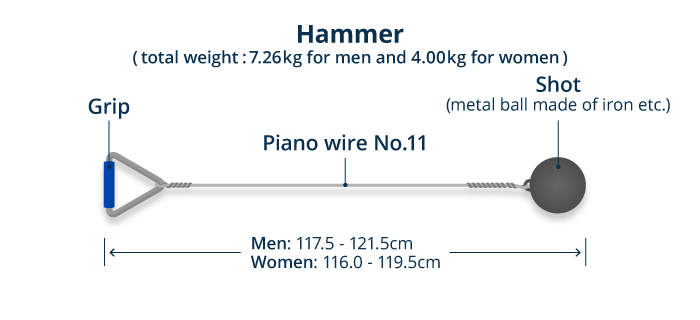
Image Source: www.tdk.com
Deciphering Hammer Throw Rules and Equipment
At its core, the hammer throw involves launching a metal ball attached to a steel wire with a handle. The complexity lies in the precise regulations governing the equipment and the execution of the throw. These rules ensure fairness and safety in hammer throw competition.
Hammer Weight Specifications: A Global Standard
The International Association of Athletics Federations (IAAF), now known as World Athletics, sets the definitive hammer weight specifications. These guidelines are meticulously followed in all major athletic events, from local meets to the Olympic Games.
Men’s Hammer Throw Weight
For male athletes, the men’s hammer throw weight is precisely 7.26 kilograms (16 pounds). This weight has been consistent for many years, representing a significant challenge for athletes to propel effectively. The wire and handle also have specific length requirements, typically ranging from 117.5 to 122.5 centimeters. The total weight of the implement (ball, wire, and handle) is also regulated.
Women’s Hammer Throw Weight
Similarly, the women’s hammer throw weight is set at 4 kilograms (8.82 pounds). This allows female athletes to execute the powerful rotational technique with a slightly lighter, yet still substantial, implement. The wire and handle length for women’s hammers are also within a specified range, usually between 116 and 119.5 centimeters.
Official Hammer Weight: Ensuring Fair Play
The official hammer weight is crucial for maintaining a level playing field. Variations in weight would significantly alter the physics of the throw, giving an unfair advantage to athletes using heavier or lighter implements. The manufacturing of these implements is also subject to strict quality control to ensure they meet the required specifications and are safe for use.
- Ball: Made of solid metal, usually brass or a similar alloy, with a smooth surface.
- Wire: A flexible steel wire that connects the ball to the handle.
- Handle: A grip designed for the athlete to hold securely.
The entire implement, including the ball, wire, and handle, must conform to the specified dimensions and weights. This ensures that every athlete is competing with the same basic tool.
The Hammer Throw Implement: More Than Just Weight
While the hammer throw weight is a primary specification, the hammer throw equipment encompasses more than just the mass of the ball. The design and construction of the entire implement play a vital role in its aerodynamics and how an athlete can manipulate it.
The Ball: The Core of the Implement
The ball itself is the most significant component determining the hammer throw weight. Its size and density are calibrated to meet the official standards. The surface is smooth to reduce air resistance, although the primary forces acting upon it are inertia and the pull of the wire.
The Wire: Flexibility and Strength
The steel wire is engineered to be both incredibly strong and sufficiently flexible. It must withstand immense forces during the spin and release without breaking. Its length is also critical, as it influences the radius of the spin, which directly impacts the centrifugal force generated. A longer wire can allow for a larger radius, potentially leading to a higher velocity at release, but it also requires greater control.
The Handle: The Athlete’s Connection
The handle, or grip, is the athlete’s sole point of contact with the hammer throw equipment. It is typically a triangular metal loop designed for a secure and comfortable grip. The way an athlete holds and manipulates the handle is a key aspect of their hammer throw training.
Historical Evolution of the Hammer Throw Weight
The hammer throw weight has evolved over time. Early forms of hammer throwing involved heavier, cruder implements. As the sport formalized and scientific principles were applied, the weights and designs became standardized.
Early Days and Variations
In the early days of athletics, hammer throwing was a less defined event. Implements varied greatly in weight and form. It was more akin to throwing a blacksmith’s hammer or a cannonball attached to a handle. The emphasis was on brute strength rather than refined technique.
Standardization and Modernization
The 19th century saw the gradual standardization of hammer throw rules and equipment. The adoption of specific weights for men and women was a significant step in creating a truly competitive and comparable sport. The introduction of steel wire improved the implement’s safety and performance.
Impact of Hammer Throw Weight on Performance
The hammer throw weight is not arbitrary; it is carefully chosen to balance strength, speed, and technique. Athletes must generate enough velocity and leverage to overcome the mass of the hammer and achieve impressive hammer throw distance.
The Physics of the Throw
The throw is governed by principles of circular motion and projectile motion. The athlete acts as the centripetal force, keeping the hammer moving in a circle. As the athlete spins, the hammer gains velocity. The force required to maintain this circular motion is directly proportional to the mass of the hammer and the square of its angular velocity.
- Mass (m): The hammer throw weight itself.
- Velocity (v): The speed at which the hammer is traveling.
- Radius (r): The length of the wire.
The kinetic energy of the hammer at release contributes significantly to its flight distance. Athletes aim to maximize this kinetic energy by increasing the velocity and, to some extent, managing the effects of the hammer’s mass.
The Role of Technique in Hammer Throw Training
Hammer throw training is intense and multifaceted. Athletes spend years perfecting their technique, which involves:
- The Wind-up: A preliminary swing of the hammer to build momentum.
- The Turns: Typically three or four full rotations, increasing the hammer’s speed.
- The Release: The precise moment the hammer is launched at an optimal angle.
The hammer throw weight influences every aspect of this technique. A heavier hammer requires more power to accelerate, while a lighter hammer might allow for faster turns but could be more susceptible to wind effects.
Balancing Weight and Speed
The challenge for athletes and coaches is to find the optimal balance between spinning the hammer throw weight as fast as possible and maintaining control. Excessive speed can lead to loss of balance or an uncontrolled release, reducing the hammer throw distance. Conversely, a lack of speed will not generate sufficient momentum.
Variations in Hammer Throw Competition
While the official hammer weight is standardized, different levels of competition or training might sometimes see variations, though these are strictly non-standard. For instance, during hammer throw training, athletes might use lighter or heavier training hammers to build specific aspects of strength or technique.
Training Hammers
Specialized training hammers are available that can adjust their weight. These allow athletes to:
- Build strength: Using heavier hammers than the competition standard.
- Improve speed and technique: Using lighter hammers to focus on rapid turns and a clean release.
- Simulate competition conditions: Using hammers that match the official weight.
These training implements are crucial for a comprehensive hammer throw training program.
Junior and Youth Competitions
In some junior and youth competitions, slightly lighter hammer weights might be used to accommodate the developing strength of younger athletes. However, these weights are still standardized within their respective age categories to ensure fairness. For example, international junior competitions often have specific weight categories that differ from senior events.
Achieving Maximum Hammer Throw Distance
The ultimate goal in any hammer throw competition is to achieve the greatest possible hammer throw distance. This is a result of the athlete’s physical prowess, technical mastery, and the efficient use of the hammer throw equipment.
The Athlete’s Contribution
- Strength and Power: Essential for accelerating the hammer through the turns.
- Speed and Agility: Crucial for executing multiple, rapid rotations without losing balance.
- Flexibility and Coordination: Needed for a smooth, controlled, and powerful release.
- Mental Fortitude: The ability to focus and execute under pressure.
The Implement’s Influence
The precise hammer throw weight, wire length, and handle design all interact with the athlete’s technique to determine the final distance. A well-balanced implement that the athlete can control effectively will yield better results.
Frequently Asked Questions (FAQ)
Q1: What is the official hammer throw weight for men?
A1: The official men’s hammer throw weight is 7.26 kilograms (16 pounds).
Q2: What is the official hammer throw weight for women?
A2: The official women’s hammer throw weight is 4 kilograms (8.82 pounds).
Q3: Can I use any weight hammer for training?
A3: While you can use various weights for hammer throw training, it is advisable to use implements that closely match the official weights during specific phases of training to prepare for competition. Using significantly different weights requires careful progression to avoid injury.
Q4: Who sets the hammer throw rules and weight specifications?
A4: World Athletics (formerly the IAAF) sets the global hammer throw rules and hammer weight specifications.
Q5: What is the maximum hammer throw distance ever recorded?
A5: The longest recorded hammer throw distance for men is 86.74 meters by Yuriy Sedykh of the Soviet Union in 1986. For women, the record is 79.42 meters by Anita Włodarczyk of Poland in 2016. These incredible distances are achieved with the official hammer throw weight and perfect technique.
Q6: Is the wire length part of the official hammer weight specification?
A6: Yes, the wire length is also regulated as part of the overall hammer throw equipment specifications, contributing to the implement’s overall performance characteristics.
Q7: Why is there a difference between men’s and women’s hammer throw weights?
A7: The difference in hammer throw weight is based on average physiological differences in strength and power between men and women, ensuring a comparable level of challenge and opportunity for both genders in hammer throw competition.
This in-depth look at the hammer throw weight reveals the intricate balance of rules, physics, and athletic ability that defines this powerful sport. From the precise kilogram specifications of the hammer throw weight to the rigorous demands of hammer throw training, every element contributes to the spectacular displays of power seen in every hammer throw competition.