
What age was Jesus when the Wise Men visited? Biblical facts suggest Jesus was likely between 3 months and 2 years old when the Wise Men, also known as the Magi, arrived. This popular question often arises when reflecting on the traditional Christmas Nativity scene. While many envision the Wise Men arriving on the same night as Jesus’ birth, a closer examination of the biblical accounts and historical context reveals a different timeline.
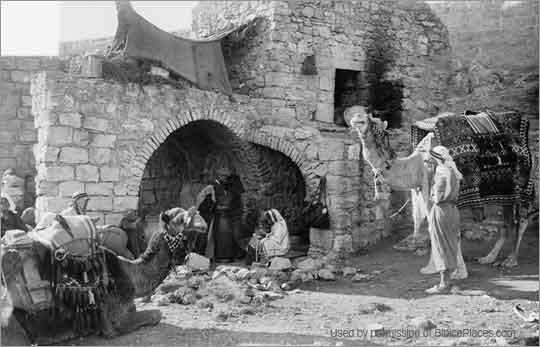
Image Source: www.neverthirsty.org
Deciphering the Timeline: Jesus’ Age and the Magi’s Journey
The traditional image of the Wise Men gazing upon Baby Jesus in a stable alongside shepherds and farm animals is a beloved Nativity scene. However, this composite picture doesn’t precisely reflect the sequence of events as described in the Bible. To accurately determine Jesus’ age when the Wise Men saw him, we need to delve into the Gospel of Matthew.
Matthew’s Account: The Star and the Journey
The Gospel of Matthew (Chapter 2) is the sole biblical source detailing the visit of the Magi. It begins by stating, “After Jesus was born in Bethlehem in Judea, during the time of King Herod, Magi from the east came to Jerusalem…” This opening immediately establishes that the event occurred after Jesus’ birth, during the reign of Herod the Great.
The Star of Bethlehem
The Magi were guided by a celestial phenomenon, the Star of Bethlehem. Their journey was not instantaneous. These were likely learned scholars and astronomers from Persia or Babylon, regions far from Judea. Such a journey would have taken months, possibly even over a year, to complete. They first traveled to Jerusalem, the capital, to inquire about a newborn king whose star they had seen.
- Initial sighting of the star: This could have occurred shortly after Jesus’ birth.
- Preparation and travel: Months would be needed to gather information, prepare for the long journey, and travel across vast distances.
- Arrival in Jerusalem: This marks a significant point after the birth.
King Herod’s Reaction and the Information Gathering
King Herod, upon hearing of a newborn king, was deeply troubled. He summoned the chief priests and teachers of the law to determine where the Messiah was to be born. They informed him, citing the prophet Micah, that it would be in Bethlehem. This process of inquiry and Herod’s subsequent actions provide further clues about the passage of time.
Herod’s Cruel Decree
Herod then sent for the Magi and, after a careful investigation into the time the star had appeared, sent them to Bethlehem. He instructed them, “Go and search carefully for the child. As soon as you find him, report to me, so that I too may go and worship him.” (Matthew 2:8).
Crucially, after the Wise Men found Jesus, they were warned in a dream not to return to Herod. This led Herod to realize he had been tricked. In his fury, he ordered the killing of all boys in and around Bethlehem who were two years old and under, basing his decision on the time he had learned from the Magi about the appearance of the star. This “Massacre of the Innocents” is a significant piece of evidence for Jesus’ age when the Wise Men saw him.
- Herod’s decree suggests the Wise Men’s visit could have happened when Jesus was up to two years old, as Herod wanted to cover all possibilities for the timing of the star’s appearance.
Bethlehem: The Setting for the Visit
The Gospel of Matthew explicitly states that the Wise Men found Jesus in Bethlehem. This is consistent with the prophecy cited by the chief priests and teachers of the law. The Nativity narrative in Luke, which describes the shepherds’ visit, also places Jesus’ birth in Bethlehem. However, Luke’s account mentions Mary and Joseph returning to Bethlehem after Jesus’ birth and then later going to Nazareth. Matthew’s narrative, featuring the Magi, seems to indicate that Jesus and his parents were already in a house in Bethlehem when the Wise Men arrived, rather than in a stable.
A House, Not a Stable?
Matthew 2:11 reads, “On coming to the house, they saw the child with his mother Mary, and they bowed down and worshiped him.” The use of the word “house” suggests that some time had passed since the immediate circumstances of the birth. The stable scenario is typically associated with the shepherds’ visit, as described in Luke.
The Significance of Epiphany
The visit of the Wise Men is celebrated in the Christian church on January 6th, known as the Feast of the Epiphany. This feast commemorates the manifestation of Christ to the Gentiles, represented by the Magi. The timing of Epiphany is 12 days after Christmas, which has led to the popular misconception that the Wise Men arrived 12 days after Jesus’ birth. However, the historical and biblical evidence points to a longer interval.
Understanding the 12 Days of Christmas
The “Twelve Days of Christmas” tradition originates from the medieval period and represents the time between the birth of Jesus and the arrival of the Wise Men. It’s a symbolic period rather than a literal timeline for the Magi’s visit.
Weighing the Evidence: When Did the Wise Men Truly Arrive?
The key to determining Jesus’ age when the Wise Men saw him lies in reconciling Herod’s actions and the Magi’s journey.
The Herod Factor
King Herod the Great died in 4 BC. This date is a crucial anchor for biblical chronology. The events surrounding the birth of Jesus, including the visit of the Magi and Herod’s subsequent massacre, must have occurred before this date. If we assume the Magi saw the star shortly after Jesus’ birth (say, within a few months), and their journey took many months, they could have arrived when Jesus was a toddler. Herod’s decision to kill all boys up to two years old in Bethlehem provides a strong upper limit for Jesus’ age at the time of the Wise Men’s visit.
- If Herod was acting on information that the star appeared perhaps a year before the Magi reached Bethlehem, he would be aiming to catch a child who could be up to that age.
The Magi’s Gifts
The gifts presented by the Magi – gold, frankincense, and myrrh – also offer subtle hints. While these were valuable offerings, they were not typically gifts given to newborns in a stable. Gold is a fitting gift for a king. Frankincense, a fragrant incense, was used in religious rituals and temples, suggesting reverence for Jesus as divine. Myrrh, often used for anointing or embalming, could symbolically point to Jesus’ future suffering and death. These symbolic gifts align with a slightly older child rather than an Infant Jesus immediately after birth.
Gifts and Their Significance
| Gift | Symbolism | Context of Presentation |
|---|---|---|
| Gold | Royalty, Kingship | Appropriate for a newborn king, signifying earthly authority. |
| Frankincense | Divinity, Priesthood, Worship | Used in temple rituals, pointing to Jesus’ divine nature and priestly role. |
| Myrrh | Suffering, Death, Anointing, Purification | Symbolically foreshadowing Jesus’ passion and eventual sacrifice; also used in embalming. |
Shepherds vs. Magi: Different Audiences, Different Times
The Gospels of Luke and Matthew describe two distinct groups visiting the newborn Jesus: shepherds and the Wise Men.
- Shepherds (Luke 2:8-20): Luke’s account places the shepherds visiting Jesus very shortly after his birth. They find Baby Jesus lying in a manger in Bethlehem. The angel’s message directly alerts them to the Savior’s birth. Their visit is immediate.
- Wise Men (Matthew 2:1-12): Matthew’s account involves a longer journey and a more complex set of events, including Herod’s involvement. This suggests their arrival was not immediate.
This difference in narrative timing strongly implies that the shepherds and the Magi visited at different times. The shepherds likely encountered the Infant Jesus in the immediate aftermath of his birth, while the Wise Men arrived later.
Comparing the Accounts
| Feature | Shepherds’ Visit (Luke) | Wise Men’s Visit (Matthew) |
|---|---|---|
| When | Very soon after birth | Months, possibly over a year, after birth |
| Where | Manger in Bethlehem | House in Bethlehem |
| Who | Local shepherds | Foreign Magi (Wise Men) from the East |
| Guide | Angels’ announcement | Star of Bethlehem |
| Interaction | Glorified and praised God | Bowed down, worshiped, presented gifts |
| Follow-up | Returned to fields, spreading the news | Warned in a dream, returned home by another way |
| Jesus’ State | Baby Jesus | Child Jesus |
Interpreting “Child” vs. “Infant”
Matthew’s use of the Greek word paidion (παίδιον) for Jesus when the Wise Men arrive is significant. While paidion can mean “infant” or “child,” it often refers to a young child, not necessarily a newborn. Some scholars argue that paidion could encompass a child up to the age of two. This linguistic nuance supports the idea that some time had passed.
Consensus and Scholarly Views
Most biblical scholars and theologians agree that the Wise Men’s visit did not occur on the same night as Jesus’ birth. The consensus points to a later arrival, likely several months to over a year after the birth.
- Favorable timeframe: Many place the visit when Jesus was between 6 months and 2 years old.
- Herod’s death: The most critical historical marker is Herod’s death in 4 BC. If the star appeared around the time of Jesus’ birth (which scholars debate, but often place between 6 BC and 4 BC), and the journey took time, the visit could have easily fallen within the year leading up to Herod’s death.
A Modern Perspective on the Nativity
The enduring image of the Wise Men alongside the shepherds at the manger is a testament to artistic license and the desire to consolidate the various events surrounding Jesus’ birth into a single, powerful visual narrative. However, appreciating the biblical timeline allows for a richer and more accurate comprehension of the events.
Key Takeaways on Jesus’ Age
- The Magi’s visit is recorded in Matthew.
- Their journey took significant time.
- Herod’s actions suggest Jesus was not a newborn but a young child, possibly up to two years old.
- Matthew describes the Wise Men finding Jesus in a “house,” not a stable.
- The gifts offered were suitable for a young child, not solely an Infant Jesus.
- Epiphany marks the manifestation of Christ to the Gentiles, but its date (Jan 6) doesn’t rigidly fix the visit to 12 days after birth.
Conclusion: A More Nuanced Nativity
In conclusion, while the traditional Nativity scene is a beautiful and important representation of faith, the biblical narrative suggests that Jesus was not a newborn Baby Jesus when the Wise Men, or Magi, arrived. The evidence points towards Jesus’ age being somewhere between several months and two years old. This understanding enriches our appreciation of the historical context and the deliberate storytelling within the Gospels, painting a picture of a divinely guided journey that revealed the newborn King not just to local shepherds, but to representatives of the wider world. The Wise Men’s visit to Bethlehem marked a significant moment, announcing Jesus’ kingly status to Gentile nations, even as Herod sought to extinguish the nascent light.
Frequently Asked Questions (FAQ)
Q1: Did the Wise Men really see Baby Jesus in the stable?
A1: The Bible (Matthew 2:11) states they found Jesus in a “house,” not a stable. The stable scene is described in Luke’s Gospel concerning the shepherds’ visit, which likely happened much closer to the actual birth.
Q2: How many Wise Men were there?
A2: The Bible does not specify the number of Wise Men. The tradition of “Three Kings” likely stems from the three gifts mentioned: gold, frankincense, and myrrh.
Q3: What is Epiphany?
A3: Epiphany is a Christian festival celebrated on January 6th. It commemorates the manifestation of Jesus Christ to the Gentiles, primarily through the visit of the Wise Men (Magi).
Q4: Why is it called the “Three Kings”?
A4: The term “Three Kings” is a popular tradition and likely derived from the three gifts brought by the Magi. The Bible refers to them as “Magi” or “Wise Men” and does not state their number or that they were kings.
Q5: Was the Star of Bethlehem a real star?
A5: The Star of Bethlehem is described as a celestial sign that guided the Magi. Various astronomical explanations have been proposed, such as a conjunction of planets, a comet, or a supernova, but its exact nature remains a subject of speculation and faith.