
What is the correct circuit breaker size? The correct circuit breaker size is determined by the wire gauge used and the electrical load it needs to support, ensuring it matches the electrical code requirements for circuit protection and home wiring.
Choosing the right circuit breaker size is crucial for the safety and efficiency of your home wiring. A circuit breaker acts as the first line of defense against electrical overloads and short circuits, preventing damage to appliances and, more importantly, reducing the risk of electrical fires. This guide will walk you through the process of determining the correct Amperage rating for your circuit breakers, ensuring your service panel and breaker panel are safely and correctly configured.
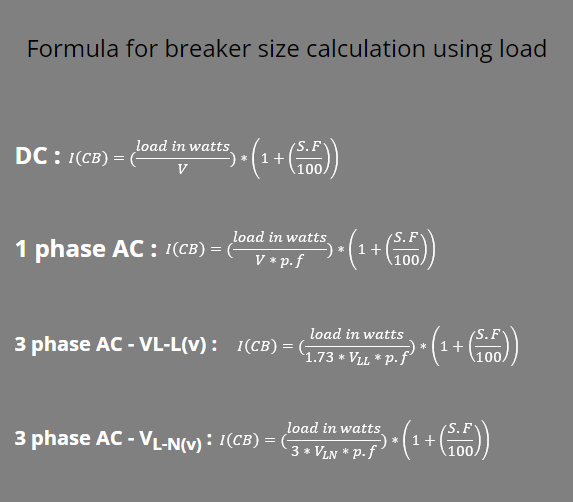
Image Source: res.cloudinary.com
Why Proper Circuit Breaker Sizing Matters
The primary function of a circuit breaker is circuit protection. It’s designed to interrupt the flow of electricity when the current exceeds a safe level. If a circuit breaker is too small for the load calculation of the devices it serves, it will trip frequently, causing inconvenience. If it’s too large, it won’t adequately protect the wires and connected appliances from damage.
- Overheating Wires: Undersized breakers can lead to wires overheating, potentially melting insulation and causing fires.
- Appliance Damage: Overloaded circuits without proper protection can damage sensitive electronics and appliances.
- Safety: Incorrectly sized breakers pose a significant fire hazard and risk of electric shock.
This guide aims to provide a clear and simple way to navigate the complexities of circuit breaker sizing, adhering to safety regulations and best practices.
Fathoming the Role of the Service Panel
Your service panel, often called the breaker panel or fuse box, is the central hub of your home’s electrical system. All electrical circuits in your house originate from here. Each breaker in the panel protects a specific circuit, controlling the power flow to a particular area or set of appliances. The main breaker at the top of the panel controls the entire house’s power supply.
Key Factors in Circuit Breaker Sizing
Several critical factors must be considered when determining the correct Amperage rating for a circuit breaker. These include the wire gauge, the anticipated load calculation, and adherence to the electrical code.
1. Wire Gauge: The Foundation of Protection
The wire gauge refers to the thickness of the copper or aluminum conductors within the electrical cable. Thicker wires can safely carry more electrical current without overheating. The electrical code specifies the minimum wire gauge required for different Amperage ratings to ensure safety regulations are met.
Understanding Wire Gauge and Amperage Limits
Different wire gauges have different current-carrying capacities. It’s essential to match the circuit breaker’s Amperage rating to the capacity of the wire it’s protecting.
| Wire Gauge (AWG) | Copper Conductor Ampacity (Amps) | Aluminum Conductor Ampacity (Amps) | Common Circuit Breaker Sizes (Amps) |
|---|---|---|---|
| 14 | 15 | 15 | 15 |
| 12 | 20 | 20 | 20 |
| 10 | 30 | 25 | 30 |
| 8 | 40 | 30 | 40 |
| 6 | 55 | 40 | 50 |
Note: These are general guidelines. Always consult the National Electrical Code (NEC) or your local electrical code for specific requirements and conditions.
Why the Match is Crucial:
- Protection: If a breaker is rated higher than the wire’s capacity, a fault could cause the wire to overheat and catch fire before the breaker trips.
- Efficiency: Using wire that is too thick for the breaker is wasteful but generally safe. The breaker will protect the wire.
2. Load Calculation: What Will the Circuit Power?
The load calculation involves determining the total electrical power required by the appliances and devices that will be connected to a specific circuit. This is usually measured in watts (W) or volt-amperes (VA). For AC circuits, watts, volts, and amps are related by the formula:
Watts (W) = Volts (V) × Amps (A)
To determine the required Amperage rating for a circuit, you need to:
- Identify all appliances and devices on that circuit.
- Find their wattage (usually listed on a label on the appliance itself).
- Sum the wattages of all devices.
- Convert total watts to amps using the formula: Amps (A) = Watts (W) / Volts (V).
Example Load Calculation:
Let’s say a kitchen counter circuit will power:
* Toaster: 1200 watts
* Coffee Maker: 1000 watts
* Blender: 500 watts
* General lighting: 100 watts
Total wattage = 1200 + 1000 + 500 + 100 = 2800 watts
Assuming a standard household voltage of 120 volts:
Required amps = 2800 watts / 120 volts = 23.33 amps
3. The 80% Rule: Ensuring Safety and Longevity
For continuous loads (equipment that runs for three hours or more), the electrical code requires that the circuit breaker and associated wiring be sized to handle no more than 80% of their rated capacity. This rule prevents overheating and ensures the longevity of the home wiring and appliances.
Applying the 80% Rule:
If your load calculation results in 23.33 amps for a continuous load, you would calculate:
Required breaker size = 23.33 amps / 0.80 = 29.17 amps
Since you can’t get a 29.17 amp breaker, you would round up to the next standard Amperage rating that is less than or equal to the wire’s capacity. In this example, if you used 12-gauge wire (rated for 20 amps), a 20-amp breaker would be the maximum, but you’d need to consider if the load truly necessitates continuous operation. If the load is not continuous, the calculation without the 80% rule might apply, but it’s always best to err on the side of caution.
If the calculated load was for a non-continuous use (like intermittent use of the blender), the 80% rule might not strictly apply, but it’s still a good practice for managing peak loads. However, for circuits powering things like furnaces or specific kitchen appliances that might run for extended periods, the 80% rule is paramount.
4. Electrical Code and Safety Regulations
The National Electrical Code (NEC), or your local equivalent, is the definitive source for safety regulations regarding electrical installations. These codes are established to prevent fires and protect people from electrical hazards. Always consult the latest edition of the NEC and any local amendments to ensure your home wiring is compliant.
- Specific Appliance Requirements: Some high-power appliances, like electric stoves, water heaters, or dryers, have specific electrical code requirements for their dedicated circuits, including minimum wire sizes and breaker ratings.
- Dedicated Circuits: Many modern appliances, especially those with heating elements or motors (like microwaves, refrigerators, or dishwashers), require dedicated circuits to prevent overloading shared circuits.
Step-by-Step Guide to Determining Circuit Breaker Size
Let’s break down the process into actionable steps.
Step 1: Identify the Circuit’s Purpose and Connected Devices
Determine what the circuit will power. Is it for general lighting in a bedroom? Is it for a workshop with heavy power tools? Or is it for kitchen outlets that will handle multiple appliances?
- General Lighting/Outlets: Typically require 15-amp or 20-amp breakers.
- Kitchen/Bathroom Outlets: Modern codes often mandate dedicated 20-amp circuits for small appliance branch circuits in kitchens and bathrooms to handle higher loads.
- Laundry Area: A dedicated 20-amp circuit is usually required for the washing machine.
- High-Power Appliances: Electric ranges, dryers, HVAC systems, electric water heaters, and EV chargers will have specific, higher Amperage rating requirements, often 30 amps, 40 amps, 50 amps, or even higher, and will require thicker wire gauge.
Step 2: Perform the Load Calculation
List all the appliance wattage for devices likely to be used simultaneously on that circuit.
- Find Wattage: Look for the wattage on the appliance’s nameplate or in its user manual. If only amps and volts are listed, calculate watts using Watts = Volts × Amps.
- Sum Wattages: Add up the wattage of all appliances.
- Convert to Amps: Divide the total wattage by the circuit voltage (usually 120V or 240V for home wiring).
Step 3: Consider the 80% Rule (If Applicable)
If the circuit is expected to power devices that will run for three or more consecutive hours (e.g., a refrigerator, a server rack, or continuous duty equipment), apply the 80% rule. Multiply the calculated amperage by 0.8.
Step 4: Select the Appropriate Wire Gauge
Based on the required amperage (after applying the 80% rule if necessary), choose the correct wire gauge. Refer to the table provided earlier or consult the NEC.
- Example: If your load calculation (after the 80% rule) requires 22 amps, you cannot use 14-gauge wire (rated for 15 amps). You would need at least 12-gauge wire, which is rated for 20 amps. However, a 20-amp breaker is still slightly less than the calculated 22 amps. The closest standard breaker size that is greater than your calculated load (22 amps) and matches or is less than the wire’s capacity (20 amps) isn’t directly possible here without re-evaluation. This highlights the need to carefully balance load, wire, and breaker. If the load was 16 amps (after 80% rule), you’d need 12-gauge wire (20 amp capacity) and a 20-amp breaker.
Step 5: Choose the Corresponding Circuit Breaker
Select a circuit breaker with an Amperage rating that:
- Is greater than or equal to the total calculated amperage of the load.
- Is less than or equal to the ampacity of the wire gauge being used.
- Complies with electrical code requirements for the specific circuit type.
- Example (Continuing from above): If your calculation (after 80% rule) shows you need 16 amps:
- You need a breaker rated at least 16 amps.
- You need wire capable of handling at least 16 amps. 12-gauge wire (rated for 20 amps) is suitable.
- Therefore, a 20-amp circuit breaker paired with 12-gauge wire is the correct choice.
Common Circuit Breaker Sizes and Their Applications
Here’s a look at typical circuit breaker sizes and where they are commonly used in home wiring.
15-Amp Circuits
- Wire Gauge: #14 AWG copper
- Applications: General lighting, standard wall outlets in bedrooms, living rooms, hallways. Circuits with lower power requirements.
20-Amp Circuits
- Wire Gauge: #12 AWG copper
- Applications: Kitchen counter outlets (often required by code), bathroom outlets, laundry room outlets, garage outlets, circuits with higher power draw like a microwave or a small appliance.
30-Amp Circuits
- Wire Gauge: #10 AWG copper
- Applications: Electric dryers, electric ovens (depending on the model), water heaters, smaller central air conditioning units.
40-Amp to 60-Amp Circuits (and higher)
- Wire Gauge: #8 AWG copper or thicker (for 40A), #6 AWG copper or thicker (for 50A/60A)
- Applications: Large electric ranges, central air conditioning units, electric furnaces, hot tubs, electric vehicle charging stations, sub-panels. These circuits require careful calculation and often professional installation due to their high power demands.
Special Considerations for Appliances
Some appliance wattage can be particularly high or have unique power requirements.
Large Appliances (Ranges, Dryers, HVAC)
These appliances often require 240-volt circuits. The load calculation for these needs to account for the specific voltage and wattage. The wire gauge and breaker size will be significantly larger than for standard 120-volt circuits. Always refer to the appliance’s manual and the electrical code.
Motors and Starting Loads
Appliances with electric motors (like refrigerators, air conditioners, or power tools) draw more power when they start up than when they are running. This “starting current” or “inrush current” needs to be considered in the load calculation. While breakers have some tolerance for brief surges, very heavy starting loads might necessitate a breaker that is slightly larger than a simple load calculation might suggest, but still within the wire’s capacity and code limits.
When to Call a Professional Electrician
While this guide provides a solid foundation for determining circuit breaker sizes, it’s essential to know when to seek professional help.
- Uncertainty: If you are unsure about any aspect of the process, especially load calculation or wire gauge selection, consult a qualified electrician.
- Major Electrical Work: Any work involving the service panel, adding new circuits, or replacing existing wiring should be done by a licensed electrician.
- Code Compliance: Electricians are experts in the electrical code and ensure all work meets safety regulations.
- Complex Loads: For circuits powering multiple high-demand appliances or specialized equipment, professional assessment is highly recommended.
Frequently Asked Questions (FAQ)
Q1: Can I replace a 15-amp breaker with a 20-amp breaker?
A1: Only if the existing wire gauge is 12 AWG or thicker and the circuit is rated for the higher load according to the electrical code. Replacing a breaker with a higher Amperage rating than the wire can safely handle is extremely dangerous and a fire hazard.
Q2: What happens if my circuit breaker trips frequently?
A2: A frequently tripping breaker usually indicates an overloaded circuit (too many devices or devices drawing too much power) or a short circuit. You need to perform a load calculation to see if the circuit is being asked to do more than it’s designed for.
Q3: Do I need a different breaker size for every outlet?
A3: No, multiple outlets can be on the same circuit, provided the total load calculation for those outlets and any other devices on the circuit does not exceed the Amperage rating of the breaker and the wire gauge. However, certain areas like kitchens and bathrooms often require dedicated circuits by code.
Q4: What is the difference between a single-pole, double-pole, and triple-pole breaker?
A4:
* Single-pole breakers protect 120-volt circuits and typically control one “hot” wire.
* Double-pole breakers protect 240-volt circuits and control two “hot” wires simultaneously, essential for larger appliances.
* Triple-pole breakers protect 208-volt or 480-volt three-phase circuits, used in commercial or industrial settings, and some larger residential HVAC systems.
Q5: How do I find the wattage of my appliances?
A5: The wattage is usually listed on a label or nameplate attached to the appliance itself. It might also be found in the appliance’s user manual. If only amps and volts are listed, you can calculate wattage using the formula: Watts = Volts × Amps.
Q6: Can I use aluminum wire for my home wiring?
A6: Aluminum wire was used in older homes but can pose fire hazards if not installed correctly with appropriate connectors and breakers designed for aluminum. Modern home wiring primarily uses copper. If you have aluminum wiring, it’s strongly recommended to have it inspected and possibly upgraded by a qualified electrician. The ampacity ratings for aluminum wire are lower than copper, requiring a larger wire gauge for the same Amperage rating.
By carefully considering the wire gauge, performing an accurate load calculation, and adhering to electrical code and safety regulations, you can ensure your home wiring and service panel are protected by correctly sized circuit breakers, safeguarding your home and family. Always prioritize safety and consult professionals when in doubt.