
Can you find your ring size with a tape measure at home? Yes, you absolutely can! This guide will show you how to get an accurate measurement using a common household item. Finding your correct ring size is crucial for a comfortable and secure fit, whether you’re buying a ring online or simply want to know your size for future purchases. This DIY ring sizing method is simple and effective.
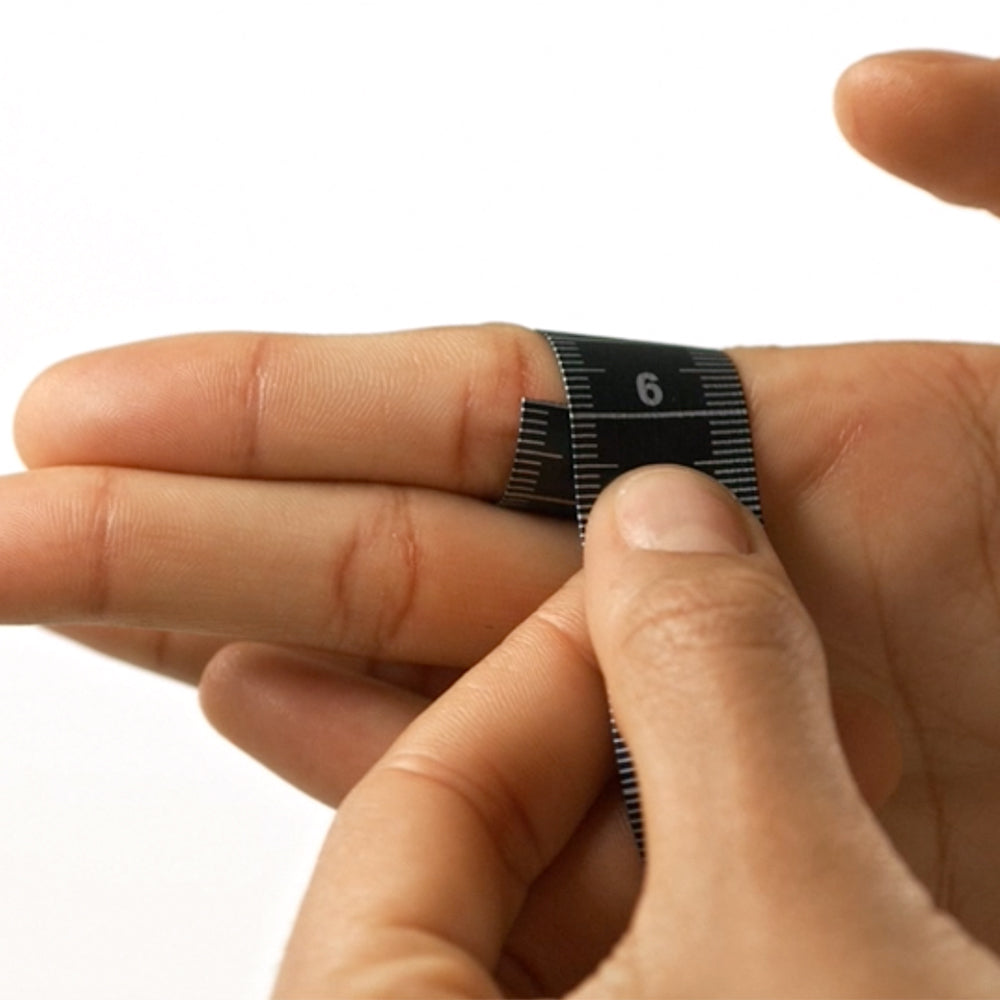
Image Source: www.danielwellington.com
Why Knowing Your Ring Size Matters
Buying jewelry, especially rings, without knowing your exact size can lead to disappointment. A ring that’s too tight will be uncomfortable and difficult to remove, potentially causing swelling. Conversely, a ring that’s too loose could easily slip off, risking loss. This simple at-home ring size guide will help you avoid these common pitfalls.
The Basics of Measuring Ring Size
Measuring ring size involves determining the circumference or diameter of your finger at the widest part. This measurement is then converted into a standard ring size using a chart. While professional sizers are ideal, a tape measure offers a readily available alternative for finding your approximate ring size. Using tape measure for rings requires a bit of care and attention to detail to ensure accuracy.
What You’ll Need
- A flexible measuring tape: A tailor’s tape measure is best. A standard paper or metal tape measure can work, but a flexible one is easier to wrap around your finger.
- A pen or pencil: To mark the measurement.
- A ruler: To read the measurement accurately if your tape measure doesn’t have clear markings.
- A ring sizing chart: You can easily find these online.
Preparing Your Finger
Before you start measuring, ensure your finger is at its normal temperature. Your fingers can swell or shrink slightly with temperature changes.
- Avoid measuring: When your hands are very cold or very hot.
- Measure at the end of the day: This is when your fingers are typically at their largest.
- Don’t measure if your fingers are swollen: From exercise or salty foods.
Step-by-Step Guide: Using Tape Measure for Rings
Here’s how to find your ring size using a tape measure, a simple ring sizing method:
Step 1: Wrap the Tape Measure
Gently wrap the flexible measuring tape around the base of the finger where you plan to wear the ring. Make sure the tape is snug but not too tight. It should feel comfortable, similar to how you’d want a ring to fit.
- Position: Place the end of the tape measure at the point where the ring will sit.
- Wrap: Bring the tape around your finger, overlapping it slightly.
Step 2: Mark the Measurement
Once the tape measure is comfortably wrapped around your finger, use your pen or pencil to make a clear mark where the end of the tape measure overlaps. This mark indicates the circumference of your finger.
- Precision: Ensure the mark is precise. A small error here can affect the final ring size.
Step 3: Read the Measurement
Carefully unwrap the tape measure. Lay it flat against a ruler if needed to get an accurate reading in millimeters or inches. The measurement from the end of the tape to your mark is your finger’s circumference.
- Units: Note whether your measurement is in millimeters (mm) or inches. Most ring size charts use millimeters.
Step 4: Convert to Ring Size
Now, you’ll need to convert this measurement to a standard ring size. You can find many ring sizing charts online. Look for one that lists finger circumference in millimeters.
Example:
Let’s say you measured your finger and the tape measure reads 55 mm.
- Find a reliable ring sizing chart online.
- Locate the circumference measurement in millimeters.
- See what ring size corresponds to 55 mm. In many charts, 55 mm corresponds to a US size 7.25 or a UK size O.
Table: Approximate Circumference to US Ring Size
| Circumference (mm) | US Ring Size |
|---|---|
| 47.1 | 4 |
| 48.4 | 4.5 |
| 49.6 | 5 |
| 50.9 | 5.5 |
| 52.2 | 6 |
| 53.5 | 6.5 |
| 54.8 | 7 |
| 56.1 | 7.5 |
| 57.4 | 8 |
| 58.7 | 8.5 |
| 60.0 | 9 |
| 61.3 | 9.5 |
| 62.5 | 10 |
| 63.8 | 10.5 |
| 65.1 | 11 |
| 66.4 | 11.5 |
| 67.7 | 12 |
Note: These are approximate values, and sizes can vary slightly between different sizing systems and manufacturers.
Alternative DIY Ring Sizing Method: Using a Strip of Paper
If you don’t have a flexible tape measure, you can still achieve a good result by using a strip of paper. This is another excellent DIY ring sizing technique.
What You’ll Need
- A strip of paper: About 1/2 inch (1.3 cm) wide and 4-6 inches (10-15 cm) long.
- A pen or pencil.
- A ruler.
- A ring sizing chart.
Steps:
- Wrap the Paper: Wrap the strip of paper around the base of your finger, just like you would with the tape measure. Ensure it’s snug but comfortable.
- Mark the Overlap: Mark where the end of the paper strip overlaps.
- Measure the Paper: Use a ruler to measure the length of the paper strip from the end to the mark you made. This measurement is the circumference of your finger.
- Convert to Ring Size: Use a ring sizing chart to find the corresponding ring size for the measured length.
Tips for Accuracy with Paper Strip:
- Paper Thickness: Use a medium-weight paper. Very thin paper might tear, and very thick paper can be hard to mark accurately.
- Straight Mark: Make sure your mark is straight across the paper strip.
Measuring Ring Size: Key Considerations for an Accurate Fit
Measuring ring size at home requires careful attention to detail. Several factors can influence the accuracy of your measurement.
Consider the Width of the Ring
The width of the ring you intend to buy can affect how it fits. Wider bands tend to feel tighter than thinner bands of the same size.
- Wide Bands: If you’re buying a wide ring (5mm or more), measure your finger using a similar width strip of paper or tape. You might need to go up half a size for wider bands.
- Narrow Bands: For thinner rings (2-4mm), your initial measurement should be quite accurate.
Measuring Different Fingers
Remember that your fingers are not all the same size. The size of your left ring finger might differ from your right ring finger, and even from finger to finger on the same hand.
- Measure the Correct Finger: Always measure the specific finger you intend to wear the ring on.
- Multiple Measurements: Take a few measurements on the same finger to ensure consistency.
Joint Size
If your knuckle is significantly larger than the base of your finger, you need to account for this.
- Measure Over the Knuckle: Wrap the tape measure or paper strip over your knuckle to get the widest measurement. This ensures the ring will pass over your knuckle comfortably.
- Consider the Fit: A ring that fits comfortably over your knuckle will feel slightly looser at the base of your finger, but this is often necessary for a secure fit.
Time of Day and Temperature
As mentioned earlier, your finger size can fluctuate throughout the day and with changes in temperature.
- Best Time: Measure in the late afternoon or evening.
- Temperature: Avoid measuring when your hands are very cold or hot. Aim for a neutral temperature.
Troubleshooting Common Issues with DIY Ring Sizing
Even with the best intentions, measuring ring size at home can sometimes present challenges. Here are some common issues and how to address them:
Issue: Inconsistent Measurements
Cause: The tape measure or paper strip wasn’t held firmly, or the mark was imprecise.
Solution: Repeat the measurement process, paying extra attention to keeping the tape or paper snug and making a clear, straight mark. Try measuring a few times to see if you get consistent results.
Issue: Finger Swelling
Cause: Measuring when your finger is naturally swollen (e.g., due to heat, exercise, or salty foods).
Solution: Wait for a more neutral time to measure. Hydration and rest can help reduce temporary swelling.
Issue: Knuckle Size Discrepancy
Cause: Your knuckle is significantly larger than the base of your finger.
Solution: Measure over the knuckle. When converting to ring size, consider that the ring needs to pass over the knuckle. Some jewelers recommend adding a small amount (e.g., 1mm) to your knuckle measurement if it’s much larger than the base of your finger.
Issue: Using a Ruler Instead of a Flexible Tape Measure
Cause: Lack of a flexible measuring tool.
Solution: While less ideal, you can carefully place a ruler against your finger to estimate the circumference. However, this method is less accurate because it’s hard to get a true circumference reading with a rigid ruler. A string or strip of paper measured against a ruler is a better alternative if you don’t have a flexible tape.
Finding Your Ring Size Without a Sizer: Advanced Tips
If you’re aiming for the most precise measurement possible using a tape measure or paper strip, consider these advanced tips for finding your ring size without a traditional sizer.
Measuring a Ring You Already Own
If you have a ring that fits a particular finger perfectly, you can measure that ring to determine your size. This method often yields a more accurate approximate ring size than measuring your finger directly.
What You’ll Need:
- A ring that fits the desired finger well.
- A ruler with millimeter markings.
- A ring sizing chart.
Steps:
- Place the Ring: Lay the ring on a flat surface.
- Measure the Inner Diameter: Use the ruler to measure the inside diameter of the ring. Measure from one inner edge to the opposite inner edge, ensuring you are measuring across the widest part of the ring’s opening.
- Convert to Ring Size: Find a ring sizing chart that lists inner diameter in millimeters. Convert this diameter measurement to circumference by using the formula: Circumference = π × Diameter (where π ≈ 3.14159).
- Alternatively: Many charts directly provide US, UK, or European sizes based on the inner diameter.
Example:
Let’s say you measure the inner diameter of a well-fitting ring to be 17.5 mm.
- Using Diameter Charts: Many charts directly correlate diameter to size. 17.5 mm might correspond to a US size 7.
- Calculating Circumference: Circumference = 3.14159 × 17.5 mm = 54.98 mm.
- Converting Circumference: A circumference of 54.98 mm is very close to 55 mm, which typically translates to a US size 7 or 7.25.
Table: Approximate Inner Diameter to US Ring Size
| Inner Diameter (mm) | US Ring Size |
|---|---|
| 14.5 | 3 |
| 15.0 | 3.5 |
| 15.3 | 4 |
| 15.7 | 4.5 |
| 16.0 | 5 |
| 16.3 | 5.5 |
| 16.7 | 6 |
| 17.0 | 6.5 |
| 17.3 | 7 |
| 17.7 | 7.5 |
| 18.0 | 8 |
| 18.3 | 8.5 |
| 18.6 | 9 |
| 19.0 | 9.5 |
| 19.3 | 10 |
| 19.7 | 10.5 |
| 20.0 | 11 |
Note: This table is for illustrative purposes. Always refer to a reputable jeweler’s chart.
Using String for Measurement
If you don’t have a flexible tape measure and a paper strip feels too flimsy, string is another option for measuring ring size.
What You’ll Need:
- A piece of non-stretchy string or thread.
- A pen or marker.
- A ruler.
- A ring sizing chart.
Steps:
- Wrap the String: Wrap the string snugly around the base of your finger.
- Mark the String: Mark where the end of the string overlaps with a pen.
- Measure the String: Lay the string flat and measure the length from the end to your mark using a ruler. This is your finger’s circumference.
- Convert: Use a ring sizing chart to find the corresponding ring size.
Key Advantage of String: String is often easier to wrap around the finger and mark precisely than a paper strip, especially if the paper is very thin.
Interpreting Your Results: What is a Good Fit?
Once you have your measurement, it’s important to know what a good fit feels like. Getting the correct ring size measurement is the goal.
- Comfortable: The ring should slide onto your finger with a little bit of gentle pressure. It shouldn’t be so tight that it hurts or leaves an indentation.
- Secure: When you gently tug the ring, it shouldn’t easily fall off. If you can slide it off with no resistance, it’s likely too loose.
- Not Too Tight: The ring shouldn’t feel like it’s cutting off circulation or causing your finger to swell.
If your measurement falls between two sizes, it’s generally recommended to size up. This is especially true for wider ring bands.
Frequently Asked Questions (FAQ)
Q1: Can I use any tape measure to find my ring size?
A1: A flexible tailor’s tape measure is best for accuracy. If you use a rigid tape measure, it’s harder to get a true circumference. In that case, using a strip of paper or string and then measuring that against a ruler is a more effective method.
Q2: How do I account for my knuckle size?
A2: If your knuckle is significantly larger than the base of your finger, measure over the widest part of your knuckle. This ensures the ring will fit over it. You might need to size up slightly compared to just measuring the base of your finger.
Q3: What if my finger size changes during the day?
A3: Finger size can fluctuate due to temperature and time of day. For the most accurate measurement, measure your finger in the late afternoon or evening when your fingers are typically at their largest. Avoid measuring when your hands are very cold or hot.
Q4: Is it better to round up or down if I’m between sizes?
A4: If your measurement falls between two sizes, it’s generally better to round up, especially for wider rings, as wider bands tend to fit more snugly.
Q5: How accurate is using a tape measure compared to a professional ring sizer?
A5: Using a tape measure at home can give you a very good approximate ring size, especially if you follow the steps carefully. However, professional ring sizers used by jewelers are calibrated for accuracy and are the most reliable method for obtaining your exact size. This DIY method is a great way to get a close estimate.
Q6: What are the different systems for ring sizes?
A6: Ring sizes vary by country. The most common systems are the US (numerical, with half sizes), UK (alphabetical), and European (numerical, based on circumference in millimeters). Always check which sizing system a jeweler uses.
By following this detailed at-home ring size guide, you can confidently find your ring size using a simple tape measure, ensuring a better fit for your next jewelry purchase. Happy measuring!