
How To Ground A Circuit Breaker Box Safely: A Step-by-Step DIY Guide
Can I ground my circuit breaker box myself? Yes, if you have a good grasp of electrical work and follow safety protocols meticulously. Who is qualified to do this? A licensed electrician is always the safest bet, especially if you’re unsure. However, for experienced DIYers, this guide provides a detailed, step-by-step approach to ensuring your circuit breaker box is properly grounded, enhancing electrical safety grounding throughout your home.
A properly grounded circuit breaker box is a cornerstone of electrical safety grounding. It provides a path for stray electricity to safely dissipate into the earth, preventing dangerous shocks and protecting your appliances from surges. This guide will walk you through the process of grounding your circuit breaker box, covering everything from identifying the components to the final connection. We’ll focus on electrical grounding as a critical safety measure.
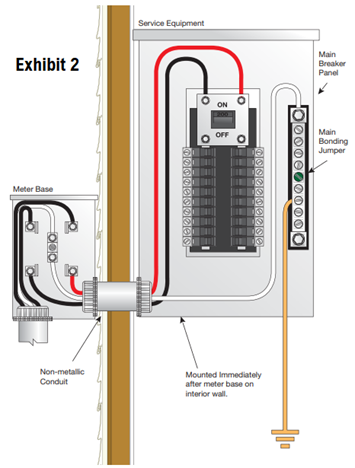
Image Source: ep2000.com
Locating Your Main Grounding Electrode System
The first step in panel grounding is identifying your home’s main grounding electrode system. This system is what connects your electrical service to the earth.
Identifying Your Grounding Electrode
Your grounding electrode is typically a metal rod driven deep into the ground near your home’s foundation. This is often referred to as a grounding rod.
- Buried Metal Water Pipe: In older homes, a metal water pipe that runs underground might serve as your primary grounding electrode. It’s crucial that this pipe is continuously buried for at least 10 feet.
- Grounding Rod: Most modern installations use a copper-clad steel rod driven into the earth. These rods are usually 8 feet long and must be at least 80% of their length buried.
- Concrete-Encased Electrode: Sometimes, a metal reinforcing bar (rebar) or a copper wire is encased in the concrete foundation footing of your home. This is also considered a grounding electrode.
Important Note: You might have a combination of these, but typically, one serves as the main connection. The National Electrical Code (NEC) outlines specific requirements for grounding electrode systems.
Checking for Existing Grounding Connections
Before you start any work, it’s essential to see if your circuit breaker box already has a connection to the grounding electrode system.
- Examine Your Main Panel: Open the cover of your main circuit breaker box. Look for a thick, bare copper wire or a green-insulated wire. This wire should be connected to the grounding bus bar inside the panel.
- Trace the Ground Wire: Follow this wire from the grounding bus bar. It should lead outside your home, eventually connecting to your grounding electrode (the grounding rod or water pipe). This is your main grounding electrode conductor.
If you see a clear connection from your panel to a grounding rod or a buried metal water pipe, your system is likely already grounded. However, if this connection is missing, damaged, or looks inadequate, it’s time to address it.
Essential Tools and Materials for Grounding
Having the right tools and materials is vital for safe and effective grounding.
Tools You’ll Need
- Screwdrivers: Phillips and flathead screwdrivers are essential for removing panel covers and tightening connections.
- Wire Strippers/Cutters: For preparing the grounding wires.
- Pliers: Various types of pliers can be useful for manipulating wires and connectors.
- Adjustable Wrench or Socket Set: For securing grounding clamps and bolts.
- Fish Tape: Helpful for pulling wires through conduits or walls if needed.
- Stud Finder: To locate studs if you need to run wires through walls.
- Voltage Tester: A non-contact voltage tester is crucial for ensuring the power is off. A multimeter is also useful for checking continuity.
- Measuring Tape: For measuring wire lengths.
- Shovel/Post Hole Digger: If you need to install or extend a grounding rod.
- Hammer: For driving the grounding rod.
- Safety Glasses: Always protect your eyes.
- Work Gloves: For handling wires and tools.
Materials Required
- Bare Copper Grounding Wire: The size of the wire depends on the amperage of your service. Consult the NEC or a local electrician for the correct gauge. Common sizes range from #8 AWG to #2 AWG.
- Grounding Rod: If you don’t have one, you’ll need a U.L.-listed grounding rod, typically 8 feet long, made of copper-clad steel.
- Grounding Rod Clamp: A U.L.-listed clamp designed to securely attach the grounding wire to the grounding rod.
- Grounding Bus Bar: If your panel doesn’t have one, you’ll need to install one.
- Bonding Jumper: If you need to connect different metallic systems (like a metal water pipe to the grounding system), a bonding jumper will be used.
- Grounding Wire Connector: For splicing or connecting grounding wires.
- Conduit and Fittings: If you need to protect the grounding wire in exposed areas.
- Wire Nuts: For connecting insulated wires, though grounding connections often use specific connectors.
Step-by-Step Guide to Grounding Your Circuit Breaker Box
This section details the process for establishing a proper earth ground connection.
Step 1: Disconnect All Power
This is the most critical safety step.
- Locate Your Main Breaker: In your circuit breaker box, find the largest breaker. This is your main disconnect.
- Turn Off the Main Breaker: Flip this breaker to the “OFF” position.
- Verify Power is Off: Use your non-contact voltage tester to confirm that there is no power at any of the breakers within the box. Test all the breaker slots.
Safety Reminder: Even with the main breaker off, it’s wise to wear insulated gloves and work with caution.
Step 2: Install or Locate Your Grounding Electrode System
If you don’t have a grounding rod, you’ll need to install one.
- Choosing a Location: Select a spot near your main electrical service entrance, close to the foundation of your home.
- Driving the Grounding Rod:
- Start driving the grounding rod into the earth using a hammer or a driving tool.
- Continue driving until at least 8 feet of the rod is buried, or as per local codes. If you hit a large rock, you may need to reposition the rod slightly or dig a hole to go around it.
- Leave a few inches of the rod exposed above ground for clamp attachment.
Step 3: Connect the Main Grounding Electrode Conductor
This is the thick wire that will carry fault current to the earth.
- Prepare the Grounding Rod: Clean the top portion of the grounding rod where the clamp will attach.
- Attach the Grounding Rod Clamp: Place the U.L.-listed clamp around the exposed section of the grounding rod.
- Strip the Grounding Wire: Strip about 1 inch of insulation from the end of your bare copper grounding wire.
- Secure the Wire to the Clamp: Insert the stripped end of the grounding wire into the clamp and tighten it securely. Ensure a solid metal-to-metal contact.
Step 4: Run the Main Grounding Electrode Conductor to the Panel
This involves routing the wire from the grounding rod to your circuit breaker box.
- Route the Wire: Run the grounding wire in the most direct and protected path from the grounding rod to your main electrical panel.
- Buried: If burying the wire, use appropriate conduit to protect it from physical damage.
- Exposed: If running the wire along the exterior of the building, use conduit and secure it with appropriate straps to prevent damage. Ensure the conduit is properly grounded itself.
- Enter the Panel: The wire should enter the main panel through a recognized service entrance conduit or a grounding wire knockout.
Step 5: Connect the Grounding Electrode Conductor to the Panel
This is where the circuit breaker grounding truly takes effect.
- Locate the Grounding Bus Bar: Inside your circuit breaker box, you’ll find a bus bar with screws. This is the grounding bus bar.
- Prepare the Wire End: Strip about 1 to 1.5 inches of insulation from the end of the grounding wire that will enter the panel.
- Secure to the Bus Bar: Connect the stripped end of the grounding wire to the grounding bus bar using an appropriately sized screw or terminal. Ensure a tight, secure connection.
Panel Grounding vs. Neutral Bus Bar:
In a main service panel, the neutral bus bar and the grounding bus bar are bonded (connected) together. This is critical for proper grounding. In subpanels, the neutral and ground bus bars must be kept separate.
Step 6: Bonding Other Metallic Systems (If Necessary)
The NEC requires that all conductive materials likely to become energized be bonded to the grounding system. This includes metal water pipes, gas pipes, and metal structural components.
- Metal Water Pipes: If your main grounding electrode is not a metal water pipe, you must bond your metal water pipe system to the grounding electrode system.
- Use a bonding jumper made of copper wire of the correct size.
- Attach one end of the bonding jumper to the grounding electrode conductor near the service entrance.
- Attach the other end to the metal water pipe with a U.L.-listed pipe clamp.
- Gas Pipes: Similarly, if you have metal gas pipes, they must be bonded to the grounding system. Always consult with your gas utility company and follow local codes for this specific connection.
- Other Metallic Structures: Any other significant metal structures, such as metal building frames or reinforcing steel in concrete, may also need to be bonded.
Why is Bonding Important? Bonding ensures that all conductive parts are at the same electrical potential. If a live wire touches a metal pipe, the bonding creates a low-resistance path for the current to flow to ground, tripping the breaker and preventing shock hazards.
Step 7: Double-Check All Connections
Before restoring power, a thorough inspection is crucial.
- Tightness: Ensure all connections at the grounding rod, the bus bar, and any bonding points are tight and secure. A loose connection can be as dangerous as no connection at all.
- Wire Integrity: Inspect the grounding wire for any nicks, cuts, or damage. Ensure it’s properly supported and protected.
- Correct Wire Gauge: Verify that you’ve used the correct gauge grounding wire as specified by electrical codes for your service size.
- U.L. Listed Components: Confirm that all clamps, connectors, and bus bars are U.L.-listed for grounding applications.
Step 8: Restore Power and Test
Once you are absolutely certain all connections are correct and secure, you can restore power.
- Turn On the Main Breaker: Flip the main breaker back to the “ON” position.
- Test Outlets: Use a plug-in receptacle tester to check the grounding at various outlets throughout your home. These testers indicate if the outlet is wired correctly, including whether it is properly grounded.
- Further Testing (Optional): For more advanced testing, you can use a multimeter to check for continuity between the ground pin of an outlet and the grounding electrode system.
Subpanel Grounding Considerations
If you have subpanels, they also require proper grounding.
Differences in Subpanel Grounding
A key distinction in subpanel grounding is that the neutral bus bar and the grounding bus bar must be kept separate.
- Separate Bus Bars: A subpanel should have distinct neutral and grounding bus bars.
- Grounding Wire: A dedicated grounding wire must run from the main panel’s grounding bus bar to the subpanel’s grounding bus bar. This wire provides the earth ground connection for the subpanel and its circuits.
- Bonding: Do not bond the neutral bus bar to the grounding bus bar in a subpanel. This is a common mistake that can create dangerous ground loops.
Grounding a Subpanel: A Brief Overview
- Disconnect Power: Ensure power to the subpanel is off at the main panel.
- Run Grounding Wire: Run a grounding wire from the main panel’s grounding bus bar to the subpanel’s grounding bus bar. Use conduit for protection if needed.
- Connect to Grounding Bus Bars: Securely connect the grounding wire to the grounding bus bar in both the main panel and the subpanel.
- Check Other Grounding: Ensure any metal enclosures for the subpanel are also bonded to the subpanel’s grounding bus bar.
Common Mistakes to Avoid
Even with the best intentions, mistakes can happen. Knowing what to avoid is as important as knowing what to do.
- Improper Wire Size: Using a grounding wire that is too small for the service amperage is a common and dangerous error. Always refer to code requirements for the correct gauge.
- Loose Connections: Any connection that is not tight can impede the flow of current to ground, rendering the grounding system ineffective.
- Confusing Neutral and Ground: In the main panel, the neutral and ground bus bars are bonded. In subpanels, they must remain separate. Incorrectly bonding these in a subpanel can be hazardous.
- Skipping Bonding: Failing to bond all required metallic systems (water pipes, gas pipes, etc.) creates significant shock hazards.
- Using the Wrong Clamps: Always use U.L.-listed clamps specifically designed for grounding rods and wires.
- Inadequate Grounding Electrode System: Relying on an old, corroded pipe or a short grounding rod may not provide a sufficient earth ground connection.
Why is Electrical Grounding So Important?
Electrical grounding is not just a recommendation; it’s a fundamental safety feature required by electrical codes worldwide. It serves two primary purposes:
- Protection Against Electric Shock: In the event of a fault (e.g., a hot wire touching an appliance casing), the grounding wire provides a low-resistance path for the current to flow directly to the earth. This causes a large surge of current, quickly tripping the circuit breaker or blowing a fuse, thereby de-energizing the circuit and preventing a potentially fatal shock. Without proper grounding, the appliance casing could become energized, and anyone touching it could become the path to ground.
- Protection Against Surges and Lightning: Grounding helps dissipate excess voltage from lightning strikes or power surges, protecting sensitive electronic equipment from damage. While not a foolproof lightning protection system, it plays a vital role in managing overvoltage conditions.
Frequently Asked Questions (FAQ)
Q1: How do I know if my circuit breaker box is grounded?
A: Look for a thick bare copper or green wire extending from the grounding bus bar inside your breaker box and running to an external grounding rod or a buried metal water pipe. You can also use a plug-in receptacle tester on your outlets.
Q2: Can I use aluminum wire for grounding?
A: While copper is the preferred and most common material for grounding, aluminum is permitted in certain applications according to electrical codes. However, specific connectors and installation methods are required for aluminum, and it’s generally recommended to use copper for its conductivity and corrosion resistance.
Q3: My house has a metal water pipe that goes into the ground. Do I still need a grounding rod?
A: If your metal water pipe is in direct contact with the earth for at least 10 feet, it can serve as a grounding electrode. However, codes often require a supplementary electrode, like a grounding rod, to be installed in conjunction with the water pipe for a more robust grounding system. It’s best to check your local electrical codes.
Q4: What happens if my circuit breaker box is not grounded?
A: An ungrounded or improperly grounded electrical system significantly increases the risk of electric shock. It also leaves your appliances vulnerable to damage from electrical surges and lightning. In essence, you lose a critical layer of protection.
Q5: How often should I check my grounding system?
A: It’s good practice to inspect your grounding system periodically, perhaps annually, or whenever you notice electrical issues. Checking connections for tightness and looking for any physical damage to the grounding wire is recommended.
This comprehensive guide aims to provide clear, actionable steps for circuit breaker grounding. Remember, while DIY can be rewarding, electrical safety grounding is paramount. If you are ever in doubt, consult a licensed electrician. They have the expertise and tools to ensure your home’s electrical system is safe and up to code. Proper grounding wire installation and maintaining your earth ground connection are vital for protecting your family and property.