
A circuit breaker is a safety device that protects your home’s electrical system from damage. If there’s a problem like a short circuit or an overload, the breaker “trips,” stopping the flow of electricity to that area. You can usually reset a tripped circuit breaker by flipping its switch back on.
Knowing how to read your circuit breaker is essential for maintaining home electrical safety and for troubleshooting electrical problems. This guide will walk you through everything you need to know, from locating the breaker panel to identifying overloaded circuits and interpreting breaker types.
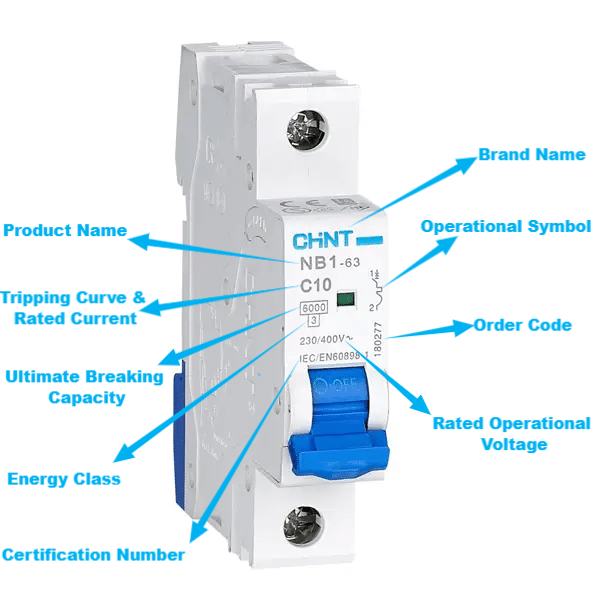
Image Source: www.chintglobal.com
Finding Your Breaker Panel
The first step in learning to read your circuit breaker is to find where your breaker panel is located. This is the central hub for your home’s electrical system.
Common Locations for Breaker Panels
- Basement: Many homes have their breaker panel in the basement. It might be on a wall near the stairs or close to the main electrical meter.
- Garage: Garages are another very common spot for breaker panels, often mounted on a wall.
- Utility Closet: Some homes have a dedicated utility closet where the breaker panel is installed.
- Hallway or Entryway: Less common, but you might find it in a shallow closet or on a wall in a main living area.
- Outside: In some warmer climates or older homes, the breaker panel might be located on an exterior wall of the house.
What to Look For
A breaker panel is typically a metal box, often gray or beige, with a door that swings open. Inside, you’ll see a row of switches, which are the circuit breakers themselves.
Deciphering the Breaker Panel
Once you’ve found your breaker panel, it’s time to look inside and start circuit breaker identification.
The Breaker Panel Diagram
Most breaker panels have a breaker panel diagram or a “legend” attached to the inside of the door or on the panel itself. This diagram is crucial for understanding breaker labels. It tells you which circuit each breaker controls.
What the Diagram Shows
- Room Designations: The diagram will list rooms or areas of your house (e.g., “Kitchen,” “Living Room,” “Bedroom 1,” “Garage Outlets”).
- Appliance Designations: It might also specify particular appliances or circuits, such as “Oven,” “Washing Machine,” “Air Conditioner,” or “Well Pump.”
- Breaker Numbers: Each breaker switch will correspond to a number on the diagram.
Example of a Breaker Panel Diagram Legend:
| Breaker Number | Controlled Area/Appliance | Notes |
|---|---|---|
| 1 | Kitchen Outlets | Countertop receptacles |
| 2 | Living Room Lights | Ceiling fixtures and lamps |
| 3 | Bedroom 1 Outlets | Standard wall sockets |
| 4 | Bathroom Fan & Light | Switch for fan and light |
| 5 | Garage Door Opener | Specific to the opener |
| 6 | Water Heater | Electric water heater circuit |
| 7 | Oven | Dedicated high-power appliance circuit |
| 8 | Central Air Conditioner | Cooling system compressor and fan |
Reading the Labels on the Breakers
Sometimes, the labels are directly on the breaker switches themselves, or there might be small slots where paper labels are inserted. The information here is vital for understanding breaker labels.
Types of Labels You’ll Find
- Room Names: Similar to the diagram, labels might simply say “Kitchen,” “Basement,” etc.
- Appliance Names: You might see “Microwave,” “Dishwasher,” “Dryer.”
- Circuit Descriptions: Sometimes labels are more general, like “Upstairs Outlets” or “Downstairs Lights.”
- Breaker Amperage: You’ll also see a number, like 15, 20, or 30. This indicates the amperage rating of the breaker.
What Do Circuit Breaker Numbers Mean?
The numbers you see on the circuit breakers (like 15, 20, 30) are the amperage ratings.
Amperage Ratings Explained
Amperage (amps) is a measure of electrical current. A circuit breaker is designed to interrupt the flow of electricity if the current exceeds its rated amperage for a certain period.
- 15 Amp Breaker: Typically used for lighting circuits and general-purpose outlets in rooms like bedrooms, living rooms, and hallways.
- 20 Amp Breaker: Often used for kitchen and bathroom outlets, as these areas typically have more appliances plugged in. They can also be used for general outlets in garages or workshops.
- 30 Amp Breaker (and higher): These are for high-demand appliances like electric ovens, clothes dryers, water heaters, or central air conditioning units.
Why Amperage Matters: Using the correct amperage breaker is crucial for safety. A breaker with too low an amperage might trip unnecessarily. A breaker with too high an amperage won’t protect the wiring from overheating if there’s an overload, which can lead to fires.
Comprehending Breaker Types
Circuit breakers aren’t all the same. There are different types designed for specific purposes and safety needs.
Standard Thermal-Magnetic Breakers
These are the most common type. They work in two ways:
- Thermal Protection: A bimetallic strip inside the breaker heats up when too much current flows through it. If it gets hot enough, it bends and trips the breaker. This protects against sustained overloads.
- Magnetic Protection: An electromagnet inside the breaker is activated by a sudden surge of current (like from a short circuit). This magnetic force trips the breaker very quickly.
Ground Fault Circuit Interrupters (GFCIs)
GFCIs are designed to protect people from electric shock. They monitor the flow of current in a circuit. If they detect an imbalance – meaning electricity is “leaking” out of the circuit (often through a person’s body) – they trip very quickly.
- Where You’ll Find Them: GFCIs are required in areas where water is present, such as bathrooms, kitchens, garages, basements, and outdoor outlets. You’ll see them as GFCI outlets (with “Test” and “Reset” buttons) or as GFCI breakers in the panel.
Arc Fault Circuit Interrupters (AFCIs)
AFCIs are designed to protect against fires caused by electrical arcs. Arcs are dangerous sparks that can happen when wires are damaged or connections are loose.
- What They Detect: They can distinguish between normal electrical arcs (like when a light switch is flipped) and dangerous arcs that can ignite materials.
- Where You’ll Find Them: AFCIs are increasingly required in bedrooms and other living areas of homes to prevent arc-related fires.
Common Configurations
- Single-Pole Breakers: These are the narrowest breakers and control 120-volt circuits. Most standard outlets and lights use single-pole breakers.
- Double-Pole Breakers: These are wider (taking up two spaces in the panel) and control 240-volt circuits. They are used for high-power appliances like electric dryers, ovens, and central air conditioners. They have a handle tie, so both poles trip simultaneously.
- Triple-Pole Breakers: Even wider, these control 208-volt or 240-volt circuits for large appliances or motors that require three-phase power.
Fathoming Breaker Labels: The Fine Print
Beyond the basic room or appliance names, some labels might have additional information that helps with circuit breaker identification.
Essential Details to Note
- Circuit Number: This is often a simple numerical sequence (1, 2, 3, etc.).
- Amperage Rating: As mentioned, this is the amp number (e.g., 15A, 20A).
- Type of Breaker: Sometimes the label will indicate if it’s a GFCI or AFCI breaker.
- “Dedicated Circuit”: This means the breaker serves only one appliance or outlet, usually a high-demand one.
Tip: If your panel is old and the labels are worn or missing, it’s a good idea to update them. You can do this by systematically turning off breakers one by one and using a voltage tester or simply checking which lights and outlets lose power. You can then label them clearly.
Identifying Overloaded Circuits
One of the most common reasons a circuit breaker trips is an overloaded circuit. This happens when you try to draw more electrical power than the circuit is designed to handle.
Signs of an Overloaded Circuit
- Breaker Trips Frequently: If a particular breaker keeps tripping, it’s a strong indicator of an overload.
- Dimming Lights: Lights dimming when an appliance is turned on, especially a high-power one, suggests the circuit is struggling.
- Warm Outlets or Switch Plates: While some warmth can be normal, excessive heat is a warning sign.
- Burning Smell: A burning smell near an outlet or breaker is a serious warning and requires immediate attention.
How to Address Overloads
- Check the Labels: Refer to your breaker panel diagram to see what the tripped breaker controls.
- Identify Appliances: Note all the appliances and devices that are currently in use on that circuit.
- Reduce the Load: Unplug or turn off some of the appliances. For example, if the kitchen breaker trips, try unplugging the toaster, microwave, or coffee maker.
- Reset the Breaker: Once the load is reduced, try to reset the breaker.
What do circuit breaker numbers mean in an overload situation? A 15-amp breaker can safely handle a continuous load of about 12 amps (80% of its rating). A 20-amp breaker can handle about 16 amps. If you’re running too many devices that draw a combined current higher than this limit, the breaker will trip.
Troubleshooting Electrical Problems with Your Breakers
Your circuit breaker is a key tool for troubleshooting electrical problems.
When a Breaker Trips
If a breaker trips, it means something in that circuit is not right.
- Locate the Tripped Breaker: In your panel, a tripped breaker will have its handle in a position that is neither fully “ON” nor fully “OFF.” It’s usually somewhere in the middle or slightly pushed towards the “OFF” position.
- Identify the Circuit: Use your breaker panel diagram or the labels on the breakers to know which part of your home this breaker controls.
- Investigate the Cause:
- Overload: Did you plug in too many things? Unplug some devices.
- Short Circuit: This is when a “hot” wire touches a “neutral” wire or a ground wire. This causes a sudden, massive surge of current. A short circuit often involves a faulty appliance or wiring. If you suspect a short, unplug all appliances on the circuit and try resetting the breaker. If it still trips immediately, there’s likely a problem with the wiring itself.
- Faulty Appliance: An appliance that has a short or internal fault can cause a breaker to trip. Try plugging that appliance into a different circuit (if safe to do so) to see if it trips that breaker.
- How to Reset a Circuit Breaker:
- Make sure the appliance causing the problem (if any) is turned off or unplugged.
- Firmly push the breaker handle all the way to the “OFF” position.
- Then, firmly push the handle all the way back to the “ON” position.
Important Safety Note: Never force a breaker. If it feels stuck or won’t reset properly, do not try to force it. This could damage the breaker or indicate a more serious electrical issue.
When a Breaker Won’t Reset
If you attempt to reset a breaker, and it immediately trips again, or if it won’t stay in the “ON” position, this indicates a persistent problem.
- Persistent Overload: You might still have too many things on the circuit.
- Short Circuit: There’s likely a dead short in the wiring or an appliance.
- Faulty Breaker: The breaker itself might be worn out or damaged.
In these situations, it’s best to call a qualified electrician.
Maintaining Your Breaker Panel
Regularly checking your breaker panel can help ensure your home electrical safety.
What to Look For During Inspections
- Clear Labels: Ensure all breakers are clearly and accurately labeled.
- No Signs of Damage: Look for any signs of burning, melting, or discoloration on the breakers or the panel itself.
- Tight Connections (Visual Check): While you should never touch internal components, a quick visual check from the outside might reveal obvious loose wires (though this is rare and best left to professionals).
- Regular Testing of GFCIs/AFCIs: Test your GFCI outlets and AFCI breakers monthly by pressing the “Test” button. They should trip, and you should be able to reset them.
When to Call a Professional Electrician
- Frequent Tripping: If breakers trip regularly, even after reducing the load.
- Signs of Overheating: Any burning smell, discolored breakers, or warm outlets.
- Buzzing or Crackling Noises: These sounds from the panel are a serious warning.
- Outdated Panel: If you have an old fuse box or a very old breaker panel that looks damaged, it may need an upgrade.
- You’re Unsure: If you’re ever uncertain about a problem or how to handle it, it’s always safest to call a professional.
Frequently Asked Questions (FAQ)
Q1: What does it mean if a circuit breaker handle is in the middle position?
A1: If a circuit breaker handle is in the middle position (not fully ON or fully OFF), it means the breaker has tripped. This happens when the circuit is either overloaded or there’s a short circuit.
Q2: Can I replace a circuit breaker myself?
A2: While it might seem simple, replacing a circuit breaker involves working with live electrical current. It’s recommended that only qualified electricians perform this task to ensure safety and proper installation.
Q3: How do I know if my house has enough circuits?
A3: Modern homes often require more circuits than older homes due to the increased use of electronics and appliances. If you frequently have breakers tripping, or if you have many extension cords in use, your home might benefit from a panel upgrade with more circuits. An electrician can assess your needs.
Q4: What is the difference between a circuit breaker and a fuse?
A4: Both devices protect electrical circuits, but they do so differently. A fuse contains a thin wire that melts and breaks the circuit when too much current flows. Once a fuse blows, it must be replaced. A circuit breaker, on the other hand, trips and can be reset manually, making it reusable.
Q5: Why do my lights flicker when I turn on an appliance?
A5: Flickering lights when an appliance is turned on can indicate an overloaded circuit or a loose connection. It’s a sign that the circuit is struggling to provide enough power. It’s advisable to reduce the load on that circuit or have an electrician check for loose wiring.
By following this guide, you can gain confidence in managing your home’s electrical system. Remember, safety first – when in doubt, always consult a qualified electrician.