
What is a circuit breaker and why is sizing important? A circuit breaker is a safety device that protects electrical circuits from damage caused by overcurrent or short circuits. Proper sizing ensures it trips (turns off) when there’s too much electricity flowing, preventing fires and equipment damage, without tripping unnecessarily during normal operation.
Electrical safety is paramount in any building, whether it’s a cozy residential electrical panel or a bustling commercial circuit breaker setup. At the heart of this safety system lies the circuit breaker. Think of it as a vigilant guardian, always watching over your electrical circuits. But how do you ensure this guardian is the right size for its job? Incorrectly sized circuit breakers can lead to anything from minor annoyances like nuisance tripping to major hazards like electrical fires. This guide will walk you through the process of sizing circuit breakers step-by-step, making sure your electrical system is as safe and efficient as possible.
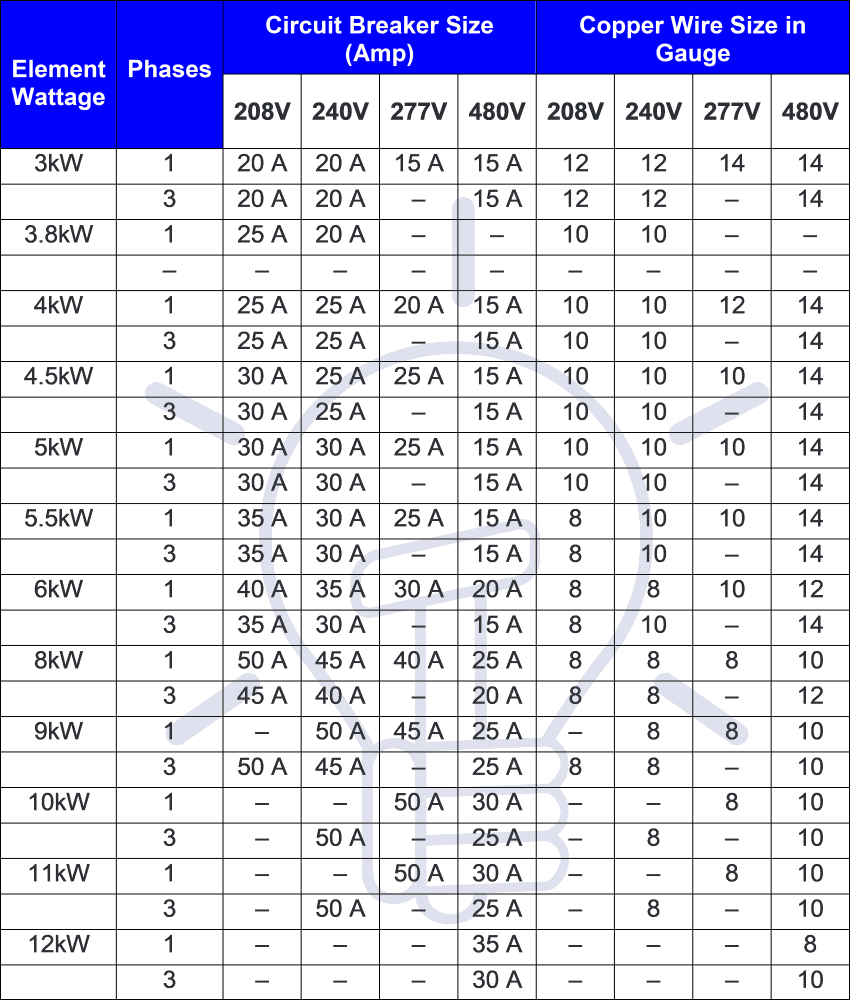
Image Source: www.electricaltechnology.org
Deciphering the Basics of Circuit Breaker Sizing
Before diving into the calculations, it’s essential to grasp a few fundamental concepts. Circuit breaker sizing isn’t about picking a number out of a hat; it’s a precise science based on the electrical needs of the circuit it’s protecting.
The Role of Overcurrent Protection
The primary function of a circuit breaker is overcurrent protection. This means safeguarding against two main scenarios:
- Overloads: When too many appliances are plugged into a single circuit, or a faulty appliance draws excessive power, the current exceeds the safe limit for the wiring.
- Short Circuits: This happens when a live wire accidentally touches a neutral wire or ground wire, causing a massive surge of current.
In both cases, the circuit breaker acts quickly to interrupt the flow of electricity, preventing overheating of wires, damage to appliances, and potential fires.
Understanding Ampacity and Its Significance
Ampacity is the maximum amount of electrical current, measured in amperes (amps), that a conductor (like a wire) can carry continuously without exceeding its temperature rating. This is a critical factor in sizing circuit breakers.
The Relationship Between Wire Gauge and Ampacity
The size of the wire, known as its wire gauge selection, directly dictates its ampacity. Thicker wires have lower resistance and can carry more current safely. The National Electrical Code (NEC) provides tables that specify the maximum ampacity for different wire gauges and types of insulation.
Differentiating Breaker Types
- Single-pole breaker: Used for 120-volt circuits, typically powering standard outlets and lights. These protect a single hot wire and a neutral.
- Double-pole breaker: Used for 240-volt circuits, common for high-power appliances like electric dryers, ovens, and water heaters. These protect two hot wires.
Conducting a Load Calculation: The Foundation of Sizing
The first crucial step in sizing a circuit breaker is to perform a thorough load calculation. This involves determining the total electrical demand of the circuit you intend to protect.
Step 1: Identify All Appliances and Outlets on the Circuit
List every item that will be powered by the circuit. For a residential electrical panel, this might include lights, outlets for general use, or specific appliances. In a commercial setting, it could be machinery, lighting systems, or office equipment.
Step 2: Determine the Power Consumption of Each Item
- Appliance Nameplates: Most appliances have a nameplate that lists their power consumption in watts (W) or amperes (A) and voltage (V).
- Calculating Amps: If only wattage and voltage are provided, you can calculate the amperage using the formula: Amps = Watts / Volts.
Step 3: Calculate the Total Continuous Load
- Continuous Load: A load that is expected to operate for three hours or more continuously. Examples include lighting in commercial spaces or HVAC systems.
- NEC Requirements: The NEC generally requires that circuits supplying continuous loads be sized at 125% of the continuous load. This means you multiply the total continuous amperage by 1.25.
Step 4: Calculate the Total Non-Continuous Load
- Non-Continuous Load: A load that operates for less than three hours. For these, you simply sum up the amperages.
Step 5: Summing Up for Total Demand
Add the calculated continuous load (at 125%) and the non-continuous load to get the total expected demand for the circuit.
Example Load Calculation for a Workshop Outlet Circuit:
Let’s say you’re wiring a workshop circuit for:
* One 1500W portable heater (operates for 2 hours – non-continuous)
* One 500W work light (operates for 4 hours – continuous)
* Several outlets for tools (estimated total of 800W, rarely all used at once – non-continuous)
- Heater Amps: 1500W / 120V = 12.5A
- Work Light Amps: 500W / 120V = 4.17A
-
Tool Outlet Amps: 800W / 120V = 6.67A
-
Continuous Load: Work Light = 4.17A
-
Continuous Load (at 125%): 4.17A * 1.25 = 5.21A
-
Non-Continuous Load: Heater (12.5A) + Tool Outlets (6.67A) = 19.17A
-
Total Demand: 5.21A (continuous) + 19.17A (non-continuous) = 24.38A
Selecting the Correct Wire Gauge Based on Ampacity
Once you have your total load calculation, the next step is to select the appropriate wire gauge selection. This ensures the wire can safely handle the calculated current without overheating.
Consulting Wire Ampacity Tables
The NEC provides detailed tables (like Table 310.15(B)(16) in older codes, or newer equivalent tables) that list the allowable ampacities for different wire gauges (AWG – American Wire Gauge) and insulation types (e.g., THHN, XHHW).
Understanding Wire Gauge Numbers
- Lower AWG numbers mean thicker wires. For instance, 10 AWG wire is thicker than 12 AWG wire.
- Thicker wires can carry more current.
Matching Load to Wire Gauge
You need to choose a wire gauge whose ampacity is equal to or greater than the calculated total demand of the circuit, keeping in mind that the circuit breaker itself must also be sized appropriately for this wire.
Table Example: Common Wire Gauges and Their Ampacities (for illustrative purposes, always consult the NEC for exact values and conditions)
| Wire Gauge (AWG) | Ampacity (Copper, 75°C Insulation) | Typical Uses |
|---|---|---|
| 14 AWG | 15 Amps | Lighting circuits, general purpose outlets |
| 12 AWG | 20 Amps | Kitchens, bathrooms, workshop outlets |
| 10 AWG | 30 Amps | Dryers, water heaters, small HVAC units |
| 8 AWG | 40 Amps | Electric ranges, larger HVAC units |
| 6 AWG | 55 Amps | Large electric ranges, subpanels |
Continuing our Workshop Example:
Our total demand is 24.38A.
Looking at the table:
* 14 AWG is rated for 15A (too low).
* 12 AWG is rated for 20A (too low).
* 10 AWG is rated for 30A (sufficient).
Therefore, for a circuit with a calculated demand of 24.38A, you would select 10 AWG wire.
Sizing the Circuit Breaker: The Final Protective Layer
With the load calculation complete and the appropriate wire gauge selected, you can now choose the correct size for your circuit breaker. The circuit breaker protects the wire, so its rating must be appropriate for the wire’s ampacity.
The “Next Size Up” Rule (with caveats)
Generally, you want to select a circuit breaker with an ampacity rating that is equal to or less than the ampacity of the wire. However, there are specific rules and common practices:
- Standard Breaker Sizes: Circuit breakers come in standard sizes: 15A, 20A, 30A, 40A, 50A, 60A, 70A, 80A, 90A, 100A, 110A, 125A, etc. You typically don’t find breakers for every single amp value.
- Matching Wire Ampacity: You should not select a breaker with a higher amp rating than the wire’s ampacity.
- The Exception (NEC 240.4(B)): If the calculated load for a circuit does not correspond to a standard breaker size, the NEC allows you to use the next higher standard size breaker, provided that the wire ampacity is equal to or greater than the calculated load, AND the wire gauge is rated for that higher breaker size.
Applying this to our Workshop Example:
- Calculated Load: 24.38A
- Wire Selected: 10 AWG, rated at 30A.
Since 24.38A is between 20A and 30A, and we’ve already chosen wire that can handle 30A, the appropriate circuit breaker size is 30A. We don’t need to go up to the next size because 30A is a standard size and is equal to the wire’s ampacity.
Another Example: A Dedicated Oven Circuit
- Appliance: Electric Oven rated at 7200 Watts, 240 Volts.
- Oven Amps: 7200W / 240V = 30A.
- NEC Requirement for Ovens: Ovens are considered continuous loads for sizing purposes, requiring a 125% factor.
- Calculated Load: 30A * 1.25 = 37.5A.
Now, let’s select the wire and breaker:
* Wire Gauge: For 37.5A, we need a wire with at least 37.5A ampacity.
* 10 AWG is typically rated for 30A (too low).
* 8 AWG is typically rated for 40A (sufficient). So, we select 8 AWG wire.
* Circuit Breaker: The wire is rated for 40A. The calculated load is 37.5A. The closest standard breaker size that is equal to or greater than the load but not exceeding the wire’s ampacity is 40A. This is a double-pole breaker because it’s a 240V appliance.
Special Considerations for Specific Circuits
Some circuits have specific rules dictated by the NEC that might influence sizing beyond basic load calculations.
Kitchen and Laundry Circuits
- The NEC mandates specific load calculation methods for kitchens and laundry rooms due to the number of small appliances and the potential for simultaneous use.
- These often require dedicated circuits for certain appliances and a calculated load for general-purpose outlets.
Dedicated Appliance Circuits
- Appliances like refrigerators, microwaves, dishwashers, and garbage disposals often require their own dedicated circuit.
- You size the breaker and wire based on the appliance’s nameplate rating, applying the 125% rule for continuous loads.
HVAC Systems
- Heating, Ventilation, and Air Conditioning (HVAC) systems are critical loads.
- Their sizing involves calculating the running amperage of the compressor and fan motors, often applying a multiplier for starting surge and continuous operation. This is a complex area, and consulting the manufacturer’s specifications is crucial.
Sizing the Electrical Panel: The Overall Framework
While individual circuit breaker sizing is vital, it’s also important to consider electrical panel sizing. The main breaker and the overall capacity of your panel must be sufficient to handle the total electrical demand of your home or building.
Determining Total Service Load
- Residential Electrical Panel: The total load for a residence is calculated using methods outlined in the NEC, which consider fixed appliances, general lighting loads, and appliance loads. This calculation determines the minimum service entrance conductor size and the main breaker size.
- Commercial Buildings: Commercial circuit breaker panels are sized based on the occupancy type, square footage, and specific equipment used within the building, often requiring more complex engineering calculations.
Ensuring Sufficient Capacity
- If you’re adding new circuits or significant appliances, you must ensure your existing electrical panel sizing has enough available space (physical breaker slots) and capacity (overall amperage rating of the panel) to accommodate the new loads.
- If the panel is nearing its capacity limit, you might need to upgrade the entire panel or install a sub-panel.
Common Pitfalls to Avoid When Sizing Circuit Breakers
Even with a step-by-step guide, mistakes can happen. Here are some common errors to steer clear of:
Nuisance Tripping
- Cause: Using a breaker that is too small for the circuit’s normal operating load.
- Solution: Recalculate the load and ensure the breaker is sized appropriately for the wire and the expected demand.
Undersized Wiring
- Cause: Using a wire gauge that is too small for the breaker size or the load.
- Solution: Always match the wire gauge ampacity to the breaker rating. Never install a breaker larger than the wire’s ampacity rating.
Overlooking Continuous Loads
- Cause: Forgetting to apply the 125% factor for loads that run for three hours or more.
- Solution: Carefully identify all continuous loads and apply the NEC multiplier.
Ignoring Manufacturer Specifications
- Cause: Relying solely on general rules and not checking appliance or equipment manufacturer data.
- Solution: Always consult the equipment’s nameplate and installation manual for specific electrical requirements.
Incorrectly Sized Main Breaker
- Cause: The main breaker that protects the entire residential electrical panel or commercial circuit breaker setup is too small for the building’s total power needs.
- Solution: Perform a comprehensive service load calculation to ensure the main breaker and service entrance conductors are adequate.
Frequently Asked Questions (FAQ)
Q1: Can I replace a 15A breaker with a 20A breaker for the same circuit?
A1: Only if the existing wiring is rated for 20 amps (typically 12 AWG copper wire). If the wire is 14 AWG, which is rated for 15 amps, replacing the breaker with a 20A one is a serious fire hazard. Always match the breaker to the wire’s ampacity.
Q2: What is the smallest wire gauge I can use for a 15A circuit?
A2: For most standard 120V circuits, 14 AWG copper wire is the minimum required for a 15A breaker. However, the NEC may have different requirements for specific situations or locations.
Q3: How do I know if I have a continuous load?
A3: A continuous load is any electrical load expected to operate for three hours or more at a constant value. Examples include general lighting circuits in commercial spaces or the heating element in a water heater that cycles on and off but can be on for extended periods.
Q4: What is the difference between a single-pole and a double-pole breaker?
A4: A single-pole breaker is used for 120-volt circuits and protects one hot conductor. A double-pole breaker is used for 240-volt circuits and protects two hot conductors simultaneously. It’s often used for high-draw appliances like dryers, ovens, and air conditioners.
Q5: Who is responsible for ensuring circuit breakers are sized correctly?
A5: In new construction or renovations, the licensed electrician performing the work is responsible. For existing systems, homeowners or building owners should consult qualified electricians if they suspect issues with their electrical system. Attempting to size or replace circuit breakers without proper knowledge can be dangerous.
Conclusion
Sizing circuit breakers correctly is a critical aspect of electrical safety. By meticulously performing load calculations, selecting the appropriate wire gauge selection, and adhering to NEC guidelines, you can ensure that your circuits are adequately protected. Remember, safety always comes first. When in doubt, always consult a qualified electrician for assistance with your electrical panel sizing and circuit breaker needs. A properly sized circuit breaker is an essential component of a safe and reliable electrical system, protecting your property and loved ones from potential hazards.