
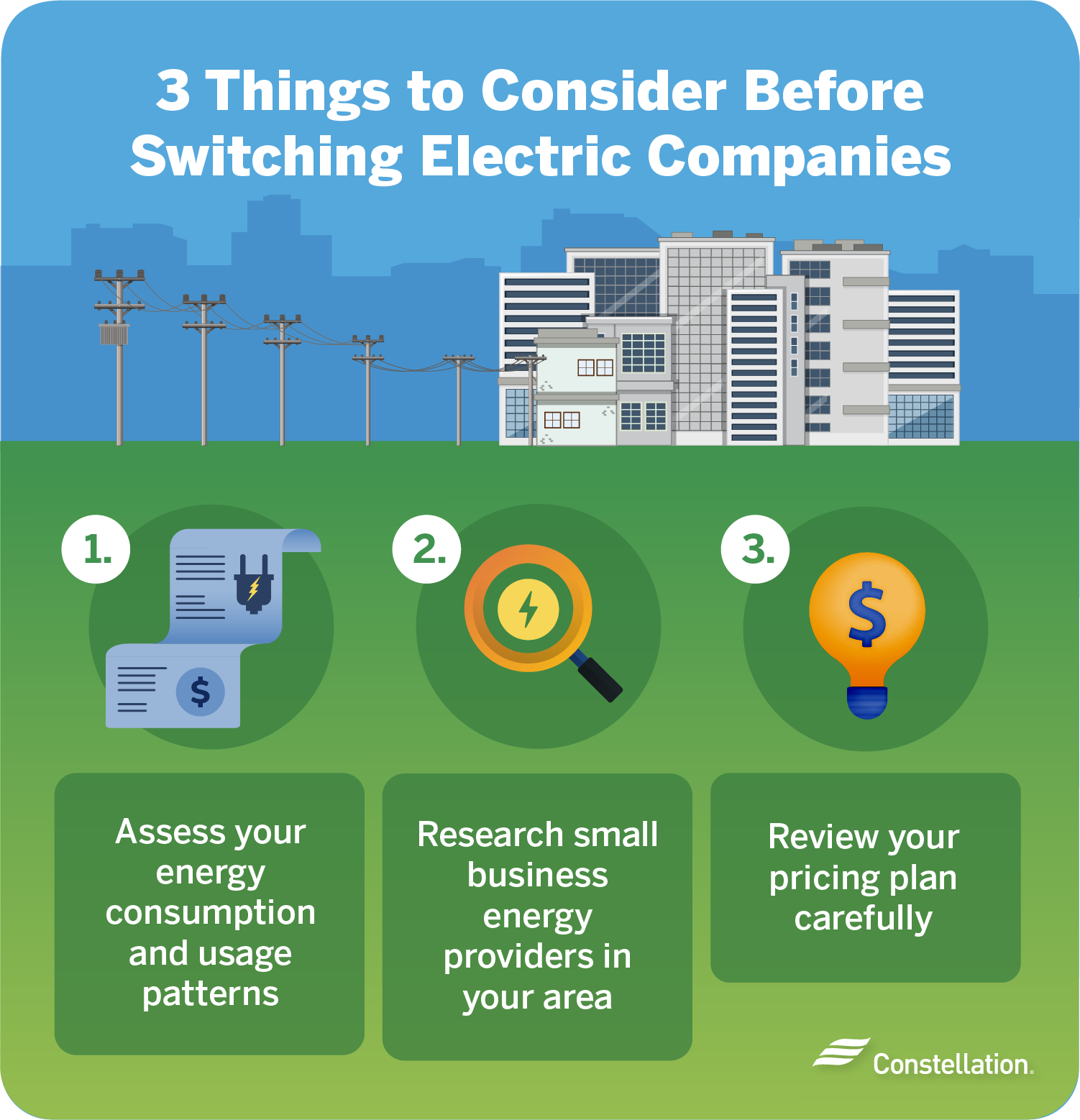
Image Source: blog.constellation.com
How To Switch Business Electricity Suppliers for Savings
Yes, switching business electricity suppliers can lead to significant savings for your business. The process involves comparing different providers and their tariffs to find the most cost-effective option that suits your company’s energy needs. This guide will walk you through everything you need to know about business energy switching to secure better rates and manage your overheads more effectively.
Deciphering Your Current Energy Usage and Contract
Before you embark on the journey of switching energy suppliers for SMEs or larger enterprises, it’s crucial to have a clear picture of your current energy consumption and contract terms. This foundational step ensures you make informed decisions and avoid potential pitfalls.
Gathering Essential Information
To begin, you’ll need to collect several key pieces of information. This data will form the basis of your search for new providers and allow you to accurately obtain business electricity quotes.
- Your Latest Energy Bills: These are your primary source of information. Look for details like your current supplier, your unit rate (pence per kilowatt-hour), standing charges, and any additional fees or levies.
- Your Annual Consumption: Bills usually show your kWh usage over a period. Summing this up for a full year will give you your total annual consumption.
- Contract End Date: This is vital. Switching before your contract ends can incur significant exit fees. Knowing this date allows you to plan your switch strategically.
- Notice Period: Most commercial electricity contracts have a notice period, often 30 to 90 days, before the contract end date during which you can switch without penalty. Missing this window means you’ll likely roll over onto a more expensive out-of-contract rate.
- Your MPAN (Meter Point Administration Number): This unique identifier for your electricity supply is usually found on your bill and is essential for comparing suppliers.
- Your Business Address and SIC Code: These details are standard requirements when requesting quotes.
Fathoming Contract Terms and Conditions
It’s not just about the price. A thorough examination of your existing commercial electricity contracts is necessary.
- Contract Length: Are you on a fixed-term contract or a variable one? Fixed-term contracts offer price stability, while variable rates can fluctuate.
- Exit Clauses: What are the penalties for leaving early? Ensure you understand these before planning to switch.
- Renewal Terms: How does your supplier notify you of renewal? Are there specific windows for accepting or rejecting their new offers?
Finding New Energy Providers
With your current situation clearly defined, the next step is to explore the market and identify potential new energy suppliers. The market is competitive, offering a range of options for businesses.
Exploring the Market Landscape
Numerous energy suppliers operate in the UK, each offering different tariffs and service levels. Some are large, established providers, while others are newer, more agile companies focusing on specific market segments or offering innovative pricing models.
- Major Suppliers: These are well-known names in the industry with broad customer bases.
- Smaller/Niche Suppliers: These often cater to specific business types or offer competitive pricing by focusing on efficiency and customer service.
Leveraging an Energy Supplier Comparison Tool
The most efficient way to navigate the diverse offerings is by using an energy supplier comparison tool. These online platforms are designed to simplify the business energy switching process.
- How They Work: You input your business details and energy consumption data. The tool then accesses a database of current tariffs from multiple suppliers and presents you with a range of options.
- Benefits:
- Time-Saving: They automate the process of gathering quotes.
- Comprehensive: They typically cover a wide range of suppliers, ensuring you see the most competitive deals.
- Impartial: Reputable tools are designed to provide objective comparisons based on your specific needs.
- Identifying Best Deals: They highlight which providers offer the lowest unit rates and standing charges for your consumption.
Comparing Business Energy Tariffs
Once you have a list of potential suppliers and their offerings, it’s time to delve deeper into the specifics of their tariffs. This is where you identify the real savings.
Key Factors to Consider When Comparing
It’s not just about the lowest price per kWh. A holistic comparison is essential.
- Unit Rates (pence per kWh): This is the cost for each unit of electricity you consume. It’s often broken down into day and night rates for businesses with different consumption patterns.
- Standing Charges: This is a daily fixed fee, regardless of your energy usage. It covers the cost of maintaining the supply to your property.
- Contract Length: Shorter contracts offer flexibility but may have higher unit rates. Longer contracts can lock in lower prices but reduce your ability to switch if market conditions change.
- Fixed vs. Variable Rates:
- Fixed Price Business Electricity: This locks in your unit rate and standing charge for the duration of the contract. It provides budget certainty but means you won’t benefit from falling wholesale energy prices.
- Variable Rate Business Energy: This allows your rates to fluctuate based on market wholesale prices. It can be cheaper if prices drop but carries the risk of higher bills if prices rise. Many businesses opt for fixed rates for predictability.
- Renewal Pricing: Some suppliers offer introductory rates that increase significantly upon renewal. Always check the renewal terms.
- Exit Fees: Although you’re switching at the end of your contract, it’s good practice to be aware of these in case your plans change.
- Supplier Reputation and Customer Service: Read reviews and check independent ratings for customer service, billing accuracy, and responsiveness. A cheap deal is less attractive if the supplier is difficult to deal with.
Analysing the Total Cost
To truly compare offers, you need to calculate the total annual cost for each supplier. This involves multiplying your annual kWh consumption by the unit rate and adding the standing charges for the contract period.
Example Calculation:
Let’s say your business uses 50,000 kWh per year, with a daily standing charge.
| Supplier | Unit Rate (p/kWh) | Standing Charge (£/day) | Annual Standing Charge (£) | Estimated Annual Bill (£) |
|---|---|---|---|---|
| Supplier A | 15.00 | 0.30 | 109.50 | (50,000 * 0.15) + 109.50 = 7609.50 |
| Supplier B | 14.50 | 0.35 | 127.75 | (50,000 * 0.145) + 127.75 = 7377.75 |
| Supplier C | 15.50 | 0.25 | 91.25 | (50,000 * 0.155) + 91.25 = 7841.25 |
In this simplified example, Supplier B appears to be the most cost-effective based on estimated annual consumption.
The Switching Process: Step-by-Step
Once you’ve chosen your new supplier, the switching process itself is generally straightforward and managed by the suppliers involved.
Initiating the Switch
- Contact Your Chosen Supplier: Inform them you wish to switch and provide the necessary details (MPAN, address, consumption).
- Provide Contract Details: You will likely need to provide details of your current contract, including the end date and your current supplier.
The Role of the Central Switching Service
In the UK, a central body ensures that the switching process is smooth and that your supply is not interrupted.
- Managing the Transfer: The new supplier will manage the transfer of your account. They will contact your existing supplier to inform them of the switch.
- No Interruption: Your electricity supply will not be turned off during the switch. The physical connection remains the same; only the billing changes.
- Deadlines: Your new supplier will confirm the official switch date, typically aligning with the end of your current contract or shortly after the notice period has passed.
What Happens on the Switch Date?
- Meter Reading: You may be asked to take a final meter reading for your old supplier and an opening meter reading for your new supplier on the switchover date. This ensures accurate billing from both parties.
- First Bill: You will receive your first bill from your new supplier, which should reflect your agreed-upon rates and charges.
Switching Business Gas and Electricity
Many businesses use both gas and electricity. It’s often beneficial to switch both services at the same time, potentially securing additional savings through dual fuel contracts.
Benefits of Dual Fuel Switching
- Simplified Administration: You have one point of contact for both your gas and electricity needs.
- Potential Discounts: Some suppliers offer discounts for taking both services from them.
- Easier Budgeting: Consolidating your energy management can make budgeting more straightforward.
The Process for Dual Fuel
The process for switching business gas and electricity is very similar to switching just electricity.
- Gather Information for Both Services: You’ll need the equivalent details for your gas supply, including your MPRN (Meter Point Reference Number) and your latest gas bills.
- Use Comparison Tools: Ensure the comparison tools you use can search for dual fuel deals.
- Compare Dual Fuel Tariffs: Look at the combined cost of gas and electricity from different suppliers.
Common Questions About Business Energy Switching
This section addresses frequently asked questions to provide further clarity on the business energy switching process.
Frequently Asked Questions (FAQ)
-
Q1: How long does it take to switch business electricity suppliers?
A1: The typical switching process takes between 2 to 4 weeks from the point you agree to switch. However, the actual transfer date is usually set to coincide with the end of your current contract to avoid exit fees. -
Q2: What happens if I’m in a fixed-term contract and want to switch early?
A2: Switching early from a fixed-term contract usually incurs exit fees, which can be substantial. It’s best to wait until your contract is nearing its end or within the supplier’s specified notice period to avoid these penalties. -
Q3: Do I need to inform my current supplier that I’m switching?
A3: No, you do not need to inform your current supplier. Your new supplier will handle all communications with your old one as part of the switching process. -
Q4: What if my business has multiple meters or sites?
A4: You can switch all your meters and sites together, or you can switch them individually. Many comparison tools can handle multiple sites, making it easier to manage your energy across your entire business. -
Q5: Can I switch if I have a smart meter?
A5: Yes, having a smart meter does not prevent you from switching suppliers. The process is the same, and your new supplier will be able to communicate with your smart meter. -
Q6: What is a “cooling-off” period?
A6: Many consumer contracts, and some business contracts, include a cooling-off period (usually 14 days) from the date you agree to the contract. During this period, you can cancel the contract without penalty. Always check the terms and conditions for specifics. -
Q7: What if my business is classed as a “micro-business”?
A7: If your business meets certain criteria (e.g., fewer than 10 employees, annual consumption below 2,900 MWh for electricity or 7,300 MWh for gas), you are considered a micro-business. You have stronger protections under energy regulations, and the switching process is designed to be even more straightforward for you. -
Q8: How do I know if I’m getting a good deal?
A8: Use an energy supplier comparison tool and compare the unit rates and standing charges against your current contract and other available offers. Consider the total annual cost based on your projected consumption. -
Q9: Are there any hidden fees when switching?
A9: Reputable energy supplier comparison tool platforms will show all costs upfront. Always read the contract details from the new supplier carefully to identify any potential hidden fees or charges you may not have anticipated. -
Q10: What happens if my business moves premises?
A10: If you are moving premises, you will need to inform your current supplier about the move date. You can arrange to close your account at the old premises and set up a new contract for your new location. It’s advisable to start this process well in advance of your move.
Conclusion: Taking Control of Your Business Energy Costs
Business energy switching is a proactive strategy that can yield significant financial benefits. By diligently researching, comparing tariffs, and navigating the switching process, businesses of all sizes can secure more favourable commercial electricity contracts. This not only reduces immediate expenditure but also provides greater budget predictability, allowing you to focus on growing your business. Don’t let outdated, expensive energy contracts hold your business back; take control and start saving today.