
What is the gauge of an extension cord? The gauge of an extension cord refers to the thickness of its wires, measured by the American Wire Gauge (AWG) system. A lower AWG number indicates a thicker wire, which can handle more electrical current and is generally safer for higher-wattage appliances.
When you’re choosing an extension cord, it’s crucial to know its gauge. This single number tells you a lot about the cord’s capacity and suitability for different tasks. Using the wrong gauge can be dangerous, leading to overheating, damage to your tools or appliances, and even fire hazards. This guide will help you decipher the mystery of extension cord gauges, ensuring you make safe and informed decisions for all your electrical needs.
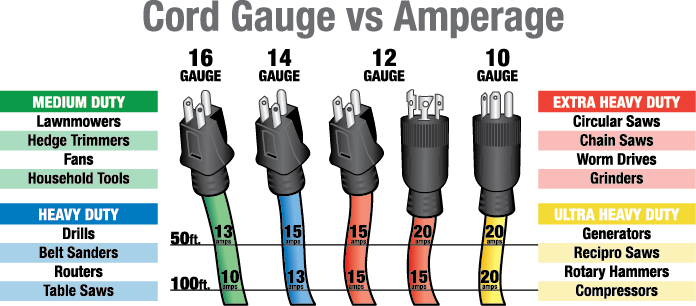
Image Source: blueprint.fastenal.com
Deciphering the AWG System
The American Wire Gauge (AWG) is the standard system used in North America for measuring the diameter of electrical wires. It’s a bit counterintuitive: the lower the AWG number, the thicker the wire. This means a 10 AWG wire is much thicker than a 14 AWG wire. This difference in electrical wire size is critical because thicker wires have less resistance, allowing more electrical current to flow through them safely.
Think of it like water pipes. A wider pipe (like a lower AWG number) can carry more water without building up pressure. A narrow pipe (like a higher AWG number) restricts the flow and can lead to problems.
Key Aspects of AWG
- Number Represents Thickness: As mentioned, a lower AWG number signifies a thicker wire.
- Current Carrying Capacity: Thicker wires (lower AWG) can safely carry more amperage (current). This directly relates to the amperage rating of the extension cord.
- Resistance: Thicker wires have lower electrical resistance. This means less energy is lost as heat, making them more efficient and safer, especially for long runs or high-power devices.
- Flexibility: Generally, thinner wires (higher AWG) are more flexible than thicker wires (lower AWG).
Identifying Wire Gauge on Extension Cords
So, how do you find this all-important gauge number on your extension cord? It’s usually printed right on the cable itself, though it might be small.
Where to Look
- Printed on the Cable Jacket: Most manufacturers print the AWG number directly onto the outer insulation (the jacket) of the extension cord. Look for a series of numbers and letters, often near the plug or the receptacle end. It might look something like “14 AWG” or “12/3”.
- The “3” in “12/3”: If you see a number like “12/3,” the “12” refers to the AWG of the conductors, and the “3” indicates the number of conductors within the cord (hot, neutral, and ground).
What to Look For
- “AWG” Designation: The most straightforward way is to find the letters “AWG” followed by a number.
- Conductor Count: As mentioned, a “3” indicates a standard three-prong cord, which is what you’ll find on most household extension cords. Some specialized cords might have more conductors.
If It’s Not Printed
If the AWG marking has worn off or is impossible to find, you might need to resort to other methods. However, this should be a last resort, as these methods are less precise.
Measuring Extension Cord Diameter
One method for identifying wire gauge without a printed label is to measure the extension cord diameter of the individual conductors inside the cord. This requires cutting open the cord, which will render it unusable, so this is only advisable if you have a cord you no longer need or are trying to identify a cord whose markings are completely gone.
- Carefully Cut and Strip: Using wire strippers or a sharp knife, carefully cut the outer jacket of the extension cord. Then, gently strip away the insulation from one of the inner conductors. Be careful not to nick the copper wire itself.
- Measure the Wire: Use a caliper or a ruler to measure the diameter of the exposed copper wire. You’ll want to measure the diameter of the copper itself, not including any insulation.
- Consult a Gauge Chart: Once you have the diameter in inches or millimeters, you can compare it to a gauge chart to find the corresponding AWG number.
Example Measurement: If you measure a copper wire conductor to be approximately 0.064 inches in diameter, this would typically correspond to a 14 AWG wire.
Comprehending the Gauge Chart
A gauge chart is your best friend when it comes to understanding electrical wire size. It directly links AWG numbers to wire diameter and, crucially, to the wire’s current-carrying capacity.
Typical AWG Gauge Chart for Extension Cords
| AWG | Diameter (inches) | Diameter (mm) | Amps (Approximate) | Common Use Cases |
|---|---|---|---|---|
| 18 | 0.040 | 1.02 | 7-10 | Light-duty indoor cords, holiday lights |
| 16 | 0.050 | 1.27 | 10-13 | Medium-duty indoor/outdoor, lamps, small appliances |
| 14 | 0.064 | 1.63 | 13-18 | General household use, power tools, appliances |
| 12 | 0.081 | 2.05 | 18-25 | Heavy duty extension cord, appliances, workshops |
| 10 | 0.102 | 2.59 | 25-30 | Very heavy duty, RVs, welders, large power tools |
Note: Ampacity ratings can vary based on insulation type, temperature, and whether the wire is in conduit or open air. The values above are general approximations for common extension cord applications.
Factors Influencing Amperage Rating
- Wire Thickness (AWG): This is the primary factor. Thicker wire (lower AWG) handles more amperage.
- Cord Length: Longer cords have higher resistance, meaning they can handle less amperage without overheating. A 14 AWG cord might be rated for 15 amps, but this rating might decrease for a 100-foot cord compared to a 10-foot cord.
- Number of Conductors: While most extension cords have three conductors (hot, neutral, ground), the presence of multiple conductors can slightly affect heat dissipation.
- Insulation Type: Different insulation materials have different temperature ratings and abilities to dissipate heat.
Why Gauge Matters: Safety and Performance
The gauge of your extension cord is not just a technical detail; it’s a critical safety feature and directly impacts the performance of your tools and appliances.
Safety First: Preventing Overheating and Fires
- Overheating: When an appliance draws more current than the wire gauge can safely handle, the copper wire gauge heats up. This can melt the insulation, leading to short circuits, sparks, and potentially a fire.
- Amperage Mismatch: Always match the cord’s amperage rating to the appliance’s power needs. If your appliance draws 12 amps, you need an extension cord rated for at least 12 amps (preferably higher for a safety margin). A cord that is too thin for the load acts like a resistor, generating excessive heat.
- Voltage Drop: For longer extension cords, a thinner gauge wire will experience a greater “voltage drop.” This means the voltage reaching your appliance is lower than the voltage from the outlet. This can cause motors to run slower, reduce the efficiency of heating elements, and potentially damage sensitive electronics.
Performance: Ensuring Your Tools Work Properly
- Power Delivery: A cord with an appropriate gauge ensures that your tools and appliances receive the full, intended power. This is especially important for power tools that require a consistent amount of energy to operate effectively.
- Tool Efficiency: Using an undersized extension cord can lead to a loss of power, making your tools perform poorly. This can result in slower work, increased wear and tear on the tool, and a less satisfactory outcome.
- Motor Protection: Electric motors are particularly sensitive to voltage drop. Using the correct gauge extension cord helps protect these motors from damage caused by insufficient power.
Choosing the Right Gauge for Your Needs
The type of appliance or tool you’re using will dictate the required extension cord gauge.
Common Scenarios and Recommended Gauges
- Indoor Lighting and Small Electronics (e.g., lamps, radios, phone chargers): These typically draw very little power. 18 AWG or 16 AWG cords are usually sufficient. However, longer runs or multiple devices plugged into one cord might warrant a 14 AWG.
- Household Appliances (e.g., vacuum cleaners, fans, coffee makers): These require a bit more power. A 14 AWG cord is a good general-purpose choice for most household appliances.
- Power Tools (e.g., drills, saws, sanders): Power tools often have motors that draw a significant amount of current, especially when starting up. For these, a 14 AWG is the minimum, but a 12 AWG is often recommended, especially for longer cord lengths or high-demand tools.
- Heavy-Duty Outdoor Equipment (e.g., lawnmowers, snow blowers): These often have powerful motors. A 12 AWG cord is usually the minimum for these applications. For very demanding tasks or longer cord lengths, a 10 AWG cord might be necessary.
- High-Wattage Appliances (e.g., space heaters, air conditioners, welders): These draw the most power. Always check the appliance’s wattage or amperage requirement. For these, you will likely need a 10 AWG heavy duty extension cord.
Considering Cord Length
Remember that cable thickness is not the only factor. Cord length significantly impacts its ability to carry current safely.
- Short Cords (up to 25 feet): You can often use a slightly higher AWG number (e.g., 16 AWG for medium loads, 14 AWG for heavier loads).
- Medium Cords (25-50 feet): It’s advisable to step up to a thicker gauge. If you’d use 14 AWG for a short cord, consider 12 AWG for this length.
- Long Cords (50-100 feet or more): For these lengths, always opt for thicker gauges. A 12 AWG might be acceptable for light loads, but a 10 AWG is often the safest and most efficient choice for moderate to heavy loads to avoid significant voltage drop and overheating.
Reading the Appliance’s Label
The most reliable way to determine the correct extension cord gauge is to check the appliance or tool itself. Look for a label that indicates its wattage or amperage.
- Wattage (W): To convert wattage to amperage, use the formula: Amps = Watts / Volts. Assuming a standard 120-volt outlet in North America, an appliance rated at 1200 watts would draw 10 amps (1200W / 120V = 10A).
- Amperage (A): If the label directly states the amperage draw, use that number.
Once you know the appliance’s amperage requirement, consult the gauge chart to select a cord with a suitable amperage rating. It’s always best to choose a cord rated for a higher amperage than your appliance requires to provide a safety margin.
Types of Extension Cords and Their Gauges
Extension cords come in various configurations, and the number of conductors and outer casing can also give clues about their intended use and gauge.
Standard Household Cords (3-Prong)
These are the most common cords, featuring three conductors: hot, neutral, and ground. They are designed for general use around the home. Their gauges typically range from 18 AWG (light duty) to 12 AWG (heavy duty).
Heavy-Duty and Industrial Cords
- 12 AWG and 10 AWG: These are considered heavy duty extension cord options. They are built with thicker insulation, more robust connectors, and often have a more durable outer jacket to withstand harsher conditions, such as those found in workshops, construction sites, or for powering larger equipment. The thicker cable thickness is essential for safely handling the high power demands of such applications.
Specialty Cords
- Outdoor Cords: These are designed to withstand weather, UV rays, and moisture. They are typically made with durable, weather-resistant materials and are often found in gauges from 16 AWG to 10 AWG, depending on their intended power capacity.
- Retractable Cords: These can vary widely in gauge depending on the power they are designed to deliver and their length when fully extended. Always check the markings.
Fathoming Wire Gauge When Markings Are Absent
If you have an old extension cord and the markings have disappeared, or you’ve found a cord without any visible gauge information, identifying wire gauge becomes trickier. Here’s a breakdown of methods, from least to most destructive:
Visual Comparison (Least Accurate)
If you have known extension cords of different gauges, you can try to visually compare the thickness of the wires. Hold them side-by-side and observe the overall extension cord diameter. However, this is highly subjective and not recommended for critical applications.
Measuring the Conductor Diameter (More Accurate, Destructive)
This is the most reliable method if markings are gone, but it requires sacrificing the cord.
- Prepare the Cord: Cut off a section of the cord, about a foot long.
- Strip the Jacket: Carefully use wire strippers or a sharp knife to remove the outer insulation (the jacket) without damaging the inner wires.
- Strip Individual Conductors: Gently strip the insulation off one of the inner conductors. Again, avoid nicking the copper wire.
- Measure the Copper: Use a caliper to measure the diameter of the bare copper wire.
- Consult a Gauge Chart: Refer to a gauge chart to find the corresponding AWG number based on the measured diameter. For example, if the copper wire measures 0.081 inches in diameter, it’s likely 12 AWG.
Using a Multimeter (Indirect Method)
While a multimeter doesn’t directly measure wire gauge, you can use it to measure the resistance of a known length of wire.
- Measure Resistance: Set your multimeter to measure resistance (ohms). Measure the resistance of a specific length of conductor (e.g., 10 feet) from the extension cord.
- Calculate Resistance per Foot: Divide the total resistance by the length in feet to get ohms per foot.
- Compare to Tables: Different AWG sizes have known resistance values per foot. You can find these tables online. For example, 14 AWG copper wire has a resistance of about 2.5 ohms per 1000 feet, or about 0.03 ohms per 10 feet. By comparing your calculated resistance per foot to these values, you can infer the wire gauge. This method requires accuracy in measurement and interpretation.
Best Practices for Extension Cord Safety
Beyond knowing the gauge, a few other practices ensure safe use of extension cords.
- Inspect Regularly: Always check extension cords for damage such as frayed wires, cracked insulation, or damaged plugs before each use. Dispose of damaged cords immediately.
- Avoid Overloading: Never plug in appliances that draw more power than the cord’s amperage rating.
- Use the Right Cord for the Job: Don’t use indoor cords outdoors, and ensure outdoor cords are rated for the environment.
- Avoid Tripping Hazards: Route cords so they don’t create tripping hazards, and never run them under carpets or rugs where damage might go unnoticed.
- Don’t Extend Extension Cords: Avoid plugging extension cords into other extension cords. This can lead to increased resistance, voltage drop, and overheating.
- Proper Storage: Store cords neatly, away from heat and moisture, to prevent damage.
Frequently Asked Questions (FAQ)
Q1: What does AWG mean on an extension cord?
A1: AWG stands for American Wire Gauge. It’s a system used to measure the thickness of wires. A lower AWG number means a thicker wire, which can handle more electrical current.
Q2: Can I use a thinner gauge extension cord if the appliance doesn’t draw much power?
A2: While technically the appliance might function, it’s not recommended. Using a thinner gauge cord than what is appropriate increases the risk of overheating, damage to the cord, and potential fire hazards, even if the appliance’s immediate draw seems low. Always err on the side of caution and use a cord with a gauge rating suitable for the appliance’s full potential power draw.
Q3: How do I know if my extension cord is a heavy-duty extension cord?
A3: A heavy duty extension cord will typically have a lower AWG number, such as 12 AWG or 10 AWG. It will also often have thicker insulation, more robust plug and receptacle ends, and its jacket might be labeled for heavy-duty use or outdoor/industrial applications. Always check the printed AWG on the cable.
Q4: What happens if I use an extension cord that is too long?
A4: Using an extension cord that is too long for the required amperage can lead to voltage drop and overheating. The longer the wire, the higher its resistance. This means less voltage reaches the appliance, reducing its efficiency and potentially damaging its motor. The increased resistance also generates more heat.
Q5: Is 14 AWG good enough for a power tool?
A5: A 14 AWG extension cord is generally suitable for many common power tools, especially for shorter runs. However, for tools that draw a lot of power, have high starting surges (like compressors or large saws), or if you need a longer cord (over 50 feet), a 12 AWG or even a 10 AWG heavy duty extension cord is a safer and more efficient choice to ensure proper performance and prevent overheating. Always check your tool’s manual for specific recommendations.
By paying close attention to the gauge of your extension cords, you ensure the safety of your home and family, as well as the optimal performance of your electrical devices. Always choose the right electrical wire size for the job.