
This comprehensive guide will walk you through the essential steps for tuning your chainsaw engine, covering everything from basic adjustments to advanced chainsaw performance tuning. Properly tuning your chainsaw ensures optimal power, smooth operation, and longevity for your equipment.
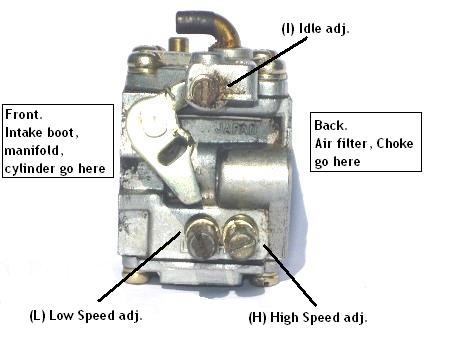
Image Source: cdn.shopify.com
How to Tune a Chainsaw: A Step-by-Step Engine Tuning Guide
A well-tuned chainsaw is a joy to use, cutting through wood with power and precision. An untuned saw can sputter, stall, bog down, and generally make a frustrating experience out of what should be efficient work. This guide focuses on chainsaw engine tuning, making your saw run its best. We’ll cover the key components and adjustments to bring your chainsaw back to life.
Why Chainsaw Tuning is Crucial
Regular chainsaw carburetor adjustment and overall engine tuning are not just about convenience; they are about maintaining the health and efficiency of your tool. A correctly tuned engine uses fuel more efficiently, produces less pollution, and experiences less wear and tear. Think of it like a tune-up for your car – it keeps everything running smoothly and prevents bigger problems down the road.
- Fuel Efficiency: Proper tuning means the chainsaw fuel mixture is just right, leading to less wasted fuel.
- Power Output: A well-tuned engine delivers maximum power, making your cutting tasks easier and faster.
- Engine Longevity: Incorrect fuel mixtures or settings can cause premature wear on engine parts.
- Reduced Emissions: Cleaner burning fuel means less pollution from your chainsaw.
- Smoother Operation: No more sputtering or stalling; a tuned saw runs consistently.
Essential Tools for Chainsaw Tuning
Before you begin, gather the necessary tools. Having the right equipment makes the job much easier and more accurate.
- Screwdriver Set: You’ll need various sizes, often including flathead screwdrivers for carburetor adjustments and Phillips head screwdrivers for other parts.
- Tachometer: Essential for accurately setting the chainsaw idle speed and high-speed limits. A digital tachometer is recommended for precision.
- Spark Plug Wrench: To remove and replace the chainsaw spark plug.
- Compressed Air or Air Compressor: For cleaning the chainsaw air filter and other components.
- Clean Rags: For wiping down parts.
- Gloves and Safety Glasses: Always prioritize safety.
- Owner’s Manual: Your chainsaw’s manual is the best resource for specific settings and procedures.
Step 1: Safety First!
Always ensure your chainsaw is off and the spark plug wire is disconnected before performing any maintenance. This prevents accidental starts and serious injury. Work in a well-ventilated area.
Step 2: Inspecting the Chainsaw Air Filter
The chainsaw air filter is the lungs of your engine. A dirty filter restricts airflow, causing poor performance and an overly rich fuel mixture.
- Locate the Air Filter Cover: This is usually a snap-off or screw-on cover on top of the engine. Consult your manual if you can’t find it.
- Remove the Air Filter: Carefully take out the filter. Note its orientation.
- Clean the Air Filter:
- Paper Filters: Gently tap the filter against a hard surface to dislodge debris. If it’s very dirty or damaged, it’s best to replace it. You can also use compressed air blown from the inside out.
- Felt or Nylon Filters: These can often be washed with warm, soapy water. Rinse thoroughly and allow them to air dry completely before reinstalling. Do not use gasoline or harsh solvents, as they can damage the filter material.
- Inspect the Filter: Look for any tears, holes, or excessive wear. Replace the filter if it’s damaged.
- Clean the Filter Housing: Wipe down the inside of the air filter housing to remove any dust or debris.
- Reinstall the Air Filter: Place the clean, dry filter back in its housing, ensuring it’s seated correctly. Replace the cover.
Step 3: Checking and Replacing the Chainsaw Spark Plug
The chainsaw spark plug ignites the fuel-air mixture. A worn or fouled spark plug can lead to misfires and rough running.
- Locate the Spark Plug: It’s usually found under a removable cover, connected to a spark plug wire.
- Remove the Spark Plug Wire: Gently pull the boot off the spark plug.
- Remove the Spark Plug: Use a spark plug wrench to unscrew the spark plug.
- Inspect the Spark Plug:
- Color: A healthy spark plug tip should be a light tan or grayish-brown.
- Fouling: Black, sooty deposits indicate a rich fuel mixture or improper combustion. Oily deposits can indicate internal engine problems. White or blistered deposits suggest a lean mixture or overheating.
- Electrode Wear: Check the gap and the electrode itself. If the electrode is worn down or the gap is too wide, it’s time for a new plug.
- Clean or Replace:
- If the plug is only slightly fouled, you can try cleaning it with a wire brush and a clean rag. Ensure no debris enters the spark plug hole.
- It’s often best practice to replace the spark plug during a tune-up, as they are relatively inexpensive. Use the correct spark plug type recommended in your owner’s manual.
- Set the Spark Plug Gap: Use a feeler gauge to set the correct gap between the electrodes, as specified in your manual.
- Install the New Spark Plug: Screw it in by hand first to avoid cross-threading. Then, tighten it with the spark plug wrench – snug is good; don’t overtighten.
- Reconnect the Spark Plug Wire: Push the boot firmly back onto the spark plug until it clicks into place.
Step 4: Chainsaw Carburetor Adjustment – The Heart of Tuning
The carburetor controls the chainsaw fuel mixture by blending air and fuel. Most modern chainsaws have a carburetor with adjustable high-speed (H), low-speed (L), and idle mixture screws. Some might have a limit-stop screw on the idle speed adjustment.
Important Note: Always refer to your chainsaw’s owner’s manual for the specific location and type of adjustment screws, and their factory settings. Many chainsaws have limiter caps on the screws to prevent over-adjustment and meet emissions standards. If your saw has these, you may need to remove them carefully to make adjustments.
General Procedure for Chainsaw Carburetor Adjustment:
- Warm Up the Engine: Start the chainsaw and let it run for a few minutes until it reaches normal operating temperature. This is crucial for accurate adjustments.
- Set the Chainsaw Idle Speed:
- Locate the idle speed screw (often marked with a ‘T’ for throttle or it’s part of the linkage).
- If your saw has a separate idle speed screw, you’ll use a screwdriver to turn it. Turning it clockwise typically increases idle speed, and counter-clockwise decreases it.
- The goal is for the engine to run smoothly at idle without the chain moving. Your manual will specify the target chainsaw idle speed RPM.
- If the engine stalls at idle or runs very slowly, you’ll need to increase the idle speed. If the chain spins at idle, you’ll need to decrease it.
- Adjusting the Mixture Screws (H and L):
- Finding the Baseline: The common starting point for both the High (H) and Low (L) mixture screws is to turn them gently clockwise until they just seat. Then, back them out a specified number of turns, usually 1 to 1.5 turns for both. Again, check your manual for the exact starting point.
- Low Speed (L) Screw Adjustment: This screw primarily affects the idle and transition to higher RPMs.
- With the engine idling, slowly turn the L screw.
- Turn it clockwise (leaner) until the engine speed starts to drop or the engine begins to sound rough (a four-stroking sound).
- Then, turn it counter-clockwise (richer) until the engine speed starts to drop again or it sounds like it’s loading up.
- The ideal setting is usually halfway between these two points, where the engine idles fastest and smoothest.
- High Speed (H) Screw Adjustment: This screw affects the engine’s performance at full throttle.
- With the engine running at full throttle (you might need to prop the throttle open or have an assistant hold it), slowly turn the H screw.
- Turn it clockwise (leaner) until the engine begins to slow down or sound like it’s “screaming.” This is the lean limit.
- Then, turn it counter-clockwise (richer) until the engine sound drops significantly or it begins to four-stroke. This is the rich limit.
- The ideal setting is usually about a quarter to half a turn counter-clockwise from the lean limit. This ensures the engine runs slightly rich at high speed, providing the best power and cooling, and preventing potential engine damage from running too lean.
- Fine-Tuning and Testing:
- After initial adjustments, re-check the chainsaw idle speed. The L screw adjustment might have changed it.
- Test the chainsaw by revving it up and down. Listen for smooth acceleration and consistent power.
- Cut some wood. Pay attention to how the saw performs under load. Does it bog down? Does it seem to have lost power?
- You may need to repeat the H and L screw adjustments and idle speed adjustments a few times to get it perfect.
Troubleshooting Carburetor Issues:
- Engine Won’t Idle: Try increasing idle speed and enriching the L mixture slightly.
- Chain Spins at Idle: Decrease idle speed and lean the L mixture slightly.
- Engine Bogs Down When Accelerating: Enrich the L mixture slightly.
- Engine Loses Power at High Speed/Four-Strokes: Enrich the H mixture slightly.
- Engine Runs Rough/Stalls at High Speed: Lean the H mixture slightly (but not too much!).
Step 5: Inspecting the Chainsaw Exhaust
While you can’t directly “tune” the chainsaw exhaust in the same way as the carburetor, its condition significantly impacts engine performance.
- Check for Obstructions: Ensure the muffler outlet isn’t blocked by debris, sawdust, or carbon buildup. A clogged muffler restricts exhaust gases, reducing power and potentially causing overheating.
- Muffler Spark Arrestor: If your chainsaw has a spark arrestor screen in the muffler, check it for carbon buildup. Clean it with a wire brush if necessary. A clogged spark arrestor can severely impede exhaust flow.
- Loose Muffler: Make sure the muffler is securely fastened to the engine. A loose muffler can cause exhaust leaks, leading to reduced power and increased noise.
Step 6: Checking the Chainsaw Governor
The chainsaw governor is a mechanical system that limits the maximum engine speed to prevent damage. While not typically adjusted by the end-user unless troubleshooting specific issues, it’s worth knowing its role.
- Governor Springs and Linkages: The governor relies on springs and linkages connected to the carburetor. If these parts are damaged, stretched, or incorrectly positioned, the governor may not function properly, leading to over-revving or insufficient high-speed performance.
- Governor Settings: The governor’s settings are usually pre-calibrated by the manufacturer. Tampering with these settings without proper knowledge and tools can lead to severe engine damage. If you suspect a governor issue, it’s best to consult a professional or your owner’s manual for specific diagnostic procedures.
Step 7: Fuel and Oil Mixture
Using the correct chainsaw fuel mixture (gasoline and two-stroke oil) is paramount.
- Fuel Type: Use fresh, high-octane unleaded gasoline. Avoid ethanol blends if possible, as they can degrade fuel lines and carburetors over time.
- Oil Type: Use a high-quality two-stroke engine oil specifically designed for air-cooled engines, like chainsaws.
- Mixing Ratio: Always follow the manufacturer’s recommended mixing ratio (e.g., 50:1, 40:1). Incorrect ratios can lead to engine damage. Measure both fuel and oil accurately. Use a clean, approved fuel container.
- Freshness: Do not store mixed fuel for extended periods (more than 30 days), as it can degrade and cause engine problems.
Step 8: Final Performance Testing
After all adjustments, take your chainsaw for a test run.
- Idle: Does it idle smoothly? Does the chain stay still?
- Acceleration: Does it rev up quickly and smoothly without hesitation?
- Full Throttle: Does it maintain consistent power at full throttle? Does it sound like it’s running efficiently, not excessively rich or lean?
- Cutting: Cut various types of wood and observe the chainsaw’s performance. It should feel powerful and responsive.
Common Chainsaw Tuning Problems and Solutions
| Problem | Possible Cause | Solution |
|---|---|---|
| Engine won’t start | No fuel, spark plug issue, blocked exhaust | Check fuel level, ensure fuel is fresh, check/clean/replace spark plug, check muffler for obstructions. |
| Engine starts but stalls | Idle too low, rich idle mixture, clogged fuel filter | Increase idle speed, slightly lean L screw, clean or replace fuel filter. |
| Engine runs rough at idle | Lean idle mixture, dirty spark plug, air leak | Slightly enrich L screw, clean/replace spark plug, check for air leaks in intake manifold or fuel lines. |
| Engine bogs down when accelerating | Lean low-speed mixture, dirty air filter | Slightly enrich L screw, clean air filter. |
| Engine loses power at high RPM | Lean high-speed mixture, clogged exhaust, governor issue | Slightly enrich H screw (do not lean too much!), clean exhaust/spark arrestor, check governor linkages for damage or obstruction. |
| Engine four-strokes (runs rough at high RPM) | Rich high-speed mixture | Slightly lean H screw. |
| Chain moves at idle | Idle speed too high, idle clutch issue | Decrease idle speed, check idle clutch for wear or proper engagement (consult manual). |
| Excessive smoke | Rich fuel mixture, wrong oil type, low-quality oil | Enrich H and L screws slightly (if needed), ensure correct oil type and ratio. |
Advanced Chainsaw Performance Tuning
For those seeking maximum output from their chainsaw, advanced chainsaw performance tuning might involve:
- Carburetor Upgrades: Some users opt for high-performance carburetors designed for increased airflow.
- Exhaust Modifications: Aftermarket mufflers or porting can improve exhaust flow, but must be done with extreme care to avoid engine damage.
- Ignition Timing: While most homeowner chainsaws have fixed ignition timing, some performance-oriented models might allow for adjustments. This is an advanced modification.
Caution: Any modifications beyond basic chainsaw carburetor adjustment and cleaning should be approached with caution. Incorrect modifications can lead to engine failure. Always research thoroughly and consider the risks involved.
Frequently Asked Questions (FAQ)
Q1: How often should I tune my chainsaw?
A1: It’s recommended to perform basic maintenance, like cleaning the air filter and checking the spark plug, before each use. A full tune-up involving chainsaw carburetor adjustment should be done at least once a year, or more often if you use your chainsaw frequently or notice performance issues.
Q2: Can I use regular gasoline in my chainsaw?
A2: It’s best to use fresh, high-octane unleaded gasoline. Avoid ethanol blends if your chainsaw is older or if you notice issues with fuel lines. Always follow the manufacturer’s recommendations.
Q3: My chainsaw is smoking a lot. What’s wrong?
A3: Excessive smoke usually indicates a rich fuel mixture (too much fuel or not enough air) or the use of the wrong type or ratio of two-stroke oil. Check your air filter, adjust the carburetor (enriching the H and L screws slightly might be necessary), and ensure you’re using the correct oil and mixing ratio.
Q4: What does it mean when my chainsaw “four-strokes”?
A4: A “four-stroke” sound means the engine is running too rich at higher RPMs – it’s getting too much fuel and not burning it all efficiently. You’ll need to lean out the chainsaw high speed adjustment (H screw) slightly.
Q5: How do I know if my chainsaw spark plug is bad?
A5: A bad spark plug will often be fouled with black, oily, or white deposits, have a worn or damaged electrode, or have an incorrect gap. If in doubt, replacing the chainsaw spark plug is a cheap and easy way to rule out an ignition problem.
By following these steps, you can effectively tune your chainsaw, ensuring it runs powerfully and reliably for all your cutting needs. Remember to always consult your owner’s manual for specific instructions tailored to your chainsaw model.