
Can you sharpen a bandsaw blade at home? Yes, you can sharpen a bandsaw blade at home, and it’s a skill that can save you money and improve your woodworking experience. Keeping your bandsaw blades sharp is crucial for clean cuts, reduced effort, and longer blade life. This guide will walk you through the process of bandsaw blade sharpening, covering everything from essential tools to the step-by-step techniques. Whether you’re a seasoned woodworker or just starting, mastering bandsaw blade maintenance will elevate your projects.
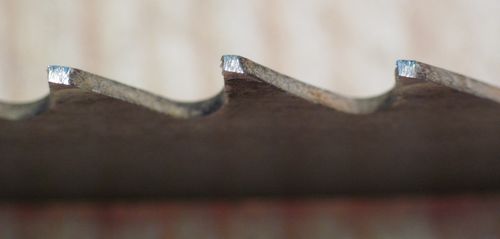
Image Source: woodgears.ca
Why Sharpen Your Bandsaw Blades?
Over time, the teeth on your bandsaw blades become dull. This dullness makes them less effective at cutting wood. Instead of slicing through material, dull teeth tear and rip, leading to several problems:
- Rough Cuts: You’ll notice splintering and uneven surfaces.
- Increased Effort: You’ll have to push harder, which can be tiring and lead to mistakes.
- Blade Wobble: Dull blades can cause the blade to wander off your cut line.
- Overheating: A dull blade generates more friction, which can burn the wood and even damage the blade itself.
- Shorter Blade Life: You might be tempted to replace the blade too soon when sharpening would suffice.
Regular sharpening extends the life of your blades and ensures you get the best performance from your bandsaw.
Essential Tools for Bandsaw Blade Sharpening
Before you begin sharpening bandsaw teeth, gather the necessary tools. Having the right equipment makes the process smoother and more effective.
Basic Sharpening Kit
- Bandsaw Blades: The blades you intend to sharpen.
- Bench Grinder: This is a fundamental tool, especially if you’re using a bandsaw blade grinder. Ensure it has a grinding wheel suitable for metal.
- Files: Various sizes of metal files, including a triangular file or a specialized bandsaw file.
- Sharpening Jig: A sharpening jig bandsaw setups can greatly improve accuracy and consistency.
- Vice: To hold the blade securely while you work.
- Magnifying Glass or Loupe: To inspect the teeth closely.
- Marking Pen: To mark teeth as you sharpen them.
- Safety Glasses: Always protect your eyes.
- Gloves: To keep your hands clean and protect them from sharp edges.
- Coolant (Optional): Water or a coolant solution to prevent overheating the blade.
- Wire Brush: To clean the blade before sharpening.
Understanding Your Bandsaw Blade
Before you start bandsaw blade sharpening, it’s helpful to know a few things about your specific blade.
- Tooth Count (TPI): Teeth per inch. Lower TPI is for rougher cuts and thicker materials. Higher TPI is for finer cuts and thinner materials.
- Tooth Set: This refers to how the teeth are angled alternately to the left and right. This set creates a kerf wider than the blade itself, preventing the blade from binding in the wood. The set determines how much material is removed with each pass.
- Hook Angle: The angle of the face of the tooth. A more aggressive hook angle cuts faster but can be more prone to breakage.
- Rake Angle: The angle of the back of the tooth.
- Gullet: The space between the teeth, which clears chips during cutting.
Methods for Bandsaw Blade Sharpening
There are two primary ways to approach bandsaw blade sharpening: manual and power-assisted.
Manual Bandsaw Sharpening
This method is more time-consuming but requires less specialized equipment. It’s a great way to start if you’re on a budget or want a more hands-on approach.
Using a File: Step-by-Step
-
Prepare the Blade:
- Clean the blade thoroughly with a wire brush to remove any sawdust, resin, or rust. A clean blade allows for more precise filing.
- Secure the blade in a vice. It’s often easiest to clamp a section of the blade flat, ensuring the teeth are facing upwards.
-
Set the Angle:
- Determine the correct bandsaw blade angle for your specific blade. This angle is usually consistent across all teeth. You can often find this information from the blade manufacturer.
- A common angle for the cutting face of the tooth is 10-15 degrees.
-
File the Teeth:
- Choose a file that is appropriate for the size of your teeth. A triangular file works well for most standard bandsaw blades.
- Position the file at the correct bandsaw blade angle against the front edge of a tooth.
- Use smooth, even strokes, filing only the top and front edge of the tooth. Aim to remove the dull metal and re-establish a sharp point.
- File in one direction only, typically away from the gullet.
- After filing one tooth, move to the next tooth on the same side of the blade. Continue this process until you have filed all the teeth on one side of the blade.
- Flip the blade over or reposition it to file the teeth on the other side. Ensure you maintain the same angle.
-
Reset the Teeth (If Necessary):
- The set of the teeth is crucial for preventing the blade from binding. If the set has been worn down, you may need to re-set the teeth.
- A specialized tool called a “set gauge” or “tooth setter” is used for this. You gently bend each tooth alternately to the left and right. Be careful not to over-bend, as this can break the teeth.
- Aim for a consistent set on every tooth.
-
Inspect and Test:
- Use your magnifying glass to check each tooth for sharpness and a consistent angle.
- A simple test is to gently run your fingernail across the cutting edge of a tooth. It should feel sharp and catch your nail.
- It’s a good practice to lightly hone bandsaw blades after filing to remove any burrs and further refine the edge. This can be done with a fine-grit stone or a ceramic rod.
Using a Sharpening Jig: Manual Operation
A sharpening jig bandsaw can significantly improve the consistency of your manual sharpening. These jigs guide the file at a precise angle.
- Mount the Jig: Securely attach the sharpening jig to your workbench or vice.
- Load the Blade: Place the bandsaw blade into the jig according to its instructions. The jig will typically hold the blade steady and present the teeth at the correct angle.
- Attach the File: Insert your chosen file into the jig’s file holder, ensuring it’s held firmly and at the correct orientation.
- File the Teeth: Guide the file along the teeth, following the jig’s path. Apply consistent pressure.
- Advance the Blade: After sharpening a section, advance the blade within the jig to the next set of teeth. Many jigs have mechanisms to ensure proper indexing between teeth.
- Repeat and Inspect: Continue the process until all teeth are sharpened. Inspect your work as you go.
Power Bandsaw Sharpening
This method utilizes specialized machinery for faster and more efficient sharpening.
Using a Bandsaw Blade Grinder
A bandsaw blade grinder is a machine specifically designed for this task. They often feature a motor-driven grinding wheel that moves along the blade.
- Mount the Blade: Secure the bandsaw blade onto the grinder’s feed mechanism. The blade is typically fed past the grinding wheel tooth by tooth.
- Set the Grinder: Adjust the grinder for the correct tooth pitch, hook angle, and rake angle. This usually involves setting stops and adjusting the grinding wheel’s position relative to the blade.
- Grind the Teeth: Start the grinder and slowly feed the blade past the grinding wheel. The wheel grinds the face of each tooth.
- Index to the Next Tooth: After grinding a tooth, the grinder’s mechanism will automatically advance the blade to the next tooth, or you will manually index it.
- Repeat and Inspect: Continue grinding until the entire blade is sharpened. Inspect the teeth for sharpness and consistency.
Table: Pros and Cons of Manual vs. Power Sharpening
| Feature | Manual Sharpening | Power Sharpening (Bandsaw Blade Grinder) |
|---|---|---|
| Cost | Lower initial investment | Higher initial investment for specialized equipment |
| Time | More time-consuming | Faster, especially for multiple blades |
| Skill Level | Requires patience and practice for consistency | Can be easier to achieve consistent results with practice |
| Accuracy | Dependent on user skill; can be challenging | Generally higher consistency and precision |
| Blade Wear | Less material removed per sharpening, potentially | More material removed per sharpening if not set correctly |
| Accessibility | Tools are widely available | Requires specialized equipment, less common for hobbyists |
Re-establishing the Tooth Set
The set of the teeth is as important as their sharpness for effective cutting. Without the proper set, the blade will bind in the kerf, leading to overheating, deflection, and potential blade breakage.
Why Re-setting is Important
When you sharpen a blade, you are essentially grinding away metal from the face and top of the tooth. This process can gradually reduce the outward bend (the “set”) of the teeth. If the set is lost, the blade will be wider than the kerf it cuts, causing friction and making cutting difficult.
How to Re-set Teeth
- Tools: You’ll need a tooth setter. These tools come in various forms, from simple hand tools to more sophisticated bench-mounted devices. They are designed to apply precise pressure to the side of each tooth.
- Process:
- Clamp the blade securely, usually with the teeth facing upwards or downwards depending on your setter.
- Place the tooth setter on the blade so that the setting mechanism contacts the side of a tooth.
- Apply pressure to bend the tooth slightly to one side (e.g., left).
- Move to the next tooth and bend it in the opposite direction (e.g., right).
- Continue this alternating pattern for the entire length of the blade.
- Consistency is Key: The goal is to achieve a consistent set on every tooth. Even a slight variation can affect the cutting performance. Most bandsaw blades have a set of about 0.020 to 0.040 inches.
- Caution: Be gentle. Applying too much force can snap the teeth off the blade. It’s better to make multiple light adjustments than one aggressive one.
Specifics for Different Tooth Types
Different bandsaw blades have different tooth configurations, and your sharpening approach may need to adapt.
Hook Tooth Blades
These are common for general-purpose woodworking. They have a pronounced forward-facing hook.
- Sharpening Focus: Concentrate on the top edge and the leading face of the hook. Aim to restore the sharp point without significantly altering the hook angle.
- Angle: Maintain the original hook angle. Too much deviation can weaken the tooth.
Skip Tooth Blades
These blades have wider spacing between teeth, with a gullet between every other tooth.
- Sharpening Focus: The wider gullets allow for better chip clearance, especially in softer woods. Ensure the teeth themselves are sharp, and the gullet remains clear.
- Angle: Similar to hook teeth, maintain the original tooth angle.
Variable Tooth Blades
These blades have varying tooth spacing and gullet depths.
- Sharpening Focus: The challenge here is maintaining consistency across different tooth types. Pay close attention to the manufacturer’s specifications for each section of the blade.
- Angle: This is where a good sharpening jig bandsaw can be particularly helpful, as it can be adjusted to accommodate the variations.
Fine-Tuning: Honing and Maintenance
Once the primary sharpening is done, a few extra steps can significantly improve the blade’s performance and longevity.
Honing Bandsaw Blades
Honing bandsaw blades refers to the process of refining the sharpened edge to make it smoother and more precise. This removes microscopic burrs left by the file or grinder.
- Tools: Fine-grit sharpening stones, ceramic honing rods, or even a piece of leather stropped with a honing compound.
- Process: Gently draw the honing tool along the top and front edge of each tooth. Use a very light touch and maintain the correct bandsaw blade angle. The goal is to polish the edge, not to remove significant amounts of metal.
Post-Sharpening Cleaning and Inspection
After sharpening and honing, clean the blade again. Inspect each tooth one last time for sharpness, angle, and set. Ensure no metal filings are lodged in the gullets.
Lubrication
Some woodworkers apply a light oil or paste to the blade to reduce friction during cutting and help prevent rust. This is more of a bandsaw blade maintenance task than sharpening itself.
When to Replace a Bandsaw Blade
While sharpening is beneficial, there are times when a blade is beyond repair.
- Worn Teeth: If the teeth have been sharpened so many times that they are becoming very small and shallow, they won’t hold an edge well.
- Cracked or Broken Teeth: Any cracks or missing teeth mean the blade is compromised.
- Warped Blade: If the blade has a significant curve or twist that cannot be corrected, it’s time for a new one.
- Excessive Set Loss: If you’ve tried re-setting the teeth multiple times and they still don’t hold a proper set, the blade material might be fatigued.
Bandsaw Blade Sharpening Frequency
How often you need to sharpen your bandsaw blades depends on several factors:
- Usage: The more you use your bandsaw, the more often you’ll need to sharpen.
- Type of Wood: Hardwoods tend to dull blades faster than softwoods.
- Material Type: Cutting abrasive materials like certain composites or very dirty wood will dull blades quickly.
- Blade Quality: Higher-quality blades generally hold an edge longer.
- Sharpening Quality: A good sharpening job will keep the blade cutting well for longer.
As a general guideline, monitor your blade’s performance. When you notice a decline in cut quality (splintering, increased effort), it’s time to consider sharpening. For heavy users, this might be every few weeks; for casual users, it could be every few months.
Safety First!
Working with sharp metal objects and power tools requires utmost caution.
- Always wear safety glasses.
- Use gloves to protect your hands.
- Ensure your workspace is clean and well-lit.
- Never force a blade when filing or grinding.
- Be aware of the sharp edges of the teeth.
- If using a bandsaw blade grinder, read and follow all manufacturer instructions. Ensure the machine is properly grounded and in good working order.
- Keep children and pets away from your work area.
FAQ: Your Bandsaw Sharpening Questions Answered
What is the best way to sharpen a bandsaw blade?
The “best” way depends on your resources and preferences. For consistency and speed, a dedicated bandsaw blade grinder is often preferred. For DIY enthusiasts on a budget or those who enjoy a more hands-on approach, manual bandsaw sharpening with a quality file and possibly a sharpening jig bandsaw is very effective.
Can I use a Dremel to sharpen bandsaw blades?
While a Dremel tool with a small grinding bit can be used for touch-ups on very small blades, it’s generally not ideal for full bandsaw blade sharpening on typical woodworking bandsaws. It’s difficult to maintain consistent angles, and the small bits can wear out quickly. It’s easy to overheat the blade and damage the temper of the steel.
How do I know if my bandsaw blade is sharp enough?
A sharp blade will cut cleanly with minimal effort and no audible tearing sound. You can test a tooth by gently running your fingernail across its cutting edge; it should feel sharp and catch your nail slightly. You should also see a consistent, fine sawdust, not large splinters.
How much metal should I remove when sharpening?
You should remove only the minimal amount of metal needed to restore the sharpness of the tooth. Over-grinding or over-filing will reduce the life of the blade significantly. Focus on re-establishing the cutting edge, not reshaping the entire tooth.
Is it better to file or grind bandsaw teeth?
Filing offers more control and is less aggressive, which can be beneficial for preserving the blade’s material. Grinding, especially with a specialized bandsaw blade grinder, is much faster and can achieve a more consistent finish if the machine is properly set up. Both methods are effective when done correctly.
What is the correct bandsaw blade angle?
The optimal bandsaw blade angle varies depending on the blade’s design and intended use. However, for the face of the tooth, an angle of around 10-15 degrees is common for general woodworking. Always check the manufacturer’s recommendations for your specific blade.
By mastering the art of bandsaw blade sharpening, you’ll not only extend the life of your blades but also significantly improve the quality of your woodworking projects. Remember to practice, be patient, and always prioritize safety.