
Can I measure my wrist without a tape measure? Yes, you absolutely can! When you need to gauge your wrist size for a bracelet, watch, or even a glove, but don’t have a tape measure handy, don’t worry. Several common household items can help you get an accurate DIY wrist measurement. This guide will walk you through several easy and effective non-tape methods to help you determine your perfect fit.
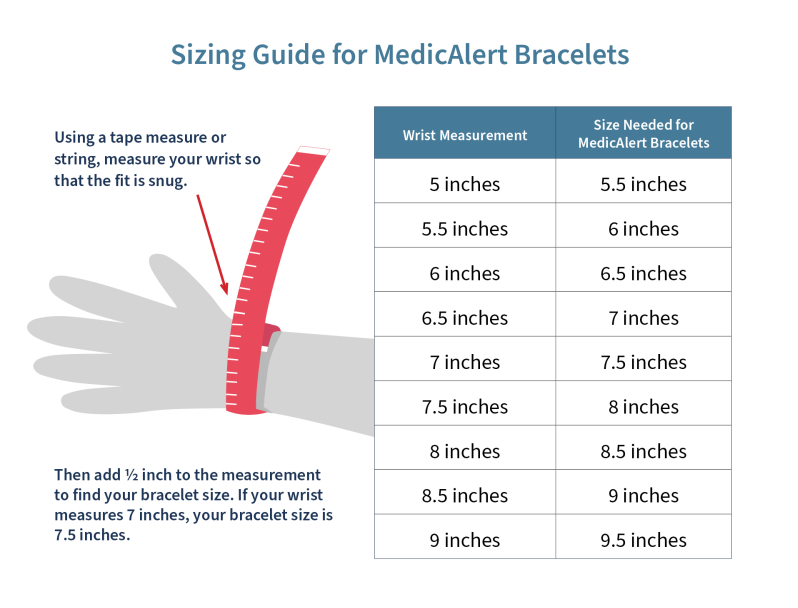
Image Source: blog.medicalert.org
The String Method: Your Go-To For Circumference Estimation
The string method is perhaps the most popular and straightforward way to measure your wrist without a tape measure. It relies on a simple principle: using a flexible item to trace the circumference of your wrist and then measuring that item against a rigid ruler.
What You’ll Need:
- A piece of string, yarn, thread, or even a thin strip of paper.
- A ruler or any measuring stick with clear inch or centimeter markings.
- Scissors (optional, for trimming the string).
Step-by-Step Guide:
- Wrap the String: Take your chosen string and wrap it snugly but comfortably around the part of your wrist where you want your jewelry or accessory to sit. This is usually just below the wrist bone, but you might want to experiment slightly to find the most comfortable spot. Ensure the string isn’t too tight, as this will give you an inaccurate reading. It should feel like how you’d want a bracelet to fit – not constricting, but also not loose enough to slide off easily.
- Mark the Measurement Point: Once the string is in place, carefully mark the point where the two ends of the string meet. You can do this by holding your finger at that spot or, if using a flexible material like a thin ribbon or paper strip, you can gently pinch the overlapping section. If you’re using scissors, you can carefully snip the string where the ends meet.
- Lay the String Flat: Straighten out the piece of string. If you snipped it, lay the two cut ends together.
- Measure the String: Now, take your ruler and lay the string along its edge. Align one end of the string with the “0” mark on the ruler. Read the measurement at the point you marked or where you cut the string. This measurement is your wrist circumference.
Tips for Accuracy with the String Method:
- Use a non-stretchy material: A stretchy string or elastic can give you a falsely larger measurement. Cotton string or a thin strip of paper works best.
- Be consistent: Ensure you wrap the string in the same spot and with the same snugness each time if you’re comparing measurements.
- Consider the item: If you’re measuring for a watch, consider where the watch face will sit. If it’s a wide bracelet, you might want to add a millimeter or two for comfort.
The Paper Strip Method: Similar to String, but Perhaps Stiffer
The paper strip method is very similar to the string method but uses a strip of paper. This can be advantageous if you don’t have string readily available, or if you find paper easier to manage.
What You’ll Need:
- A strip of paper (printer paper, newspaper, or even a receipt will work).
- A ruler.
- Pen or pencil.
Step-by-Step Guide:
- Cut a Paper Strip: Cut a thin strip of paper, about half an inch to an inch wide. The length should be enough to wrap around your wrist with some overlap.
- Wrap and Mark: Wrap the paper strip around your wrist, just as you would with the string. Hold it snugly but comfortably. Use your pen or pencil to make a clear mark on the paper where the end overlaps.
- Lay Flat and Measure: Carefully lay the marked paper strip flat against your ruler, aligning the starting edge with the “0” mark. Read the measurement at the pencil mark.
Variations for Paper:
- Pre-marked ruler: If you have a ruler, you can also wrap the paper strip around your wrist and then simply press the edge of the paper against the ruler to find the “0” mark, then mark where the other end meets.
- Self-marking strip: Some people find it easier to hold the paper strip taut and mark the point where the second edge meets the first. Then, unwrap and measure the length of the paper strip from the starting edge to the mark.
The Cord Trick: A Flexible Alternative
The cord trick is essentially the string method, but using the term “cord” might evoke a sense of using something slightly more robust, like a thin electrical cord (unplugged, of course!) or a strong piece of twine. The principle remains the same: use a flexible item to capture the circumference.
What You’ll Need:
- A thin cord (like headphone cords, thin electrical wire, or strong twine).
- A ruler.
Step-by-Step Guide:
- Position the Cord: Wrap the cord around your wrist at your desired measurement point.
- Secure and Mark: Hold the cord firmly at the point where the ends meet. You can pinch it or, if it’s a cord with some stiffness, you might be able to hold it in place without it slipping. Make a mental note of the spot or gently fold the cord at that point.
- Measure Against Ruler: Lay the cord along a ruler, aligning one end with the zero mark, and find where your marked or folded point falls on the ruler.
Ruler Measurement: Direct Application (If Possible)
While the title focuses on measuring without a tape measure, sometimes a ruler itself can be used directly if your wrist and the ruler’s length allow for it. This is less common as most rulers are rigid and don’t bend easily around a curve. However, for smaller wrists or if you’re measuring a rigid object like a watch strap, it might be an option.
What You’ll Need:
- A rigid ruler.
Step-by-Step Guide:
- Position the Ruler: Place the “0” end of the ruler against one side of your wrist.
- Curve (Carefully): Gently try to curve the ruler around your wrist to meet the other side. This is where the limitation lies, as most rulers are not flexible enough for an accurate measurement of a curved surface.
- Read the Measurement: If you can get the ruler to conform to your wrist’s shape, read the measurement where the ruler meets the other side of your wrist. This method is generally not recommended for accurate wrist sizing due to the rigidity of most rulers.
Belt Loop Sizing: An Unconventional Approach
This is a more creative approach and might be useful if you’re trying to size a belt or a similar item. It’s less about direct wrist measurement and more about using an existing item that has been measured.
What You’ll Need:
- A belt that fits you well.
- A ruler or measuring tape.
Step-by-Step Guide:
- Identify the “Wrist Loop”: Imagine the belt is cinched to a size that fits your wrist comfortably. This isn’t a practical way to wear a belt, but for the purpose of measurement, visualize where the end of the belt would pass through a loop at that circumference.
- Measure the Belt: Take your belt and lay it flat. Measure from the buckle’s post (where it starts the cinching process) to the hole that corresponds to your visualized wrist size.
- Use the Ruler: If the belt itself has markings or holes that are spaced at known intervals, you might be able to use that as a reference. However, it’s more likely you’ll need to measure the distance between the buckle and the chosen hole with a ruler.
This method is highly indirect and more for conceptualizing than precise measurement. It’s best to stick to the string or paper methods for actual wrist sizing.
Shoelace Technique: Another Cord-Like Option
A shoelace is essentially a type of cord, making this technique a variation of the cord or string method. Most people have shoelaces available.
What You’ll Need:
- A shoelace.
- A ruler.
Step-by-Step Guide:
- Wrap the Shoelace: Take a clean shoelace and wrap it around your wrist comfortably.
- Mark the Overlap: Pinch or mark the point where the ends of the shoelace meet.
- Measure the Shoelace: Lay the shoelace flat against your ruler and measure the length to your mark.
Paper Strip Method (Revisited): Precision with Paper
Let’s revisit the paper strip method for a slightly more detailed look at achieving precision.
What You’ll Need:
- A thin strip of paper (about 1/2 inch or 1 cm wide).
- A ruler with clear markings.
- A pen or pencil.
Method for Precise Measurement:
- Prepare the Strip: Cut a strip of paper of sufficient length. Ensure the edges are as straight as possible.
- The “Zero” Point: On one end of the paper strip, draw a small, clear line at the very edge. This will be your “zero” point.
- Wrap and Align: Wrap the strip around your wrist. Make sure the “zero” line is positioned at the starting point. Bring the other end of the paper strip around to meet the “zero” line.
- Marking the Circumference: While holding the strip taut at your wrist, use your pen or pencil to make a clear mark on the paper strip exactly where the second edge meets the first edge.
- Measure the Marked Length: Take the paper strip off your wrist. Lay it flat on a table. Align the “zero” line on the paper strip with the “0” mark on your ruler. Read the measurement directly under the pencil mark you made.
Table: Common Wrist Sizes (for reference)
While personal measurements are key, having some reference points can be helpful.
| Gender | Average Wrist Circumference (inches) | Average Wrist Circumference (cm) |
|---|---|---|
| Female | 6.0 – 6.5 inches | 15.2 – 16.5 cm |
| Male | 7.0 – 7.5 inches | 17.8 – 19.1 cm |
Note: These are averages. Your actual measurement may vary significantly. Always measure your own wrist for accuracy.
Non-Tape Methods: A Summary of Options
To recap, when you need to gauge wrist size and lack a tape measure, here are the most reliable non-tape methods:
- String Method: Wrap string, mark, and measure the string.
- Paper Strip Method: Wrap a paper strip, mark, and measure the paper.
- Cord Trick: Use a thin cord, mark, and measure the cord.
- Shoelace Technique: Use a shoelace, mark, and measure it.
DIY Wrist Measurement: Tips for Success
Regardless of which method you choose, a few general tips can ensure your DIY wrist measurement is as accurate as possible.
Key Principles for Accuracy:
- Location, Location, Location: Measure at the exact spot where you intend to wear the accessory. For bracelets or watches, this is typically just below the prominent wrist bone.
- Snug, Not Tight: The goal is to mimic a comfortable fit. If the string or paper is too tight, your measurement will be smaller than reality. If it’s too loose, it will be larger.
- No Stretching: Avoid using materials that can stretch significantly, as this will lead to an inflated measurement.
- Read the Ruler Clearly: Ensure you are reading the ruler markings accurately. Small increments matter, especially for jewelry.
- Consider the Item’s Width: A thin chain bracelet will fit differently than a wide cuff. If you’re measuring for a wide item, you might want to add a millimeter or two to your measurement for a more comfortable fit.
- Multiple Measurements: If you’re unsure, take the measurement a couple of times to ensure consistency.
Gauging Wrist Size for Specific Items
Measuring for Bracelets:
For most bracelets, especially those that are closed loops (like bangles or cuffs), you’ll want to measure your wrist circumference where you intend for the bracelet to sit. Consider the width of the bracelet. A wider bracelet might need a slightly looser fit than a thin chain.
Measuring for Watches:
For watches, you’re measuring the circumference of your wrist where the watch band will attach. You may also want to consider the size of the watch case itself and how it will sit on your wrist. Some people prefer a snug fit for watches, while others like a bit more movement.
Measuring for Gloves:
Glove sizing usually involves more than just wrist circumference. You’ll often need to measure the width of your palm and the length of your hand. However, if a glove has a wrist closure or adjustment, your wrist measurement will be crucial for ensuring a proper fit around that area.
FAQ: Frequently Asked Questions
What is the best way to measure my wrist without a tape measure?
The most reliable methods are the string method and the paper strip method. These involve wrapping a flexible item around your wrist, marking the circumference, and then measuring that item against a ruler.
Can I use a credit card to measure my wrist?
While a credit card has a standard size (approximately 8.5 cm long), it’s not ideal for measuring the curved circumference of your wrist directly. You could potentially use it as a rough gauge by comparing its length to your wrist, but it won’t be very accurate. The string method or paper strip method is far better.
How tight should the string or paper be when measuring?
The string or paper should be snug enough to stay in place but not so tight that it digs into your skin or restricts blood flow. It should feel like the comfortable fit you’d want for a bracelet or watch.
What if my measurement falls between sizes?
If you’re buying jewelry or accessories with specific sizes, and your measurement falls between two sizes, it’s generally recommended to size up. A slightly larger item can often be adjusted or made to fit better than a piece that is too small.
How do I measure for a cuff bracelet?
For a cuff bracelet, you measure the circumference of your wrist where you want the cuff to sit. You’ll also want to consider if the cuff has an opening. If it does, measure the circumference and then subtract the gap size to get the actual metal length needed.
By using these simple, non-tape methods, you can accurately gauge your wrist size from the comfort of your own home, ensuring a perfect fit for your next jewelry purchase or accessory.