
When a circuit breaker trips, it’s usually because of a problem like a faulty outlet or too many appliances plugged into one circuit. You can reset a tripped circuit breaker by simply pushing the switch back to the “on” position. However, if it trips again immediately, there’s likely a persistent issue that needs professional attention.
Experiencing a sudden power outage can be disruptive, leaving you in the dark and questioning what went wrong. Often, the culprit behind a localized loss of electricity is a tripped breaker. Your home’s electrical system is protected by a breaker box, also known as an electrical panel, which contains numerous circuit breakers. These breakers are designed to safeguard your home from electrical hazards like electrical surges and overloads. When a circuit draws too much power, or if there’s a short circuit, the breaker automatically “trips” – its switch flips to the “off” position – to prevent damage to your wiring and appliances, and most importantly, to prevent fires. Knowing how to safely reset a tripped breaker is a valuable skill for any homeowner.
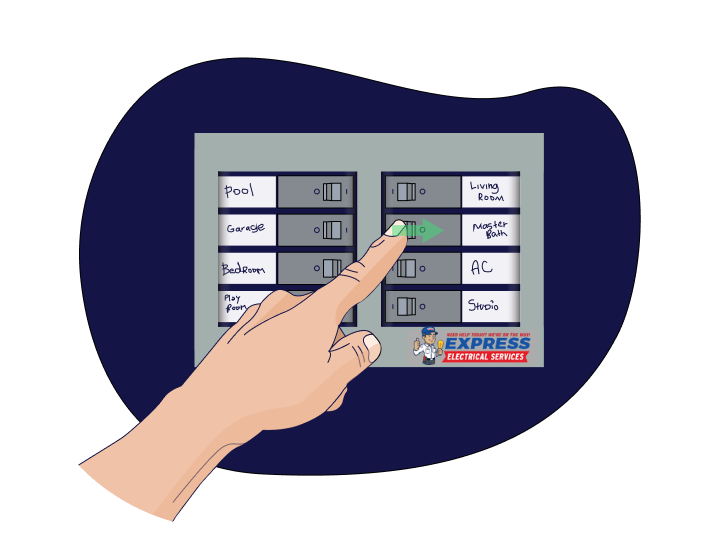
Image Source: expresselectricalservices.com
Deciphering Your Breaker Box
Your breaker box is the central hub for your home’s electricity. It’s typically a metal cabinet, often found in a basement, garage, utility room, or closet. Inside, you’ll see a series of switches, each controlling a different circuit in your home. These switches are the circuit breakers. Each breaker is labeled to indicate which areas or appliances it serves (e.g., “Kitchen Outlets,” “Bedroom Lights,” “Bathroom Fan”).
What is a Circuit Breaker?
A circuit breaker is an automatic electrical switch. It’s a safety device designed to protect an electrical circuit from damage caused by excess current, usually resulting from an overload or a short circuit. It does this by interrupting the current flow when it detects a problem, preventing overheating and potential fires. Unlike a reset fuse, which must be replaced after it blows, a circuit breaker can be reset and reused.
Why Do Breakers Trip?
Several factors can cause a circuit breaker to trip:
- Overload: This happens when you plug too many devices into a single circuit, drawing more power than it’s designed to handle. Think of running a microwave, toaster, and coffee maker all at once on the same kitchen circuit.
- Short Circuit: This occurs when a “hot” wire accidentally touches a neutral wire or a ground wire. This creates a path of very low resistance, causing a massive surge of current that immediately trips the breaker. This can be caused by damaged wiring, a faulty outlet, or an appliance with internal wiring issues.
- Ground Fault: Similar to a short circuit, but the fault occurs to ground. This also causes a sudden surge in current.
- Faulty Appliance: An appliance with internal electrical problems can draw excessive current, leading to a tripped breaker.
How to Safely Reset a Circuit Breaker
Resetting a tripped breaker is generally straightforward, but it’s crucial to follow these steps carefully to ensure your safety and to address the root cause.
Step-by-Step Guide to Resetting a Breaker
- Locate Your Breaker Box: Find your electrical panel.
- Identify the Tripped Breaker: Open the breaker box door. Look for a switch that is in a different position than the others. Most often, a tripped breaker will be in the middle position, or fully in the “off” position, while all other breakers are “on.” Some breakers have a small indicator light that might also show if it’s tripped.
- Push the Breaker to the “Off” Position: Even if the breaker appears to be in the middle, firmly push it all the way to the “off” position. This ensures the breaker is fully disengaged.
- Push the Breaker Back to the “On” Position: Once it’s in the “off” position, firmly push the switch all the way back to the “on” position. You should hear a distinct click.
- Check for Power: Go back to the area or appliance that was affected to see if power has been restored.
What to Do If the Breaker Trips Again
If the breaker trips again immediately after you reset it, do not keep trying to reset it. This indicates a persistent problem that requires further investigation. Attempting to reset it repeatedly could damage the breaker or the wiring.
Here’s what to do if the breaker keeps tripping:
- Unplug Appliances: Go to the circuit that tripped and unplug all appliances and devices connected to it.
- Reset the Breaker Again: With all devices unplugged, reset the breaker.
- Plug Devices Back In, One by One: If the breaker stays on, plug your appliances back in, one at a time. Wait a few minutes between plugging each item in. This will help you identify which appliance or device is causing the overload or short circuit.
- If a Specific Appliance Trips the Breaker: If you find that a particular appliance trips the breaker every time you plug it in, that appliance is likely faulty. Do not use it and consider having it repaired or replaced.
- If the Breaker Trips with Nothing Plugged In: If the breaker still trips even when nothing is plugged into the circuit, the problem might be with the wiring itself, the faulty outlet, or the breaker itself.
When to Call a Professional Electrician
While resetting a tripped breaker is a common homeowner task, there are times when it’s essential to call a qualified electrician. Your safety is paramount, and electrical work can be dangerous if not performed correctly.
Signs You Need Professional Help
- Frequent Tripping: If breakers in your breaker box trip regularly, it suggests an underlying issue that needs expert diagnosis.
- Breaker Won’t Stay On: If you’ve unplugged everything on a circuit and the breaker still trips when you try to reset it, there’s likely a problem with the wiring or the breaker itself.
- Burning Smell or Sparks: If you notice a burning smell coming from the electrical panel or see sparks, immediately turn off the main breaker (if you can do so safely) and call an electrician. Do not attempt to circuit reset anything yourself in this situation.
- Warm or Hot Breaker Switch: A breaker that feels unusually warm to the touch could indicate a loose connection or an overloaded circuit.
- Multiple Circuits Affected: If you experience a widespread power outage affecting multiple circuits and resetting individual breakers doesn’t work, the issue might be with the main breaker or the connection to your utility company.
- Signs of Damage: If you see any physical damage to your electrical panel, wiring, or outlets, it’s best to have it inspected by a professional.
The Importance of Professional Diagnosis
An electrician can safely and effectively:
- Inspect Wiring: Check for damaged or outdated wiring, which can be a fire hazard.
- Test Appliances: Diagnose whether an appliance is the cause of the problem.
- Assess the Electrical Panel: Ensure the breaker box is functioning correctly and isn’t overloaded.
- Identify Faulty Outlets: Test and replace any faulty outlet that might be causing short circuits.
- Upgrade Electrical Systems: Recommend upgrades if your home’s electrical system is insufficient for your current needs.
Preventing Future Breaker Trips
Preventing future power outage incidents due to tripped breakers involves good electrical habits and awareness.
Smart Usage Tips
- Distribute Power Load: Avoid plugging too many high-wattage appliances into a single circuit. Spread your appliances across different circuits. For example, don’t use your microwave, toaster, and electric kettle all at the same time on the same circuit.
- Use Appliances Appropriately: Be mindful of the power requirements of your appliances. Consider using surge protectors for sensitive electronics to safeguard them from electrical surges.
- Check Appliance Cords: Regularly inspect appliance cords for any damage. Frayed or damaged cords can cause short circuits.
- Know Your Circuits: Familiarize yourself with which appliances and areas are on which circuits. This makes it easier to identify potential overloads.
- Consider Dedicated Circuits: For high-demand appliances like refrigerators, microwaves, or air conditioners, ensure they are on their own dedicated circuits. This prevents them from overloading shared circuits.
Maintaining Your Electrical System
- Regular Inspections: Schedule periodic inspections of your electrical panel and wiring by a qualified electrician. This can help catch potential problems before they lead to a tripped breaker or more serious issues.
- Upgrade Outdated Systems: If your home has an older electrical system, consider upgrading to a more modern electrical panel and wiring. Older systems may not be equipped to handle the power demands of modern households.
- Proper Installation: Ensure that any new electrical work or appliance installations are done by qualified professionals. Incorrect installation is a common cause of electrical faults.
Troubleshooting Common Scenarios
Let’s look at some common situations and how to address them:
Scenario 1: Kitchen Outlets Go Out
- Problem: You plug in a new appliance, and suddenly the outlets in your kitchen stop working.
- Action:
- Go to your breaker box and locate the breaker labeled “Kitchen Outlets” or similar.
- Check if it’s tripped (in the “off” or middle position).
- Reset the breaker by pushing it firmly to “off,” then to “on.”
- If it trips again, unplug all appliances on those kitchen outlets.
- Reset the breaker.
- Plug in appliances one by one to find the culprit. If a toaster and microwave were running simultaneously, this likely caused an overload.
Scenario 2: Lights Flicker and Then Go Out in One Room
- Problem: The lights in your living room flicker, and then the power goes out in that room.
- Action:
- Find the breaker for the “Living Room Lights.”
- Check if it has tripped and reset it.
- If it trips again, unplug any lamps, electronics, or other devices in the living room.
- Reset the breaker.
- If the breaker stays on, plug items back in one by one. A lamp with a damaged cord or a faulty outlet could be the issue.
Scenario 3: The Whole House Loses Power
- Problem: All power is out in your home.
- Action:
- Check the main breaker in your electrical panel. This is usually the largest switch, located at the top or side.
- If the main breaker is tripped, try resetting it.
- If the main breaker trips again, or if it’s already in the “on” position and there’s still no power, the problem might be outside your home. Check your neighbors to see if they have power.
- If your neighbors also have a power outage, contact your utility company. If only your home is affected, there might be an issue with the main service line or a problem within your breaker box that requires an electrician.
Understanding Different Types of Protection
Beyond standard circuit breakers, there are specialized types of circuit protection designed for specific needs.
GFCI (Ground Fault Circuit Interrupter) Breakers and Outlets
- Purpose: GFCI devices are designed to protect people from electric shock. They monitor the flow of current and shut off power within milliseconds if they detect an imbalance, which can happen if electricity starts flowing through a person to ground.
- Common Locations: You’ll find GFCI outlets in areas where water is present, such as kitchens, bathrooms, garages, and outdoor areas.
- Resetting: GFCI outlets have “Test” and “Reset” buttons on them. If a GFCI outlet trips, the power to that outlet and any others downstream from it will be cut off. You reset a GFCI outlet by pressing the “Reset” button. If it won’t reset, or trips again, there’s a fault.
AFCI (Arc Fault Circuit Interrupter) Breakers
- Purpose: AFCI breakers protect against fires caused by electrical arcs. Arcing can occur due to damaged wires, loose connections, or faulty appliances, creating sparks that can ignite nearby materials.
- How They Work: AFCIs detect the unique electrical signatures of dangerous arcs and quickly shut off the circuit to prevent a fire.
- Resetting: AFCIs are typically installed in the breaker box like standard breakers. You reset them by flipping the switch to “off” and then back to “on.” If an AFCI breaker trips frequently, it’s a strong indicator of a hazardous condition that needs professional attention.
Frequently Asked Questions (FAQ)
Q1: Can I reset a circuit breaker with my bare hands?
A1: Yes, you can reset a circuit breaker with your bare hands, provided the breaker box is dry and you are not standing in water. However, if you are unsure or uncomfortable, you can use a non-conductive tool like a wooden broom handle to push the switch.
Q2: What does it mean if a breaker trips immediately after I reset it?
A2: This means the circuit is still experiencing an overload or a short circuit. Do not continue to reset it. Unplug all devices on that circuit and reset the breaker. If it still trips, the problem is likely with the wiring or a faulty outlet, and you should call an electrician.
Q3: How do I know which breaker is for which circuit?
A3: Your electrical panel should have labels indicating what each breaker controls. If the labels are missing or unclear, you can test them by flipping breakers one by one and seeing which lights or outlets turn off. It’s advisable to have a professional label your breaker box properly.
Q4: Is it safe to use a breaker reset tool?
A4: While not strictly necessary for a standard circuit reset, some tools are available to help reset breakers, particularly if they are stiff or difficult to reach. Ensure any tool you use is designed for electrical work and is made of insulating materials.
Q5: What is the difference between a fuse and a circuit breaker?
A5: A fuse contains a thin wire that melts and breaks the circuit when too much current flows through it. Once a fuse blows, it must be replaced with a new one. A circuit breaker, on the other hand, is a mechanical switch that trips and can be reset multiple times. Circuit breakers are the modern standard for circuit protection in homes.
Q6: How often should I check my breaker box?
A6: It’s a good practice to visually inspect your breaker box every few months to ensure it’s clean, dry, and free from any signs of damage or corrosion. If you notice any issues or if breakers are tripping frequently, schedule a professional inspection.
Q7: My appliance seems to be causing the breaker to trip. Should I try to reset the fuse?
A7: Your home likely uses circuit breakers, not reset fuse systems. If an appliance is causing the breaker to trip, follow the steps of unplugging the appliance, resetting the breaker, and then plugging appliances back in one by one to identify the faulty unit. Do not continue to operate a faulty appliance.
By following these guidelines, you can confidently manage tripped breakers and ensure the safety and reliability of your home’s electrical system. Remember, when in doubt, always consult a qualified electrician.