
What is extension cord gauge and why does it matter? Extension cord gauge refers to the thickness of the wire inside the cord, measured by the American Wire Gauge (AWG) system. It’s crucial because a thicker wire (lower AWG number) can safely carry more electrical current, preventing overheating and potential hazards.
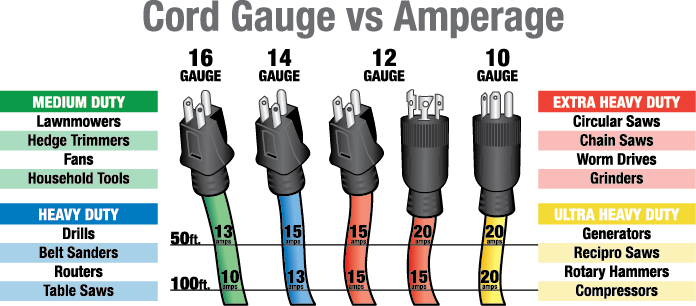
Image Source: blueprint.fastenal.com
Deciphering Extension Cord Markings: Your First Clue
The most straightforward way to determine the gauge of an extension cord is by looking for markings directly on the cord itself. Manufacturers are required to provide this information for safety reasons. You’ll typically find the wire gauge printed or embossed on the outer jacket of the power cord gauge.
Common Markings to Look For:
- “14 AWG,” “12 AWG,” “10 AWG”: These are direct indicators of the AWG size. The number before “AWG” is the gauge. Remember, a smaller number means a thicker wire.
- “Gauge” followed by a number: Some cords might simply state “Gauge 16” or similar.
- “XX/3 SJTW,” “XX/3 SJOOW”: In these markings, the first number (before the slash) often indicates the gauge. For example, “14/3” means 14-gauge wire. The “3” refers to the number of conductors (wires) inside the cable.
Where to Find the Markings:
- Along the entire length of the cord: Manufacturers often print the gauge and other specifications repeatedly along the length of the cord, ensuring it’s visible no matter where you cut it or how you use it.
- Near the plugs: The markings might be concentrated near the male and female ends of the extension cord.
- On a tag: Sometimes, a small tag is attached to the cord near one of the plugs, containing detailed extension cord specifications.
The American Wire Gauge (AWG) System: A Deeper Dive
The AWG system is a standardized way of measuring the diameter of conductive metal wire. It’s an inverse scale, meaning that as the electrical wire size number decreases, the wire diameter and thickness increase. This is a critical concept when selecting the right extension cord for your needs.
Key Principles of AWG:
- Lower Number = Thicker Wire: A 10 AWG cord is thicker than a 12 AWG cord, which is thicker than a 14 AWG cord, and so on.
- Thicker Wire = Higher Amperage Capacity: Thicker wires can handle more electrical current (measured in amperes or amps) without generating excessive heat. This directly relates to the amperage rating of the cord.
- Length Matters: The longer an extension cord is, the more resistance it has. To compensate for this resistance and prevent voltage drop, you’ll often need a thicker gauge wire for longer cords, even if you’re using the same appliance.
What If the Markings Aren’t Clear? Measuring Your Extension Cord Gauge
Sometimes, markings can fade, get damaged, or be absent altogether. In these situations, you might need to resort to physically measuring the wire to determine its gauge. This process involves measuring extension cord gauge by examining the thickness of the individual conductors.
Tools You’ll Need:
- Wire Strippers: To carefully remove a small section of the outer insulation.
- Wire Gauge Tool or Caliper: A specialized tool designed to measure wire diameter or a precise digital caliper.
- Wire Gauge Chart: A reference table that correlates wire diameter to its AWG size.
Steps for Measuring:
- Safety First: Ensure the extension cord is unplugged from any power source.
- Expose the Wire: Using wire strippers, carefully strip about an inch of the outer insulation from the extension cord. You’ll see the individual insulated conductors inside.
- Strip Individual Conductors: Carefully strip about half an inch of insulation from one of the inner conductors. Be gentle to avoid nicking the metal wire itself.
- Measure the Diameter:
- Using a Wire Gauge Tool: Many wire gauge tools have slots or holes corresponding to different AWG sizes. Insert the stripped conductor into these slots until you find the one that fits snugly. The number on that slot is your gauge identification.
- Using a Caliper: Place the stripped wire between the jaws of a digital caliper. Ensure the caliper is measuring the diameter of the metal conductor, not any remaining insulation. Record the diameter in millimeters or inches.
- Consult a Wire Gauge Chart: Compare the measured diameter to a wire gauge chart. This chart will list the typical diameters for each AWG size. For example, a 14 AWG copper wire typically has a diameter of about 1.63 mm (0.064 inches).
Important Considerations When Measuring:
- Measure the Conductor, Not the Insulation: Always measure the bare metal wire.
- Measure Multiple Conductors: If possible, measure a conductor from different sections of the cord to ensure consistency.
- Clean Wire: Ensure the wire is clean and free of any dirt or corrosion that could affect the measurement.
- Copper vs. Aluminum: Most extension cords use copper wiring. If you suspect aluminum wiring, consult a professional, as it has different conductivity properties.
The Relationship Between Gauge, Amperage, and Wattage
The wire gauge is directly linked to how much electrical current (amperage) a cord can safely handle. This, in turn, determines the maximum wattage of the appliance it can power.
Key Concepts:
- Amperage (A): The rate at which electrical current flows.
- Voltage (V): The electrical potential difference.
- Wattage (W): The rate at which electrical power is consumed. The formula is: Watts = Volts × Amps.
Why Gauge Matters for Amperage:
As mentioned, thicker wires (lower AWG numbers) have less electrical resistance. Less resistance means less heat is generated when current flows through the wire. If a cord is too thin for the appliance it’s powering, the wire can overheat, melt the insulation, and potentially cause a fire.
General Guidelines for Extension Cord Gauge and Amperage:
This is a simplified guideline, and actual ratings can vary slightly based on insulation type and temperature. Always refer to the cord’s specifications for precise ratings.
| AWG Size | Typical Amperage Rating (for 120V) | Typical Wattage Rating (for 120V) | Cord Thickness | Best Use Cases |
|---|---|---|---|---|
| 18 AWG | 5-7 Amps | 600-840 Watts | Thin | Light-duty indoor use, small electronics, lamps, radios. Not for high-power tools. |
| 16 AWG | 7-10 Amps | 840-1200 Watts | Medium-Thin | Small appliances, portable tools, holiday lights, general household use. |
| 14 AWG | 10-13 Amps | 1200-1560 Watts | Medium | Power tools, larger appliances, medium-duty outdoor use, temporary power needs. |
| 12 AWG | 13-18 Amps | 1560-2160 Watts | Medium-Thick | Heavy-duty power tools, generators, appliances requiring significant power, long runs. |
| 10 AWG | 18-25 Amps | 2160-3000 Watts | Thick | High-draw tools (welders, large air compressors), RVs, demanding outdoor applications. |
How to Use the Table:
- Find Your Appliance’s Wattage: Check the label on your appliance or tool to find its power consumption in watts. If it lists amps and volts, calculate watts (Watts = Volts × Amps).
- Consider Cord Length: For longer cords (over 50 feet), it’s often advisable to step up to a thicker gauge (lower AWG number) to minimize voltage drop.
- Choose the Right Gauge: Select an extension cord whose amperage rating (and corresponding wattage rating) is equal to or greater than your appliance’s needs.
Factors Affecting Cord Performance and Gauge Choice
Beyond the basic wire gauge, several other factors influence how an extension cord performs and dictates the appropriate cord thickness for your application.
1. Cord Length
The longer the extension cord, the more resistance the wire offers to the flow of electricity. This resistance causes a voltage drop.
- Voltage Drop: A significant voltage drop can cause appliances to perform poorly, overheat, or even fail.
- Compensating for Length: For longer runs, you need a thicker wire (lower AWG number) to minimize resistance and voltage drop. For example, a 100-foot 14 AWG cord might be suitable for a light load, but for a heavy load over the same distance, a 12 AWG or even 10 AWG cord would be necessary.
2. Number of Conductors
Most common extension cords have three conductors: a hot wire, a neutral wire, and a ground wire.
- Grounding: The ground wire is a crucial safety feature that provides a path for electricity to flow to the ground in case of a fault, preventing electric shock.
- Gauge Specification: When you see markings like “14/3,” the “3” indicates three conductors, and the “14” refers to the gauge of each of those conductors.
3. Insulation Material and Type
The material used for the cord’s insulation affects its durability, flexibility, and suitability for different environments.
- Common Insulation Types:
- SJOOW, SOOW: These are durable, oil-resistant, and weather-resistant cords, suitable for heavy-duty outdoor use and industrial applications.
- SJTW, STW: These are weather-resistant and suitable for outdoor use, but generally less robust than SOOW cords.
- SEW, SEOW: Similar to SJOOW and SOOW, often with added flame resistance.
- Non-Rated (Indoor Use Only): These cords are typically thinner and not designed for outdoor or harsh conditions.
- Impact on Gauge: While the insulation type doesn’t directly change the electrical wire size, it’s a critical part of the overall extension cord specifications. A heavy-duty cord designed for demanding environments will often have thicker insulation, but the underlying wire gauge is still the primary determinant of its electrical capacity.
4. Temperature and Environment
The temperature of the environment where the extension cord is used can affect its amperage rating.
- Hot Environments: In hotter conditions, the wire can heat up more quickly, potentially reducing its safe carrying capacity.
- Outdoor Use: Cords used outdoors need to be weather-resistant to withstand moisture, UV rays, and temperature fluctuations. Always check the cord’s rating for outdoor use.
Choosing the Right Extension Cord: A Practical Guide
Selecting the correct extension cord gauge is about matching the cord’s capabilities to the demands of the appliance you’re powering.
Steps to Proper Selection:
- Identify the Appliance: What tool or appliance will you be using with the extension cord?
- Check the Appliance’s Power Requirements: Look for the wattage (W) or amperage (A) rating on the appliance’s label. If only amperage is listed, and you know the voltage (e.g., 120V in North America), calculate the wattage.
- Determine Cord Length: How far will the cord need to reach from the power outlet?
- Consult a Wire Gauge Chart or Table: Use the appliance’s power requirements and the desired cord length to select the appropriate AWG size. Remember, a lower AWG number means a thicker, more capable cord.
- Consider Environmental Factors: Will the cord be used indoors or outdoors? In a wet or dry location? Choose a cord with appropriate insulation and weather resistance.
- Look for Safety Certifications: Opt for cords that are certified by recognized safety organizations like UL (Underwriters Laboratories), ETL (Intertek), or CSA (Canadian Standards Association). These certifications indicate that the cord has been tested for safety and performance.
Common Pitfalls to Avoid:
- Using the Wrong Gauge: This is the most common and dangerous mistake. Using a cord that is too thin for the appliance can lead to overheating and fire.
- Ignoring Cord Length: Using a long cord with a thin gauge can result in voltage drop and poor appliance performance.
- Using Indoor Cords Outdoors: Indoor cords are not designed to withstand weather conditions and can quickly become damaged and hazardous.
- Damaged Cords: Never use a frayed, cut, or otherwise damaged extension cord.
Frequently Asked Questions (FAQ)
Q1: Can I use a thicker gauge extension cord than what’s recommended?
Yes, it is always safe to use a thicker gauge extension cord (lower AWG number) than what is recommended. It provides a higher amperage rating and greater safety margin. You just can’t use a thinner gauge.
Q2: How do I know if my extension cord is the correct gauge for my power tool?
Check the power tool’s label for its wattage or amperage requirements. Then, refer to a wire gauge chart or a table like the one provided in this article to match the tool’s needs with the extension cord’s AWG size and length.
Q3: What happens if I use an extension cord that’s too thin?
Using an extension cord that is too thin for the appliance’s needs can cause the wire to overheat. This can melt the insulation, create a fire hazard, and damage the appliance. It can also lead to voltage drop, causing the appliance to perform poorly.
Q4: Does the color of the extension cord matter?
The color of the cord’s insulation usually indicates its intended use. Light gray or brown cords are typically for indoor use. Yellow or orange cords are often for general-purpose or outdoor use. Heavy-duty cords can come in various colors, but markings are the definitive way to determine the gauge identification.
Q5: How can I tell the gauge of a cord if the markings are gone?
If the markings are illegible, you will need to physically measure the diameter of the conductor using a wire gauge tool or a caliper and then consult a wire gauge chart to determine the electrical wire size. Always ensure the cord is unplugged before attempting to measure it.
Q6: What is the difference between AWG and gauge?
“Gauge” is a general term for wire thickness, while “AWG” (American Wire Gauge) is the specific standardized system used in North America to measure wire diameter. They are often used interchangeably in the context of extension cords.
By paying attention to the wire gauge, AWG size, and other extension cord specifications, you can ensure safe and efficient operation of your electrical devices. Always prioritize safety and choose the right power cord gauge for the job.