
So, how many amps does a table saw use? The answer varies, but most common table saws, especially those found in home workshops and for DIY projects, typically draw between 10 to 15 amps. However, larger cabinet table saws or those with more powerful motors can demand significantly more, sometimes reaching 20 amps or even higher.
This electrical information is crucial for any woodworker, from the beginner setting up their first saw to the seasoned professional ensuring their workshop is correctly wired. Understanding your table saw’s table saw power requirements is not just about plugging it in; it’s about safety, efficiency, and preventing tripped breakers or damaged equipment. This article will delve into the intricacies of table saw amperage draw, exploring what influences it, how to find the information, and what it means for your electrical setup.
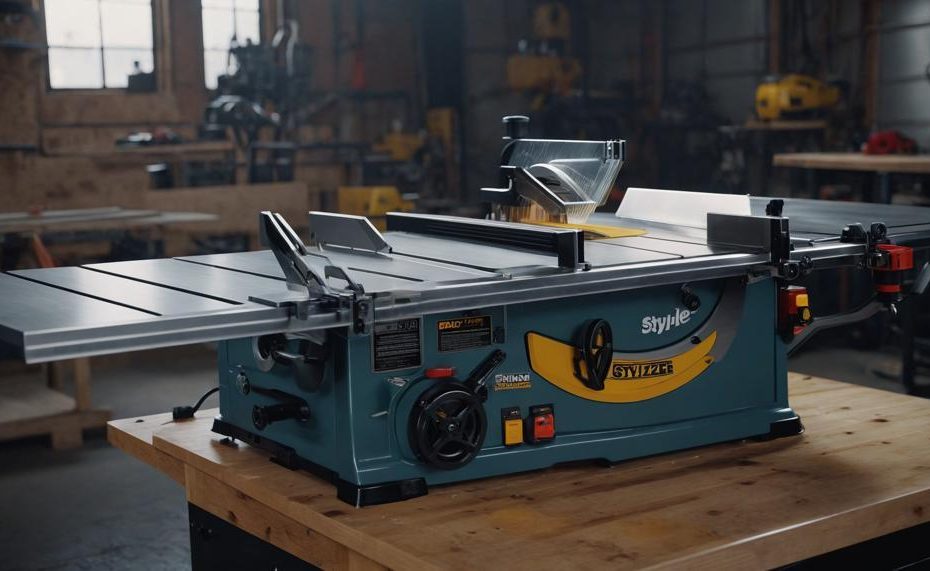
Image Source: www.disposecleverly.com
Deciphering Table Saw Current Consumption
The amount of electricity a table saw uses, its table saw current consumption, is primarily determined by its motor. The motor is the heart of the machine, responsible for spinning the blade at high speeds to cut through wood. Several factors contribute to how much power this motor needs, and consequently, how many amps it draws.
Factors Influencing Amperage Draw
- Motor Horsepower (HP): This is the most significant factor. A higher horsepower motor generally requires more amperage to operate. A 1-HP motor will draw less current than a 2-HP or 3-HP motor. However, it’s important to note that stated horsepower on some tools can be a “starting” or “peak” horsepower rather than the continuous running horsepower, which is a better indicator of electrical needs.
- Blade Speed (RPM): While not as direct a factor as horsepower, the speed at which the blade spins can influence the energy needed, especially under load.
- Type of Cut: Sawing through hardwoods like oak or maple requires more power than cutting softer woods like pine. Dense materials put a greater strain on the motor, causing it to draw more current. Similarly, making wide or deep cuts will increase the load.
- Blade Condition and Type: A dull blade or a blade with too many teeth for the material being cut will increase resistance and force the motor to work harder, thus drawing more amps. The kerf (thickness of the cut) of the blade also plays a role.
- Voltage: The table saw voltage and amperage are directly related. A saw designed for 120V will have a different amperage draw than the same saw running on 240V. Generally, a saw will draw half the amperage on 240V as it does on 120V for the same power output. This is a critical consideration for wiring and circuit selection.
Gauging Table Saw Motor Size and Amps
When you look at a table saw, you’ll often see the motor size listed in horsepower. But how does that translate to amps? This is where table saw motor size amps becomes a practical concern for users.
The Amperage Equation: A Closer Look
While there’s no single universal formula that works for every single table saw due to variations in motor efficiency and design, a general understanding can be derived from the power formula:
Power (Watts) = Voltage (Volts) × Current (Amps)
Since horsepower is a measure of mechanical power, and 1 horsepower is approximately 746 watts, we can begin to estimate.
- 120V Saws: A common 10-inch portable table saw might have a 1.5 HP motor.
- Approximate Watts = 1.5 HP × 746 Watts/HP = 1119 Watts
- Estimated Amps = 1119 Watts / 120 Volts ≈ 9.3 Amps
This is the theoretical running amperage. In reality, motors have inefficiencies and startup surges, so the actual draw will be higher. Many 120V saws are rated to draw around 10-13 amps under a typical load.
- 240V Saws: A more powerful cabinet saw might have a 3 HP motor and run on 240V.
- Approximate Watts = 3 HP × 746 Watts/HP = 2238 Watts
- Estimated Amps = 2238 Watts / 240 Volts ≈ 9.3 Amps
Again, this is a theoretical running amperage. In practice, a 3 HP 240V saw might draw around 12-15 amps under load, with startup surges potentially higher.
Startup Surge vs. Running Amps
It’s crucial to distinguish between a table saw’s startup amperage and its running amperage. When a motor starts, it requires a significant surge of current to overcome inertia and begin spinning. This “inrush current” can be several times the normal running current for a brief moment. This is why circuit breakers are designed with a time-delay mechanism, allowing for these momentary surges without tripping.
Table Saw Electrical Needs: Wiring Your Workshop
Your table saw electrical needs dictate the type of circuit and wiring you’ll require. Incorrect wiring can lead to nuisance tripping of breakers, overheating wires, and potentially fire hazards.
Circuit Breaker Size and Table Saw Circuits
The table saw circuit breaker size is a critical safety component. It’s designed to protect the circuit and the saw from overcurrents.
- General Rule: For most 120V table saws that draw around 10-15 amps, a dedicated 15-amp circuit is recommended. If the saw’s nameplate specifies a maximum draw of, say, 14 amps, then a 15-amp breaker is appropriate. If the saw consistently draws near the 15-amp limit, or if you’re pushing the saw hard, a 20-amp breaker might be considered, but this must be matched with appropriate wiring gauge.
- Dedicated Circuits: It’s highly advisable to run table saws on a dedicated circuit. This means the saw is the only major appliance on that particular breaker. Sharing a circuit with other tools or lighting can lead to overloading and tripping, especially if multiple devices are used simultaneously.
- 240V Circuits: For larger cabinet saws requiring 240V and drawing 15-20 amps or more, a 20-amp, 30-amp, or even higher rated circuit breaker and corresponding wiring will be necessary.
Wire Gauge (AWG)
The gauge of the electrical wire is directly related to the amount of current it can safely carry. Thicker wires (lower AWG number) can handle more current with less resistance and heat buildup.
- For 15-amp circuits: Typically, 14-gauge wire is used. However, if the saw is rated for close to 15 amps, or if the extension cord is long, using 12-gauge wire is safer and provides better performance.
- For 20-amp circuits: 12-gauge wire is the minimum. For longer runs or continuous heavy use, 10-gauge wire might be preferable.
- For 240V circuits: The wire gauge requirements will increase with amperage. A 20-amp 240V circuit would typically use 12-gauge wire, while a 30-amp 240V circuit would need 10-gauge wire.
Always check the electrical code in your area and the saw manufacturer’s recommendations for specific wire gauge requirements.
Extension Cords: A Common Pitfall
Using the wrong extension cord is a frequent mistake that can hinder performance and pose a safety risk.
- Gauge Matters: Just like the wiring in your walls, the gauge of an extension cord is critical. A cord that is too thin (high AWG number) will have higher resistance, leading to voltage drop. This means the saw receives less than its rated voltage, resulting in reduced power, slower motor speed, and increased motor heat.
- Cord Length: The longer the extension cord, the greater the resistance. If you need a long cord, you must use a thicker gauge to compensate for the length.
- Amperage Rating: Extension cords are rated for a maximum amperage. Ensure the cord you use is rated for at least the amperage of your table saw’s circuit.
Table 1: Recommended Extension Cord Gauges
| Amperage Rating | Cord Length (up to 25 ft) | Cord Length (25-50 ft) | Cord Length (50-100 ft) |
|---|---|---|---|
| 10-15 Amps | 14 AWG | 12 AWG | 10 AWG |
| 15-20 Amps | 12 AWG | 10 AWG | 10 AWG |
Note: These are general recommendations. Always check the saw manufacturer’s manual for specific guidance.
Table Saw Plug Type and Amps
The plug on your table saw is designed to match the outlet and circuit it’s intended to be used with. Understanding table saw plug type amps helps ensure compatibility.
Common Plug Types
- 120V Plugs:
- NEMA 5-15P: This is the standard three-prong plug found on most household appliances. It’s rated for 15 amps at 120 volts. Most portable table saw amperage draws up to 15 amps will use this plug.
- NEMA 5-20P: This plug looks similar to the 5-15P but has one of the horizontal prongs offset, preventing it from being plugged into a standard 15-amp outlet. It’s used for 20-amp, 120-volt circuits and is found on higher-amperage portable saws or some benchtop models that require a dedicated 20-amp circuit.
- 240V Plugs:
- NEMA 6-15P: A three-prong plug for 15 amps at 240 volts.
- NEMA 6-20P: A four-prong plug with two hot wires, a ground, and sometimes a neutral, used for 20 amps at 240 volts.
- NEMA 6-30P: A plug for 30 amps at 240 volts, commonly found on larger cabinet table saw amps and other heavy-duty tools.
The plug type is a visual indicator of the saw’s voltage and amperage requirements and ensures it can only be plugged into a correctly wired outlet. Never force a plug into an outlet it doesn’t fit.
Portable Table Saw Amperage vs. Cabinet Table Saw Amps
There’s a significant difference in the electrical demands between portable table saw amperage and cabinet table saw amps.
Portable Table Saws
- Design: Designed for mobility, these saws are generally lighter and more compact.
- Motors: Typically use universal motors or AC induction motors ranging from 1 HP to 2 HP.
- Amperage: Most draw between 10 to 15 amps on a 120V circuit. Some higher-end portable saws might draw up to 15 amps and require a 20-amp circuit.
- Plugs: Usually use the standard NEMA 5-15P or the NEMA 5-20P plug.
- Circuit Needs: Can often run on standard household circuits (15A), but a dedicated circuit is always preferred.
Cabinet Table Saws
- Design: Stationary, heavy-duty machines built for precision and power in professional woodworking shops.
- Motors: Primarily use robust AC induction motors, ranging from 1.5 HP to 5 HP or more.
- Amperage:
- On 120V: Will likely draw 15 amps or more and require a 20-amp or larger dedicated circuit.
- On 240V: A 3 HP saw might draw 12-15 amps running, requiring a 20-amp 240V circuit. A 5 HP saw could draw 20-24 amps, necessitating a 30-amp or higher 240V circuit.
- Plugs: Will use various NEMA plugs designed for 240V circuits (e.g., NEMA 6-15P, 6-20P, 6-30P).
- Circuit Needs: Always require dedicated circuits, usually 20A or 30A at 240V, and sometimes even higher for very large industrial saws.
How to Find Your Table Saw’s Amperage
The most accurate way to determine your table saw’s amperage requirements is to check the table saw nameplate. This is a metal plate affixed to the saw, usually on the back or side of the motor housing, or on the main body of the saw.
What to Look For on the Nameplate:
- Voltage (V): This will tell you if the saw is designed for 120V or 240V.
- Amperage (A) or Current (A): This is the crucial number. It might be listed as “FLA” (Full Load Amps) or simply “Amps.” This is the typical running current under normal operating conditions.
- Horsepower (HP): As discussed, this gives an indication, but the amperage rating is more direct for electrical planning.
- Phase: Most home workshop saws are single-phase. Industrial saws might be three-phase.
- Hertz (Hz): Standard is 60 Hz in North America.
Other Sources of Information:
- Owner’s Manual: The manual that came with your table saw will contain detailed specifications, including electrical requirements.
- Manufacturer’s Website: Most manufacturers provide product specifications online for their current and often discontinued models.
Maximizing Performance and Safety
Properly addressing your table saw’s electrical needs is paramount for both performance and safety.
Troubleshooting Common Electrical Issues
- Tripping Breakers: This is often due to overloading the circuit, using an undersized extension cord, or the saw drawing too much current for the circuit’s rating. Ensure the breaker is the correct size for the saw and the wiring.
- Slow Motor Speed: A voltage drop, caused by a long or thin extension cord, or a circuit shared with other high-demand appliances, can lead to a sluggish motor.
- Overheating Components: Undersized wiring or cords can overheat, posing a fire risk. Always use the recommended wire gauge and check cords for damage.
Upgrading Your Workshop Electrical System
For serious woodworkers with larger saws or multiple power tools, upgrading the workshop’s electrical system might be necessary. This could involve:
- Installing dedicated circuits: Running new circuits from the main electrical panel specifically for your tools.
- Increasing circuit breaker size: Replacing 15-amp breakers with 20-amp or higher, ensuring the wiring gauge supports the new rating.
- Installing 240V outlets: For larger cabinet saws, this is often a requirement.
Consulting a qualified electrician is highly recommended for any significant electrical work to ensure it is done safely and to code.
Frequently Asked Questions (FAQ)
Q1: Can I plug my table saw into a regular household outlet?
A1: Yes, most portable table saws designed for 120V use a standard household outlet (NEMA 5-15P or 5-20P). However, it’s best if the outlet is on a dedicated 15-amp or 20-amp circuit to avoid tripping the breaker when other appliances are running.
Q2: What happens if I use a cord that is too thin for my table saw?
A2: Using a cord that is too thin (higher gauge number) will cause a voltage drop. This means the motor won’t receive its full rated voltage, leading to reduced power, slower operation, and potential motor overheating and damage. It can also be a fire hazard due to excessive heat in the cord.
Q3: Do I need a special outlet for a table saw?
A3: For most portable table saws running on 120V, a standard outlet is sufficient, provided it’s on an adequate circuit. However, higher-amperage portable saws (drawing close to 15A) or any saw requiring 20A or 240V will need specific outlets (e.g., NEMA 5-20R for 20A/120V, or various NEMA 6-series for 240V).
Q4: How do I know if my table saw needs a 20-amp circuit?
A4: Check the table saw’s nameplate or manual. If the “Amps” or “FLA” rating is 15 or higher, or if it specifies 20 amps, it will require a 20-amp circuit and a NEMA 5-20R outlet if it’s a 120V saw.
Q5: Can I use a 20-amp breaker on a circuit with 14-gauge wire?
A5: No. 14-gauge wire is rated for a maximum of 15 amps. Using a 20-amp breaker on 14-gauge wire is a fire hazard as the wire can overheat before the breaker trips. Always match the breaker size to the wire gauge capacity (14 AWG = 15A, 12 AWG = 20A, 10 AWG = 30A).
Q6: My table saw keeps tripping the breaker. What should I do?
A6: First, check if the circuit is overloaded (other high-power devices running simultaneously). Ensure the circuit breaker is the correct amperage for your saw. If your saw consistently trips a correctly sized breaker under normal use, the motor might be failing, or there could be an issue with the saw’s wiring or capacitor. If using an extension cord, try running the saw directly from the outlet to rule out cord issues. If problems persist, consult a qualified electrician or the saw manufacturer.