
An extension cord can handle anywhere from 300 watts to 1,800 watts or more, depending on its extension cord wattage capacity, which is primarily determined by its extension cord amperage rating and the extension cord wire size (gauge).
Knowing the limits of your extension cords is crucial for preventing fires and ensuring your appliances work correctly. This guide will help you decipher the world of extension cord power and safety, ensuring you don’t end up with an overloaded extension cord.
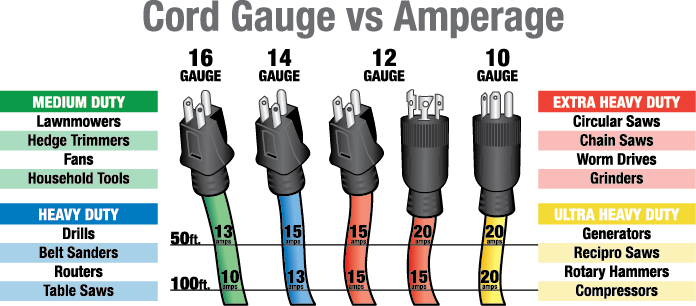
Image Source: blueprint.fastenal.com
Fathoming Extension Cord Power Limits
The maximum extension cord power a cord can safely carry is directly linked to how much electrical current (measured in amperes or amps) it can handle. Think of it like water flowing through a pipe. The wider the pipe (the thicker the wire), the more water it can carry without issue. Similarly, thicker wires in an extension cord can carry more electricity without overheating.
The Role of Amperage and Wattage
- Amperage (Amps): This is the rate of electrical current flow. Most household circuits are protected by circuit breakers or fuses rated at 15 amps or 20 amps.
- Voltage (Volts): This is the electrical pressure that pushes the current. In the United States, standard household voltage is 120 volts.
- Wattage (Watts): This is the measure of electrical power, calculated by multiplying voltage by amperage (Watts = Volts × Amps).
So, if an extension cord has an extension cord amperage rating of 10 amps and is used with a 120-volt outlet, its maximum power capacity is:
10 Amps × 120 Volts = 1200 Watts
It’s important to remember that this is a theoretical maximum. For safe extension cord usage, you should always stay below this limit, ideally by 10-25%, to avoid stressing the cord.
Deciphering the Extension Cord Gauge Chart
The most critical factor in determining an extension cord’s capacity is its extension cord wire size, often referred to as the gauge. The lower the gauge number, the thicker the wire, and the more power it can handle.
Key Wire Gauges and Their Capacities
Here’s a general guide for common extension cord gauges and their typical capacities. Keep in mind that these are approximate and can vary slightly between manufacturers. Always check the cord’s packaging or label for specific ratings.
| Gauge (AWG) | Typical Amperage Rating | Approximate Wattage Capacity (120V) | Use Cases |
|---|---|---|---|
| 18 | 7 Amps | 840 Watts | Light-duty appliances (fans, lamps, clocks) |
| 16 | 10 Amps | 1200 Watts | Medium-duty appliances (power tools, vacuums) |
| 14 | 13 Amps | 1560 Watts | Heavy-duty appliances (lawnmowers, microwaves) |
| 12 | 15 Amps | 1800 Watts | High-demand tools, longer runs |
| 10 | 20 Amps | 2400 Watts | Very high-demand, very long runs |
Important Considerations for Extension Cord Gauge:
- Length Matters: As extension cords get longer, they experience something called “voltage drop.” This means the voltage delivered to the appliance at the end of the cord is lower than at the outlet. To compensate for longer runs, you’ll need a thicker gauge cord (lower number) to maintain adequate power and prevent overheating. For example, a 100-foot 16-gauge cord might handle fewer watts safely than a 25-foot 16-gauge cord.
- Number of Outlets: Cords with multiple outlets are designed to share the total power cord load capacity. Don’t plug in several high-wattage devices into a single multi-outlet extension cord, as this can quickly lead to overloading.
- Condition of the Cord: Always inspect your extension cords for damage. Frayed wires, cracked insulation, or damaged plugs can create safety hazards and reduce the cord’s capacity.
Grasping Extension Cord Voltage Limits
While most common extension cords are designed for standard household extension cord voltage limits (120V in North America), it’s crucial to be aware of the voltage rating.
- Heavy-Duty & Industrial Cords: Some heavy-duty or industrial extension cords are rated for higher voltages (e.g., 240V). Using a cord not rated for the voltage of your outlet or appliance can lead to damage, malfunction, or even fire.
- Polarized Plugs: Look for cords with polarized plugs (one blade is wider than the other). These are designed for specific outlets and help ensure correct connections.
- Grounded Plugs: Extension cords with three prongs (grounded) are essential for appliances with metal casings. The ground wire provides a safety path for electricity in case of a fault, preventing electric shock. Never use a three-prong plug in a two-prong outlet without a proper adapter, and even then, it defeats the safety feature.
Safe Extension Cord Usage: Best Practices
Adhering to extension cord safety guidelines is paramount to preventing accidents and ensuring the longevity of your equipment.
Key Safety Practices:
- Match the Cord to the Load: Always use an extension cord that is rated for the wattage or amperage of the appliance you are powering. It’s better to use a heavier-duty cord than one that is too light.
- Avoid Overloading: Never plug in more appliances than the cord can safely handle. This is a common cause of overheating and fires. If an appliance’s wattage is close to the cord’s limit, consider a higher-rated cord or plugging the appliance directly into the wall outlet.
- Inspect Regularly: Before each use, check the extension cord for any signs of wear and tear, such as cuts, frays, melted spots, or loose connections. Do not use damaged cords.
- Keep Cords Tidy: Avoid running cords under rugs, furniture, or in high-traffic areas where they can be pinched, cut, or tripped over.
- Outdoor Use: Use only extension cords specifically rated for outdoor use when operating equipment outside. Outdoor cords are designed to withstand moisture, temperature changes, and UV exposure.
- Avoid Daisy-Chaining: Do not connect multiple extension cords together. This practice significantly increases the risk of overloading and overheating, as the combined length and potential for voltage drop become more problematic.
- Proper Storage: Store extension cords neatly, avoiding kinks or sharp bends that can damage the insulation.
- Electrical Outlet Capacity: Be mindful of the capacity of the wall outlet itself and the circuit breaker protecting it. An extension cord cannot safely carry more power than the circuit it’s plugged into is designed for.
Interpreting Extension Cord Markings
Extension cords come with various markings that provide crucial information about their capabilities and safety features. Learning to read these markings is part of safe extension cord usage.
What to Look For:
- Gauge (AWG): As discussed, this indicates wire thickness.
- Amperage Rating: The maximum current the cord can handle.
- Voltage Rating: The maximum voltage the cord is designed for.
- “Heavy Duty,” “Light Duty,” “General Use”: These terms offer a general idea of capacity, but the gauge and amperage rating are more precise indicators.
- UL or ETL Listed: Look for certifications from recognized testing laboratories like Underwriters Laboratories (UL) or Intertek (ETL). These labels indicate that the cord has met specific safety standards.
- Indoor/Outdoor Use: Clearly marked on the cord or its packaging.
- Number of Conductors: Typically indicated by the number of wires inside the cord (e.g., “3-conductor” means it has a hot, neutral, and ground wire).
Common Appliances and Their Power Needs
To properly gauge what an extension cord can handle, it’s helpful to know the typical wattage of common household appliances.
Appliance Wattage Examples:
| Appliance | Typical Wattage Range | Recommended Gauge (for moderate lengths) |
|---|---|---|
| Lamp | 40 – 150 Watts | 18 or 16 Gauge |
| Fan | 75 – 200 Watts | 18 or 16 Gauge |
| Vacuum Cleaner | 700 – 1500 Watts | 16 or 14 Gauge |
| Toaster | 800 – 1500 Watts | 16 or 14 Gauge |
| Microwave | 1000 – 1500 Watts | 14 Gauge |
| Hair Dryer | 1200 – 1875 Watts | 14 Gauge |
| Portable Heater | 1000 – 1500 Watts | 14 Gauge |
| Electric Drill | 500 – 1000 Watts | 16 or 14 Gauge |
| Lawnmower (Electric) | 1000 – 1800 Watts | 14 Gauge |
| Power Saw | 1000 – 1500 Watts | 14 Gauge |
Note: For appliances with heating elements (heaters, hair dryers, toasters), always err on the side of a heavier gauge cord. These appliances draw a significant amount of power, especially when first switched on.
What Happens When an Extension Cord is Overloaded?
An overloaded extension cord is a serious fire hazard. When you exceed the power cord load capacity, the wire inside the cord heats up significantly. This can lead to:
- Melting Insulation: The heat can melt the plastic insulation around the wires, exposing them and creating a risk of short circuits and electrical fires.
- Fire Ignition: The overheated cord can ignite nearby combustible materials like dust, paper, or fabric.
- Appliance Damage: Overloading can also damage the appliances themselves, as they may not receive the stable power they need.
- Reduced Lifespan of the Cord: Even if a fire doesn’t start, consistently overloading a cord will shorten its lifespan and make it more prone to failure.
Frequently Asked Questions (FAQ)
Q1: Can I use a 14-gauge extension cord for my power tools?
A1: Yes, generally a 14-gauge extension cord is suitable for most power tools, as they often fall within the 10-15 amp range. However, always check the wattage of your specific power tool and compare it to the cord’s extension cord wattage capacity. For high-demand tools or very long extensions, a 12-gauge cord might be a better choice.
Q2: Is it safe to plug my refrigerator into an extension cord?
A2: It’s generally recommended to plug large appliances like refrigerators directly into a wall outlet. If you must use an extension cord, ensure it is a heavy-duty, grounded cord with a sufficient extension cord amperage rating for the refrigerator’s motor. The refrigerator’s motor draws a surge of power when it starts, so a cord that’s just “barely enough” might not be suitable.
Q3: What does AWG mean on an extension cord?
A3: AWG stands for American Wire Gauge. It’s a standard used to measure the thickness of electrical wires. As mentioned earlier, a lower AWG number indicates a thicker wire and a higher extension cord capacity.
Q4: Can I use a short extension cord instead of a long one if I’m only using a low-wattage device?
A4: Yes, for low-wattage devices (like a lamp or phone charger), a short, light-duty cord (18-gauge) is usually sufficient. However, always ensure the cord’s wattage rating exceeds the appliance’s needs.
Q5: My extension cord feels warm, is that normal?
A5: A slight warmth might be felt on a cord carrying a significant load, but it should never be hot to the touch. If an extension cord feels hot, it is likely overloaded extension cord, and you should immediately unplug it and switch to a heavier-duty cord or a different outlet.
By following these guidelines and paying close attention to the extension cord wire size, extension cord amperage rating, and extension cord voltage limits, you can ensure your electrical connections are safe and efficient. Prioritizing safe extension cord usage protects your appliances, your home, and most importantly, yourself.