
How many watts does a table saw use? The wattage of a table saw can vary significantly, but most typically range from 1,500 to 2,200 watts for common household or workshop models. However, some high-powered cabinet saws can exceed this, using up to 3,000 watts or more.
If you’re a woodworker, you know that a table saw is often the heart of a workshop. But have you ever stopped to wonder about the power behind this essential tool? Specifically, how many watts does a table saw actually use? This isn’t just a curious question; it’s a crucial one for anyone looking to set up a workshop, manage their electricity usage, or simply make informed purchasing decisions. Let’s dive deep into table saw watts and explore what powers these machines.
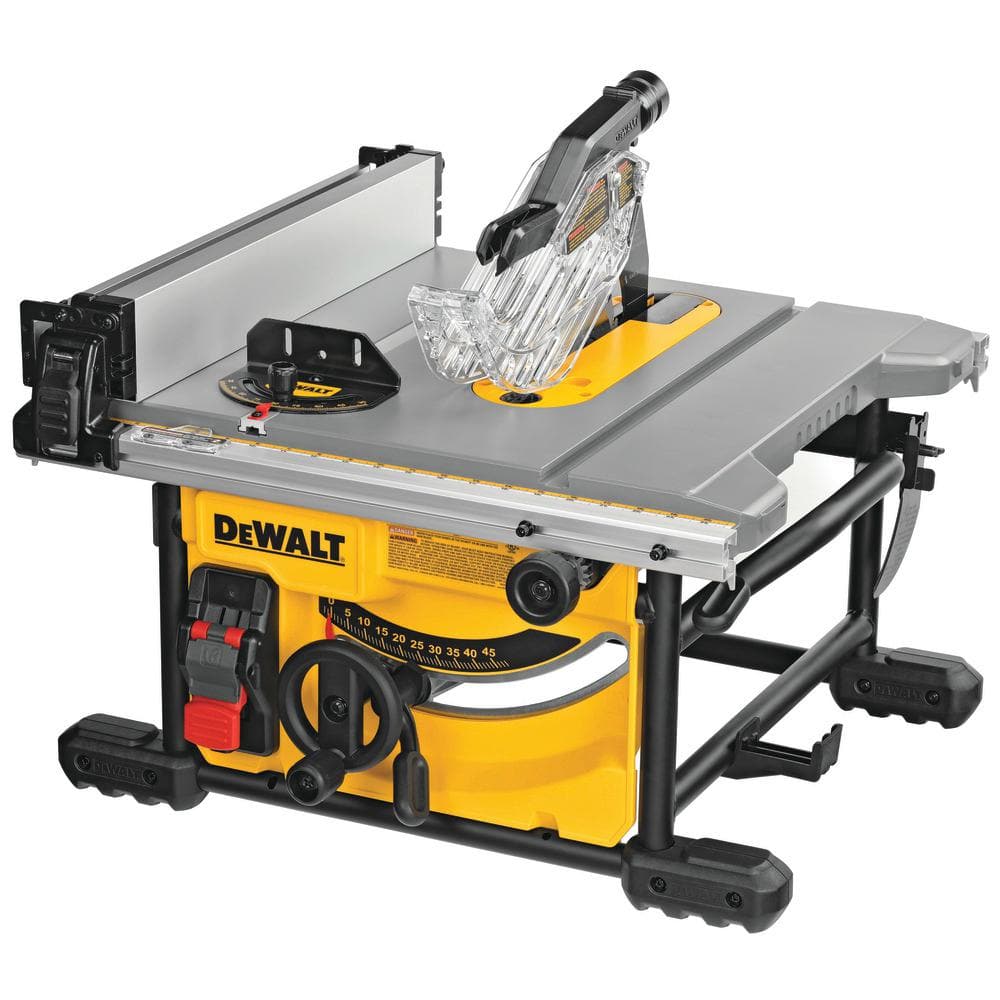
Image Source: images.thdstatic.com
Fathoming Table Saw Power Consumption
When we talk about how much power a table saw uses, we’re really looking at its table saw power consumption. This is measured in watts (W), which tells us the rate at which the saw uses energy. Think of it like this: if a light bulb is 60 watts, it uses 60 joules of energy every second. A table saw, being a much more powerful tool, uses a lot more energy to spin its blade and cut through wood.
The actual watts a table saw draws can fluctuate. It’s not a static number. When a table saw is just idling, it uses much less power than when it’s actively cutting through a dense piece of hardwood. The load on the motor is the primary factor in determining the table saw energy usage.
What Drives Table Saw Power?
Several factors influence how many watts a table saw consumes:
- Motor Size: This is perhaps the most significant factor. The table saw motor size is usually given in horsepower (HP), but this directly correlates to its wattage. A larger motor generally means more power and higher wattage.
- Blade Speed (RPM): While not directly wattage, a motor designed to spin a blade faster may require more power.
- Type of Wood: Cutting through soft pine uses less energy than ripping through a dense oak. The resistance the blade encounters directly impacts the motor’s workload and, therefore, its power draw.
- Depth and Type of Cut: A shallow cut will draw less power than a deep rip cut through thick material. Bevel cuts and dado cuts can also require more sustained power.
- Blade Quality and Sharpness: A dull or poorly set blade will make the motor work harder, increasing power consumption.
Deciphering Table Saw Amperage and Voltage
To truly grasp a table saw’s power, we need to look beyond just watts. Understanding table saw voltage and amperage is key to understanding its overall electrical needs.
Voltage (V)
Voltage is the electrical pressure that pushes the current through the circuit. Most home workshops in North America run on 120 volts (V). However, larger, more powerful table saws, particularly cabinet saws, often require 240 volts. This higher voltage allows for more power to be delivered to the motor without needing excessively thick or expensive wiring.
Amperage (A)
Amperage, or current, is the flow of electrical charge. It’s how much electricity is actually moving through the wires. The amperage a table saw draws is directly related to its power consumption and the voltage it operates on.
The fundamental relationship between watts, volts, and amps is: Watts = Volts × Amps.
This equation is crucial for determining table saw wattage. If you know the voltage and amperage rating of your table saw, you can easily calculate its maximum wattage.
Table Saw Amperage Ratings:
- 120V Saws: These are typically found in smaller, portable table saw watts configurations or contractor saws. They might draw anywhere from 10 to 15 amps when under load. A 15-amp breaker is common for 120V circuits.
- 240V Saws: These are generally more powerful contractor saws and cabinet saws. They often draw between 10 to 20 amps at 240V. While the amperage is similar to 120V tools, the higher voltage means significantly more power.
Connecting Amperage, Voltage, and Wattage
Let’s put the formula into practice.
- A 120V table saw drawing 12 amps:
Watts = 120V × 12A = 1,440 watts. - A 120V table saw drawing 15 amps:
Watts = 120V × 15A = 1,800 watts. - A 240V table saw drawing 10 amps:
Watts = 240V × 10A = 2,400 watts. - A 240V table saw drawing 15 amps:
Watts = 240V × 15A = 3,600 watts.
As you can see, a 240V saw can deliver substantially more power with the same or even lower amperage draw than a 120V saw. This is why larger saws often opt for the 240V setup.
Table Saw Power Requirements:
When you’re planning your workshop, you need to consider these table saw power requirements. You’ll need appropriate circuits and potentially dedicated lines.
- 120V Saws: Most 120V table saws can run on a standard 15-amp household circuit. However, if your saw is rated at 15 amps, it’s best to plug it into a circuit with a 20-amp breaker to avoid nuisance tripping, especially if other devices are on the same circuit. Some larger 120V saws may require a 20-amp circuit.
- 240V Saws: These require a dedicated 240V circuit, usually with a 20-amp or 30-amp breaker, depending on the saw’s amperage rating. You’ll need to have this type of wiring installed if your workshop doesn’t already have it.
Gauging Wattage by Table Saw Type
The type of table saw you have largely dictates its power output and, consequently, its wattage.
Portable Table Saw Watts
Portable table saw watts are generally on the lower end of the spectrum, designed for mobility and ease of use.
- Typical Wattage: 1,200 to 1,800 watts.
- Motor Size: Often feature 1 HP to 1.75 HP motors.
- Voltage: Almost exclusively 120V.
- Amperage: Usually draw between 10 and 15 amps.
- Use Case: Ideal for DIYers, job sites, and occasional woodworking tasks. They are lightweight and can be easily transported.
These saws are designed to be user-friendly on standard home circuits, but it’s still a good idea to check the specific power requirements listed on the tool.
Contractor Table Saw Power
Contractor saws strike a balance between portability and power, making them a popular choice for many home workshops. Contractor table saw power is a step up from portable models.
- Typical Wattage: 1,500 to 2,200 watts (for 120V models), but can be higher for 240V models.
- Motor Size: Typically range from 1.5 HP to 2 HP.
- Voltage: Available in both 120V and 240V configurations.
- Amperage: 120V models might draw 15 amps, while 240V models could draw 10-12 amps.
- Use Case: Suitable for serious hobbyists and small-scale professional use. They offer better dust collection, sturdier fences, and more robust components than portable saws.
Cabinet Table Saw Energy Usage
Cabinet saws are the workhorses of professional woodworking shops. Their cabinet table saw energy usage is higher due to their substantial size and power.
- Typical Wattage: 2,000 to 3,000 watts, and often much more for larger, industrial models.
- Motor Size: Commonly feature 3 HP to 5 HP motors, with some even exceeding this.
- Voltage: Primarily operate on 240V, though some can be wired for 480V.
- Amperage: Can range from 12 amps to 20 amps or more at 240V.
- Use Case: Designed for continuous operation, heavy-duty tasks, and precision woodworking. They have heavier cast iron construction, superior dust collection, and more precise adjustments.
The higher horsepower motors in cabinet saws translate directly to higher wattage draw. These saws often require dedicated, heavy-duty circuits.
Table Saw Motor Size vs. Wattage
The table saw motor size is often advertised in horsepower (HP). While not a direct measure of watts, it’s the primary indicator of a motor’s power output. Here’s a rough conversion:
- 1 HP motor ≈ 746 watts.
However, this is for continuous operation under ideal conditions. Motors, especially those in power tools, have peak power ratings and can draw more than their continuous rating for short bursts. So, a 1.75 HP motor might have a continuous draw closer to 1,300 watts, but its peak wattage could be closer to 1,750 watts or more.
Table 1: Horsepower to Approximate Wattage Conversion
| Horsepower (HP) | Approximate Continuous Watts (W) | Approximate Peak Watts (W) | Typical Table Saw Type |
|---|---|---|---|
| 1.0 | 746 | 1,000 – 1,200 | Portable, Small Contractor |
| 1.5 | 1,119 | 1,400 – 1,700 | Contractor |
| 1.75 | 1,306 | 1,600 – 1,900 | Contractor, Hybrid |
| 2.0 | 1,492 | 1,800 – 2,200 | Contractor, Hybrid |
| 3.0 | 2,238 | 2,500 – 3,000 | Cabinet, Heavy Duty Hybrid |
| 5.0 | 3,730 | 4,000 – 4,500+ | Cabinet, Industrial |
Note: These are approximations. Actual wattage can vary based on motor efficiency, design, and operating conditions.
Table Saw Energy Efficiency
While we’ve focused on wattage, it’s also worth touching upon table saw energy efficiency. Not all motors are created equal. More efficient motors will produce the same amount of work for less energy consumption.
- Brushless Motors: Newer table saws, particularly higher-end models, are starting to incorporate brushless motors. These are generally more energy-efficient, quieter, and have a longer lifespan than traditional brushed motors.
- Motor Design: The quality of the motor windings, bearings, and overall construction plays a role in efficiency. A well-built motor will operate with less friction and heat loss, converting more electrical energy into mechanical work.
- Operating Conditions: As mentioned, the load on the motor is critical. A saw running at its designed capacity will often be more efficient than one constantly struggling with overloaded cuts.
When choosing a table saw, consider not just the advertised horsepower or peak wattage, but also the build quality and, if available, information on motor efficiency.
Determining Table Saw Wattage
How do you find out the specific wattage of your table saw?
- Check the Nameplate/Sticker: Most power tools have a nameplate or sticker on the motor housing or the tool body. This sticker usually lists the voltage (V), amperage (A), and sometimes directly states the wattage (W) or horsepower (HP). If it lists HP, you can use the conversion formula (HP × 746) to get an approximate continuous wattage.
- Consult the User Manual: The owner’s manual for your table saw will almost always contain detailed specifications, including power consumption.
- Manufacturer’s Website: If you can’t find the information on the tool itself, check the manufacturer’s website for product specifications.
- Use a Watt Meter: For a precise measurement of actual power consumption under specific conditions, you can use an inline watt meter. You plug the meter into the outlet, and then plug the table saw into the meter. This will show you the real-time wattage the saw is drawing. This is particularly useful for understanding peak loads during cuts.
Example of Nameplate Information:
Imagine a nameplate reads:
“MODEL: TS-1000 | 120V ~ 60Hz | 15A | 2 HP”
From this:
* Voltage = 120V
* Amperage = 15A
* Horsepower = 2 HP
We can calculate:
* Watts (from Amps): 120V × 15A = 1,800 watts.
* Approximate Watts (from HP): 2 HP × 746 W/HP = 1,492 watts (this is a continuous rating).
The actual operational wattage will likely be between these two figures, peaking higher during demanding cuts.
Powering Your Workshop: Important Considerations
When planning your workshop or buying a new table saw, always consider its table saw power requirements.
- Circuit Capacity: Ensure the circuit you intend to use can handle the saw’s amperage draw. Overloading a circuit can trip breakers or, worse, cause a fire hazard.
- Dedicated Circuits: For powerful table saws (especially 2 HP and above, or any 240V saw), running them on a dedicated circuit is highly recommended. This means the saw is the only major appliance on that circuit, preventing interference and ensuring a stable power supply.
- Wire Gauge: Using the correct wire gauge for the circuit is essential, especially for longer runs or higher amperage tools. Undersized wiring can overheat.
- Extension Cords: If you must use an extension cord with a portable or contractor saw, use a heavy-gauge cord (lower gauge number) that is rated for the amperage and wattage of your tool. A cord that is too thin or too long can cause voltage drop, reducing the saw’s power and potentially damaging the motor.
Frequently Asked Questions (FAQ)
Can I run a table saw on a standard 15-amp household outlet?
Yes, most portable and many contractor table saws can run on a standard 15-amp outlet. However, if your saw’s rating is close to 15 amps, it’s better to use a 20-amp circuit if available, or ensure nothing else is drawing significant power on that circuit simultaneously. Running a 15-amp saw on a 15-amp circuit without other loads is usually fine, but you might experience breaker trips during demanding cuts.
What is the difference between horsepower and watts for a table saw?
Horsepower (HP) is a measure of the motor’s mechanical output, indicating its strength. Watts (W) is a measure of electrical power consumption – how much electricity the motor is drawing from the outlet. While related (1 HP ≈ 746 watts), they aren’t the same. A saw with higher HP will generally consume more watts.
Does a table saw use the same wattage for all cuts?
No. A table saw uses significantly less wattage when idling (spinning the blade without cutting) compared to when it’s actively cutting through wood. The wattage increases with the resistance the blade encounters, such as cutting hardwoods, thicker materials, or making very wide rip cuts.
What does “peak horsepower” mean for a table saw?
Peak horsepower is the maximum horsepower a motor can produce for a very short period. It’s often used in marketing. Continuous or rated horsepower is a more reliable indicator of sustained power output. For determining table saw wattage, it’s more accurate to base calculations on the amperage and voltage ratings, as these reflect actual electrical draw.
How can I improve my table saw’s energy efficiency?
- Ensure your blade is sharp and properly set.
- Avoid forcing the wood through the blade; let the blade do the work.
- Clean out sawdust buildup around the motor and blade path, as this can impede airflow and cooling.
- Consider upgrading to a saw with a more efficient motor, like a brushless motor, if available.
- For 240V saws, ensure proper wiring to minimize voltage drop.
My table saw feels weak, could it be a power issue?
Yes, several factors can cause a table saw to feel weak. It could be:
* An undersized extension cord causing voltage drop.
* A circuit breaker that is weak or not rated correctly.
* A dull blade.
* The motor itself struggling due to age or internal issues.
* The saw drawing insufficient power due to an inadequate home circuit.
By paying attention to table saw power consumption, understanding table saw voltage and amperage, and considering the table saw motor size, you can ensure your woodworking operations are powered efficiently and safely.