
The cost of a sawmill varies greatly, from a few thousand dollars for a small, basic unit to hundreds of thousands for a large commercial operation. What is a sawmill? A sawmill is a facility where logs are sawn into lumber. Can I afford a sawmill? Whether you can afford one depends on your budget, intended use, and the scale of your operation. Who is a sawmill for? Sawmills are for individuals, small businesses, and large lumber companies looking to process timber.
Deciding on the right sawmill is a big step, whether you dream of milling your own lumber for DIY projects, starting a small woodworking business, or establishing a full-scale lumber operation. The question of “how much is a sawmill” isn’t straightforward because the sawmill cost is influenced by many factors. This guide will break down the expenses involved, from the initial sawmill investment to ongoing operational costs, helping you make an informed decision.
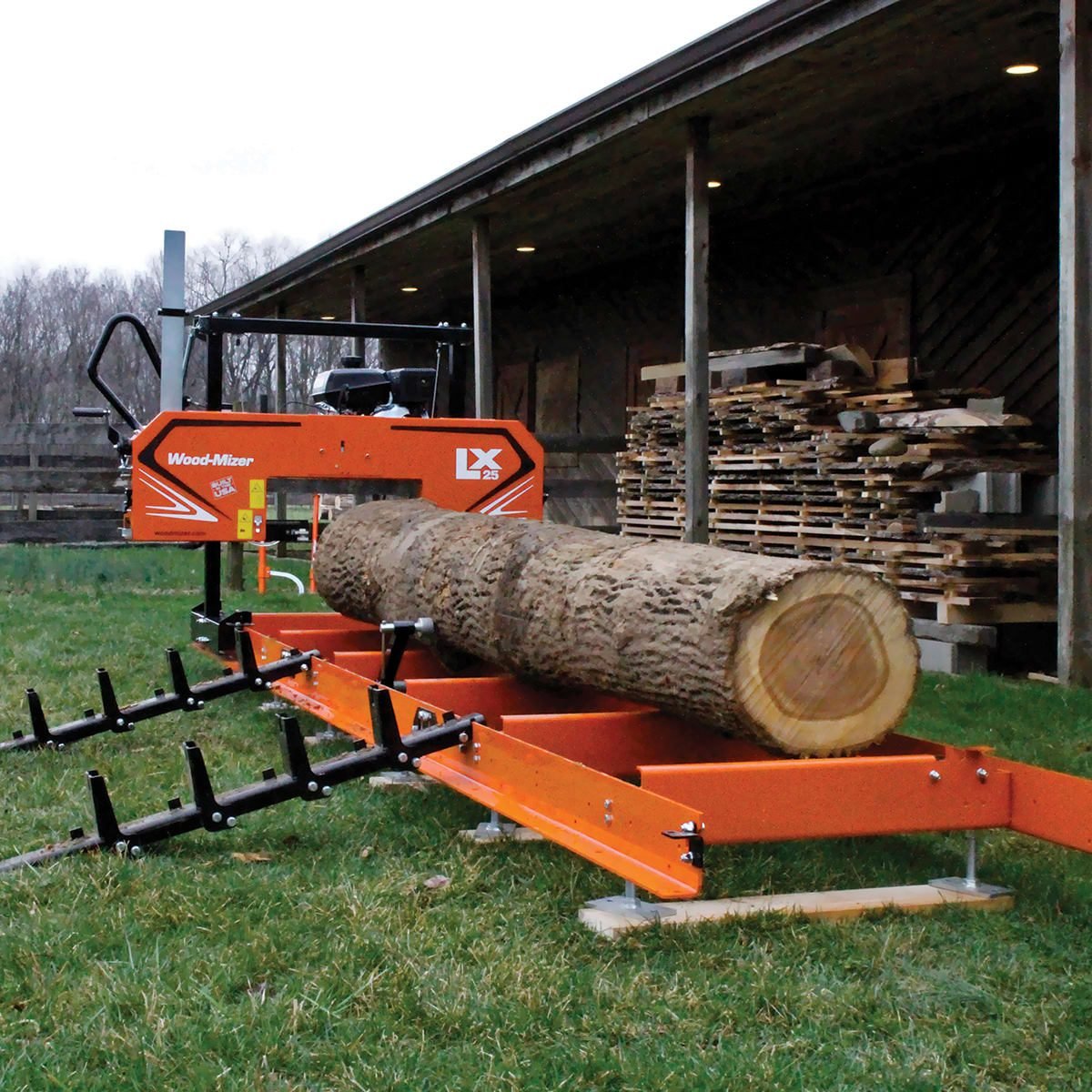
Image Source: www.familyhandyman.com
Factors Influencing Sawmill Price
Several key elements contribute to the overall sawmill cost. It’s crucial to consider these before diving into specific price ranges.
Type of Sawmill
The fundamental design and technology of a sawmill significantly impact its price.
Band Sawmills
- Description: Band sawmills use a continuous band of steel with teeth on one edge. This band runs over two wheels, creating a narrow kerf (the width of the cut). They are known for their efficiency and ability to produce high-quality lumber with minimal waste.
- Sawmill Cost: Generally, band sawmills tend to be more expensive than other types due to their precision engineering and the cost of the band saw blade itself.
- Band Sawmill Cost: You can expect the band sawmill cost to start around \$3,000 for very basic, manual models and climb upwards of \$50,000 or more for fully automated, high-capacity units.
Circular Sawmills
- Description: Circular sawmills use a rotating circular blade to cut logs. They are typically faster than band sawmills but produce a wider kerf, leading to more sawdust (wood waste).
- Sawmill Cost: Circular sawmills are often more affordable upfront.
- Sawmill Machine Cost: A basic, smaller circular sawmill might be found for \$1,000, while larger, more powerful models can range from \$5,000 to \$20,000.
Chainsaw Sawmills
- Description: These are essentially modified chainsaws that attach to a guide system to cut logs into lumber. They are the most basic and least expensive option.
- Sawmill Cost: They offer the lowest small sawmill cost entry point.
- Portable Sawmill Price: A portable sawmill price using a chainsaw can range from a few hundred dollars for a basic attachment to a couple of thousand dollars for a more robust setup with a guide bar and track.
Size and Capacity
The size of the logs you intend to mill and the volume of lumber you need to produce will dictate the size and type of sawmill required.
- Small Sawmills: Designed for milling smaller logs or for hobbyists and small-scale operations. These often have a smaller cutting capacity and lower power output.
- Small Sawmill Cost: The small sawmill cost can range from \$3,000 to \$15,000 for portable band sawmills.
- Medium Sawmills: Suitable for businesses or individuals who mill moderate amounts of timber regularly. They handle larger logs and have higher production rates.
- Sawmill Cost: Expect to pay between \$15,000 and \$40,000 for mid-sized industrial or commercial-grade sawmills.
- Large Commercial Sawmills: Built for high-volume production in industrial settings. These are robust, often automated, and designed for continuous operation.
- Commercial Sawmill Price: The commercial sawmill price can easily range from \$50,000 to \$500,000 or more, depending on automation, power, and throughput.
Portability
Do you need to move your sawmill to different locations, or will it have a permanent site?
- Portable Sawmills: These are designed to be easily transported. They are ideal for those who need to mill logs at various sites, such as on a client’s property or in remote locations.
- Portable Sawmill Price: The portable sawmill price can vary significantly, from \$3,000 for manual, lighter models to \$20,000+ for more advanced, self-propelled, or trailer-mounted units.
- Stationary Sawmills: These are fixed in one location and are typically larger and more powerful, designed for high-volume, continuous operation. Their initial lumber mill cost might be lower per unit of capacity compared to portable options, but they require a dedicated site.
Automation and Features
The level of automation and the included features will also affect the sawmill equipment price.
- Manual Operations: Require more physical labor for log handling, blade adjustment, and cuts. These are generally the least expensive.
- Semi-Automated: May have hydraulic log loaders, log turners, or powered headblocks, reducing manual effort.
- Fully Automated: Feature hydraulic systems for all operations, computer controls for precise cuts, and integrated conveyors for lumber removal. These offer the highest throughput and lowest labor cost but come with a significantly higher sawmill machine cost.
Power Source
The type of engine or motor powering the sawmill influences both the initial cost and ongoing operating expenses.
- Electric Motors: Often found in smaller or stationary sawmills. They require a reliable power source and can be more environmentally friendly but may have limitations in remote locations.
- Gasoline Engines: Common in portable sawmills. They offer independence from a power grid but require fuel and regular maintenance.
- Diesel Engines: More powerful and fuel-efficient than gasoline engines, making them suitable for larger or heavier-duty sawmills. They are often more expensive upfront.
Cost to Build a Sawmill vs. Buying New
A crucial consideration is whether to buy a pre-made sawmill or embark on a cost to build a sawmill.
Buying New
- Pros:
- Warranty: New sawmills typically come with a manufacturer’s warranty.
- Latest Technology: Access to the most efficient and advanced features.
- Reliability: Less likely to have immediate mechanical issues.
- Support: Access to customer service and parts from the manufacturer.
- Cons:
- Higher Initial Investment: The sawmill investment will be the highest when buying new.
- Depreciation: Like any machinery, new sawmills depreciate in value.
Buying Used
- Pros:
- Lower Initial Cost: A significant way to reduce the overall sawmill cost.
- Established Reputation: Can find well-maintained models from reputable brands.
- Cons:
- No Warranty: Often sold as-is.
- Potential for Repairs: May require immediate or future maintenance.
- Outdated Technology: May lack the latest efficiency features.
- Availability: Finding the exact model you need can be challenging.
Cost to Build a Sawmill
- Pros:
- Customization: Build a machine tailored to your specific needs.
- Potential Cost Savings: If you have the skills and access to materials, it can be cheaper than buying new.
- Learning Experience: Gain valuable mechanical knowledge.
- Cons:
- Time Investment: Designing and building takes significant time.
- Technical Expertise Required: Need strong welding, fabrication, and mechanical skills.
- Sourcing Parts: Finding suitable components can be difficult and time-consuming.
- Reliability Concerns: Performance and safety depend heavily on build quality.
- No Warranty: You are your own warranty provider.
- Sawmill Equipment Price (DIY): The sawmill equipment price for a DIY build can range from \$1,000 for very basic setups using scrap parts to \$5,000+ for more complex designs using new components.
Sawmill Price Ranges: A Detailed Look
Let’s break down the sawmill cost by category. These are approximate figures and can vary based on brand, features, and location.
Small Sawmills (Hobbyist/Light Use)
- Type: Typically manual or semi-automatic portable band sawmills or robust chainsaw mills.
- Capacity: Can handle logs up to 18-24 inches in diameter.
- Features: Basic log handling, manual blade adjustments, limited power.
- Sawmill Cost: \$3,000 – \$15,000.
- Chainsaw Mill Attachments: \$300 – \$2,000 (requires a powerful chainsaw).
- Basic Portable Band Sawmills (Manual/Hand-crank): \$3,000 – \$7,000.
- Entry-Level Portable Band Sawmills (Powered Assist): \$7,000 – \$15,000.
Medium Sawmills (Small Business/Regular Use)
- Type: Semi-automatic to automated portable or stationary band sawmills, or larger circular sawmills.
- Capacity: Can handle logs up to 30-40 inches in diameter.
- Features: Hydraulic log loading, turning, and clamping; powered sawhead adjustments; potentially trailer-mounted for portability.
- Sawmill Cost: \$15,000 – \$40,000.
- Mid-Range Portable Band Sawmills (Hydraulic Assist): \$15,000 – \$30,000.
- Larger Portable or Small Stationary Band Sawmills (Full Hydraulic): \$30,000 – \$40,000.
Large Commercial Sawmills (Industrial Production)
- Type: High-capacity, fully automated band sawmills or sophisticated circular sawmills.
- Capacity: Can handle logs 40 inches in diameter and larger, with high throughput rates.
- Features: Sophisticated hydraulic systems, computerized controls, automated log decks, edgers, slabbers, and lumber handling systems.
- Commercial Sawmill Price: \$50,000 – \$500,000+.
- Heavy-Duty Portable Sawmills (Fully Hydraulic): \$40,000 – \$80,000.
- Small to Medium Stationary Industrial Sawmills: \$80,000 – \$250,000.
- Large, High-Production Commercial Sawmills: \$250,000 – \$1,000,000+.
Additional Costs to Consider
The initial sawmill purchase price is just the beginning. You need to budget for several other expenses to get your operation running.
Site Preparation
- Foundation: Some sawmills, especially larger ones, may require a concrete foundation for stability.
- Clearing and Leveling: The area where the sawmill will operate needs to be cleared and leveled.
- Shelter: Protecting your investment from the elements might necessitate a basic shed or a more substantial building.
- Estimated Cost: \$500 – \$10,000+, depending on the scale and existing site conditions.
Power and Utilities
- Electricity: If using an electric sawmill, you might need to run power lines, install transformers, or upgrade your existing electrical service.
- Fuel Storage: For gas or diesel-powered sawmills, you’ll need safe fuel storage tanks.
- Water/Drainage: Depending on your local regulations and operations, you might need water for cooling or dust suppression and drainage systems for runoff.
- Estimated Cost: \$200 – \$5,000+ (highly variable).
Sawmill Equipment Price (Ancillary)
Beyond the main sawmill unit, you’ll need other equipment to operate efficiently.
- Log Debarker: Removes bark from logs, which can prolong blade life and improve lumber quality. (\$2,000 – \$15,000+)
- Edger: A secondary saw used to square up the edges of boards after they’ve been cut from the log. (\$2,000 – \$10,000+)
- Resaw: Used to rip boards to a thinner dimension or to cut multiple boards from a single slab. (\$3,000 – \$20,000+)
- Conveyors: For moving logs, sawdust, and lumber. (\$1,000 – \$10,000+)
- Forklift/Tractor: For loading logs onto the sawmill and moving lumber. (Used: \$5,000 – \$20,000+; New: \$20,000 – \$60,000+)
- Drying Kiln: If you plan to dry your lumber, this is a significant investment. (\$5,000 – \$100,000+)
- Blade Sharpener/Setter: Essential for maintaining your saw blades. (\$500 – \$3,000)
Blades and Consumables
- Saw Blades: These are a recurring cost. The price depends on the type, size, and material. Expect to pay \$20 – \$100+ per band saw blade.
- Fuel/Electricity: Ongoing operational costs.
- Lubricants and Maintenance Supplies: For keeping the machinery running smoothly.
Permits and Licenses
- Depending on your location and the scale of your operation, you may need business licenses, environmental permits, or zoning approvals.
- Estimated Cost: \$50 – \$1,000+ (highly variable by municipality).
The Sawmill Investment: Calculating Your Return
When considering the sawmill investment, it’s essential to think about the potential return.
Revenue Streams
- Selling Lumber: The primary way to generate revenue is by selling sawn lumber. Prices vary based on wood species, grade, and market demand.
- Milling Services: You can offer your milling services to others who have logs but no sawmill.
- By-products: Sawdust and wood chips can be sold for mulch, animal bedding, or fuel.
Cost-Benefit Analysis
Before purchasing, conduct a thorough cost-benefit analysis.
- Estimate Your Production: How much lumber can you realistically produce with a given sawmill?
- Determine Market Prices: Research the going rates for the types of lumber you plan to sell in your area.
- Calculate Operating Costs: Factor in fuel, electricity, maintenance, consumables, and labor.
- Project Profitability: Compare your estimated revenue against your total costs to determine potential profit.
Frequently Asked Questions (FAQ)
Q: What is the cheapest type of sawmill?
A: The cheapest type of sawmill is generally a chainsaw mill attachment, which can cost a few hundred dollars. Basic, manual portable band sawmills are the next cheapest option, typically starting around \$3,000.
Q: Can I really make money with a small sawmill?
A: Yes, you can make money with a small sawmill, but it requires careful planning, efficient operation, and a good understanding of your local lumber market. Focusing on niche markets or high-value species can improve profitability.
Q: How much electricity does a sawmill use?
A: The electricity consumption varies greatly depending on the size and power of the sawmill’s motor. Smaller electric sawmills might use 5-10 horsepower (around 3.7-7.5 kW), while larger industrial mills can consume hundreds of horsepower.
Q: How often do I need to replace saw blades?
A: The frequency of blade replacement depends on the wood species being cut, the presence of dirt or rocks in the logs (which dull blades quickly), and proper blade maintenance (sharpening and setting). You might get several hours of cutting from a blade before it needs sharpening, and blades can be sharpened multiple times before replacement.
Q: What are the safety concerns with operating a sawmill?
A: Sawmills involve significant safety risks, including contact with moving blades, flying debris, heavy logs, and potential for kickback. Always wear appropriate personal protective equipment (PPE) such as safety glasses, hearing protection, and steel-toed boots. Follow manufacturer safety guidelines rigorously and ensure proper training.
Q: Is it better to buy a portable or stationary sawmill?
A: The choice between portable and stationary depends on your operational needs. If you need to mill logs at different locations, a portable sawmill is essential. If you have a consistent supply of logs at a single site and require higher volume or more powerful machinery, a stationary sawmill might be more efficient.
Q: What is the lifespan of a sawmill?
A: With proper maintenance, lubrication, and care, a well-built sawmill can last for many years, even decades. The lifespan is heavily influenced by the quality of its construction, the intensity of its use, and the maintenance it receives.
Conclusion
The question of “how much is a sawmill” is complex, with a wide spectrum of answers. From the entry-level small sawmill cost of a few thousand dollars for hobbyists to the substantial commercial sawmill price running into hundreds of thousands for industrial operations, the investment varies dramatically. Your sawmill investment should be guided by your specific needs, production goals, budget, and willingness to engage in ongoing maintenance and operation. By carefully considering the type of sawmill, its capacity, features, and all associated ancillary costs, you can make an informed decision that sets you on the path to successful lumber production.