
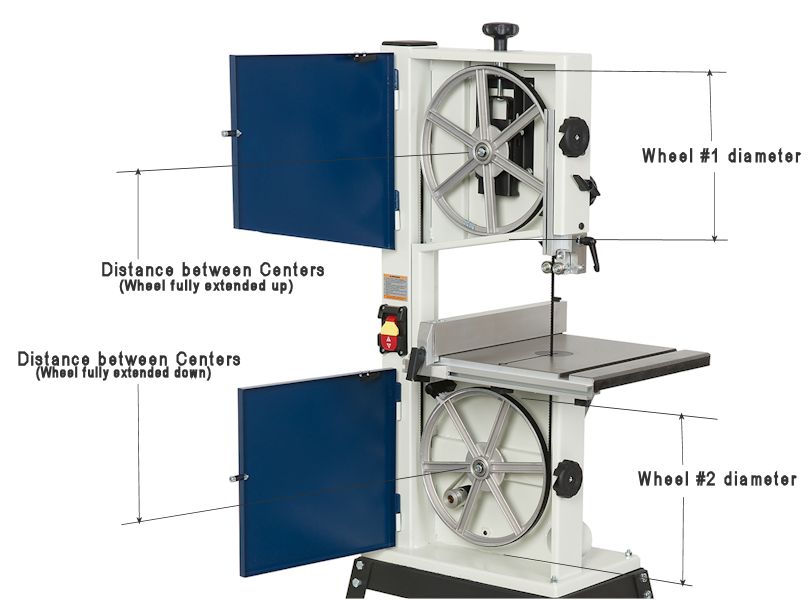
Image Source: www.bandsawbladecenter.com
How To Measure Bandsaw Blade Length Easily
So, you need to know your bandsaw blade length, but aren’t sure how to get it? You can measure your bandsaw blade length by looping it around your bandsaw’s wheels and measuring the circumference, or by calculating it based on your bandsaw’s specifications. This guide will make it simple. We’ll cover everything you need to know, from the basics of blade dimensions to practical measurement techniques. We’ll also touch on why knowing this information is crucial for your woodworking success.
Why Knowing Your Bandsaw Blade Length Matters
Getting the correct bandsaw blade length is not just about having a blade that fits. It’s vital for several reasons:
- Safety: A blade that’s too short or too long can cause serious accidents. A blade that’s too short won’t reach the drive mechanism properly, leading to slippage and potential detachment. A blade that’s too long might rub against parts of the saw it shouldn’t, causing damage or fire.
- Performance: The right length ensures the blade tracks correctly on the wheels. This means smoother cuts, less blade deflection, and ultimately, better results.
- Blade Lifespan: Using the correct length reduces stress on the blade and the saw’s components. This can extend the life of both your blade and your bandsaw.
- Ordering New Blades: When it’s time to buy a new blade, having the exact length is the first and most important piece of information you need.
Beyond Length: Other Key Blade Specifications
While length is king when it comes to fitting, other aspects of your bandsaw blade are just as important for cutting performance. Knowing these will help you choose the right blade for the job.
Bandsaw Blade Width
Bandsaw blade width affects your cutting ability.
- Narrow Blades (1/8″ to 1/2″): Great for intricate curves and tight turns.
- Medium Blades (1/2″ to 3/4″): Good for general-purpose cutting, including resawing and straighter cuts.
- Wide Blades (3/4″ and up): Ideal for resawing thick lumber and making very straight cuts. They offer more stability.
Bandsaw Blade Thickness
Bandsaw blade thickness also plays a role. Thicker blades are generally more durable and can handle more aggressive cutting. However, they also require more tension to stay on the bandsaw wheels. Thin blades are more flexible and suitable for delicate work.
Bandsaw Blade TPI (Teeth Per Inch)
Bandsaw blade TPI is crucial for cut quality and speed.
- Low TPI (e.g., 2-6 TPI): Fewer teeth per inch mean larger gullets (the space between teeth). This is good for cutting thick wood quickly, as the large gullets clear sawdust efficiently.
- Medium TPI (e.g., 8-14 TPI): A good all-rounder for various wood types and thicknesses.
- High TPI (e.g., 18-32 TPI): More teeth per inch create a smoother finish, ideal for thin materials or hardwoods. The small gullets clear fine dust.
Bandsaw Blade Pitch
Bandsaw blade pitch is another term for TPI. So, if you see “pitch” on a blade package, it’s the same as TPI.
Bandsaw Blade Material
The bandsaw blade material determines its durability and cutting edge.
- Carbon Steel: Affordable and versatile. Good for general woodworking and softer materials. They can dull faster than other types.
- Bi-Metal: A blend of carbon steel and high-speed steel (HSS). Offers a good balance of flexibility and edge retention, making them suitable for tougher woods and metal.
- Carbide Tipped: The most durable. These blades have carbide teeth brazed onto a steel band. They are excellent for cutting very hard materials, abrasive woods, or for extended resawing. They are also the most expensive.
Bandsaw Blade Gullet
The bandsaw blade gullet is the space between the teeth. It’s important for efficient sawdust removal. Larger gullets are needed for fast cutting of thick materials to prevent clogging. Smaller gullets are better for fine finishes.
Bandsaw Blade Kerf
The bandsaw blade kerf is the width of the cut the blade makes. A thinner kerf means less material is wasted, which is important when cutting expensive wood or making many passes.
Identifying Your Bandsaw Blade Length: Method 1 (The Direct Measurement)
This is the most reliable way to determine your bandsaw blade length.
What You’ll Need
- A flexible tape measure (a builder’s tape measure works well).
- Your bandsaw.
- Safety glasses.
Step-by-Step Measurement
- Safety First: Always wear safety glasses. Make sure the bandsaw is unplugged or the power switch is turned off.
- Loosen the Blade Tension: On your bandsaw, there’s usually a tension knob or lever. Turn this to release the tension on the blade. This makes it easier and safer to handle.
- Remove the Blade (Optional but Recommended): While you can measure with the blade on the saw, it’s much easier and more accurate to remove it. Open the bandsaw’s doors and carefully lift the blade off the upper and lower wheels. Let it rest on the lower wheel or carefully lay it out on a flat surface.
- Lay the Blade Flat: Gently lay the removed blade on a flat, clean surface. Ensure the teeth are facing upwards and the blade is as straight as possible without straining it.
- Measure the Length: Take your flexible tape measure and start at one end of the blade. Lay the tape measure along the length of the blade, following the curve of the metal band. Measure from the tip of one tooth to the tip of the tooth at the very end of the band.
- Record the Measurement: Write down the length. It’s usually in inches or millimeters. Most bandsaw blades are around 60 to 160 inches long, but this varies greatly by saw model.
Tips for Accurate Direct Measurement
- Keep it Flat: Try to keep the blade as flat as possible when measuring.
- Measure Tooth Tip to Tooth Tip: Ensure your tape measure is aligned with the very tips of the teeth.
- Double Check: Measure it twice to be sure. It’s easy to be off by an inch or two if you’re not careful.
Identifying Your Bandsaw Blade Length: Method 2 (The Calculation)
If you can’t remove the blade easily, or if you know your bandsaw’s model, you can calculate the bandsaw blade length.
What You’ll Need
- Your bandsaw’s manual or manufacturer’s website.
- A tape measure (for measuring wheel diameters if not readily available).
The Formula
The length of a bandsaw blade is essentially the circumference of the path it travels around the wheels. The formula for circumference is:
Circumference = π × Diameter
Where:
- π (Pi) is approximately 3.14159.
- Diameter is the diameter of the bandsaw wheels.
How to Calculate
- Find Your Wheel Diameter:
- Check the Manual: The most accurate way is to look up your bandsaw’s model number in its manual or on the manufacturer’s website. The wheel diameter is usually listed in the specifications.
- Measure the Wheels: If you can’t find the manual, you can measure the wheels directly. Open the bandsaw doors and measure the diameter of the upper and lower drive wheels. Measure across the widest part of the wheel, from one edge to the other, passing through the center. Important: Measure the diameter of the rubber tires on the wheels, as this is the surface the blade runs on.
- Apply the Formula:
- Let’s say your bandsaw wheels have a diameter of 14 inches.
- Blade Length = 3.14159 × 14 inches
- Blade Length ≈ 43.98 inches
Understanding Variations and Adjustments
- Tire Thickness: The rubber tires on your bandsaw wheels add a small amount to the effective diameter. Many manufacturers account for this in their listed blade lengths. If you measure, you might be slightly off if you don’t include the tire’s contribution.
- Blade Tension Adjustment: Bandsaw saws have a mechanism to adjust blade tension. This means the actual length might vary slightly depending on how much tension is applied. The calculated or directly measured length is usually the “neutral” length.
Factors Influencing Blade Length and Fit
Several factors can affect the bandsaw blade length and how it fits your machine.
Bandsaw Wheel Size
This is the most significant factor. Larger wheels require longer blades. Always know the diameter of your bandsaw’s wheels.
Blade Tension Mechanism
The way your bandsaw applies bandsaw blade tension can slightly influence the exact length needed. Some saws have more adjustment range than others.
Blade Width and Thickness
While not directly changing the required length, bandsaw blade width and bandsaw blade thickness can affect how a blade tracks. A wider, thicker blade might require slightly more tension to stay on the wheels properly.
Blade Material and Construction
The bandsaw blade material itself doesn’t change the length requirement, but different materials might have slightly different properties that affect tracking.
Common Bandsaw Blade Identification Marks
When you buy a new blade, or when you’re trying to figure out what kind of blade you have, look for these markings.
Markings on the Blade Itself
Often, the bandsaw blade identification is printed or etched directly onto the blade band itself. Look for:
- Length: Sometimes the exact length is printed.
- Width: Usually indicated in fractions of an inch (e.g., 1/2″).
- TPI (Teeth Per Inch): Indicated as “TPI” followed by a number (e.g., 6 TPI).
- Tooth Set: While not always marked, the pattern of teeth (raker, wavy, or straight) is part of the bandsaw blade identification.
- Material: Sometimes the material like “Bi-Metal” or “Carbon” is printed.
Markings on the Blade Packaging
When you purchase a new blade, the packaging will have all the necessary bandsaw blade identification details:
- Exact Length (e.g., 115 inches)
- Width (e.g., 3/8 inch)
- TPI (e.g., 4 TPI)
- Tooth Style (Hook, Skip, Regular)
- Material (Carbon Steel, Bi-Metal, Carbide)
- Intended Use (e.g., Resaw, Scroll Saw, General Purpose)
Troubleshooting Common Blade Issues Related to Length
Sometimes, even with the right length, you might encounter problems.
Blade Slips Off the Wheels
- Possible Cause: Blade is too short or too long.
- Solution: Double-check your measured or calculated bandsaw blade length. Ensure you’re using the correct length for your saw. Also, check that the blade isn’t worn out and the teeth aren’t damaged, which can affect tracking.
Blade Breaks Frequently
- Possible Cause: Blade is too long, causing excessive tension, or the blade is being over-tensioned. Also, a blade that is too narrow for the wheels can be a factor.
- Solution: Verify bandsaw blade length. Ensure you are applying the correct bandsaw blade tension. Check the recommended tension for your specific blade type and width.
Poor Cut Quality
- Possible Cause: Incorrect TPI for the material, dull blade, or improper tension. While not directly a length issue, a blade that’s slightly off in length can cause tracking problems that lead to bad cuts.
- Solution: Ensure you have the right bandsaw blade TPI and bandsaw blade pitch for your material. Check your bandsaw blade tension.
Frequently Asked Questions (FAQ)
Q1: Can I use a blade that is slightly shorter or longer than the recommended length?
It is strongly advised against using a blade that is significantly shorter or longer than the recommended length. A blade that is too short will not engage properly with the wheels, leading to slippage and poor tracking. A blade that is too long will be over-tensioned, putting excessive stress on the blade, the welds, and the saw components, which can lead to premature blade breakage and damage to your bandsaw. Always aim for the exact specified length.
Q2: How often should I replace my bandsaw blade?
The lifespan of a bandsaw blade depends on several factors, including the bandsaw blade material, the type of wood you are cutting, how often you use the saw, and whether you are using the correct blade for the job. Generally, you should replace a blade when you notice a decrease in cutting performance, such as rougher cuts, slower cutting speed, or if the blade is dull. For carbon steel blades, this might be after cutting a certain amount of wood, while bi-metal or carbide-tipped blades will last much longer. Listen to your saw and watch your cuts for signs of dullness.
Q3: What does “hook tooth” mean for a bandsaw blade?
A “hook tooth” refers to the bandsaw blade pitch and tooth shape. Hook tooth blades have teeth that are angled forward aggressively (like a fish hook). This design provides a large bandsaw blade gullet and allows for faster cutting, making them ideal for resawing thick lumber or cutting softer woods. They are generally not recommended for very fine or delicate work where a smoother finish is required.
Q4: How does the bandsaw blade kerf affect my cuts?
The bandsaw blade kerf is the width of the cut made by the blade. A narrower kerf means less material is removed as sawdust. This is advantageous when working with expensive hardwoods or when making multiple cuts on a single piece of lumber, as it conserves material and reduces waste. Blades with thinner kerfs might be more flexible and suitable for tighter curves.
Q5: Is there a difference between bandsaw blade length and bandsaw wheel circumference?
The bandsaw blade length is designed to be the circumference of the path it travels around the bandsaw wheels, including the rubber tires. While you can calculate the blade length using the wheel circumference (plus an allowance for tire thickness), the most reliable method is direct measurement of the blade or checking the manufacturer’s specifications for your bandsaw model. This ensures you get the precise length needed for proper fit and tensioning.
Q6: How do I know if my bandsaw blade tension is correct?
Proper bandsaw blade tension is critical. Too little tension will cause the blade to wander, slip, or even come off the wheels. Too much tension can lead to blade breakage or damage to the saw’s frame and bearings. Many bandsaws have a tension indicator gauge. If yours doesn’t, a general rule of thumb is to apply enough tension so that the blade feels stiff and taut when plucked, but not so much that it makes a high-pitched ringing sound. Refer to your bandsaw manual for specific tensioning recommendations for your machine and blade type.
Q7: What is the best bandsaw blade width for resawing?
For resawing, which involves cutting thick lumber along its length, a wider bandsaw blade width is generally preferred. Blades ranging from 1/2 inch to 1 inch or more provide greater stability and prevent the blade from deflecting, resulting in straighter cuts. A wider blade also typically allows for lower TPI, which helps clear sawdust efficiently from the deeper cut.
Q8: Can I use a metal-cutting bandsaw blade on my wood bandsaw?
While some metal-cutting bandsaw blades (like bi-metal blades) can cut wood, it’s generally not recommended to use them interchangeably. Wood bandsaw blades are designed with specific tooth geometries, TPI, and gullet designs optimized for wood. Using a metal blade on wood may result in slower cutting, excessive dust buildup in the gullets, and premature dulling of the blade. Conversely, using a wood blade on metal will quickly dull and damage the blade. Always use the blade designed for the material you are cutting.
By following these guidelines, you can confidently measure, identify, and select the right bandsaw blade for all your woodworking projects, ensuring safety, efficiency, and excellent results.