
A circuit breaker panel is the heart of your home’s electrical system, directing power to different areas. What is a circuit breaker panel? It’s a metal box containing switches that control electricity flow to various circuits. Can I safely work with my circuit breaker panel? Yes, by following safety guidelines and knowing how to read it, you can manage minor issues and ensure your home’s electrical safety. Who is responsible for electrical safety? Ultimately, homeowners are responsible for maintaining their electrical systems safely.
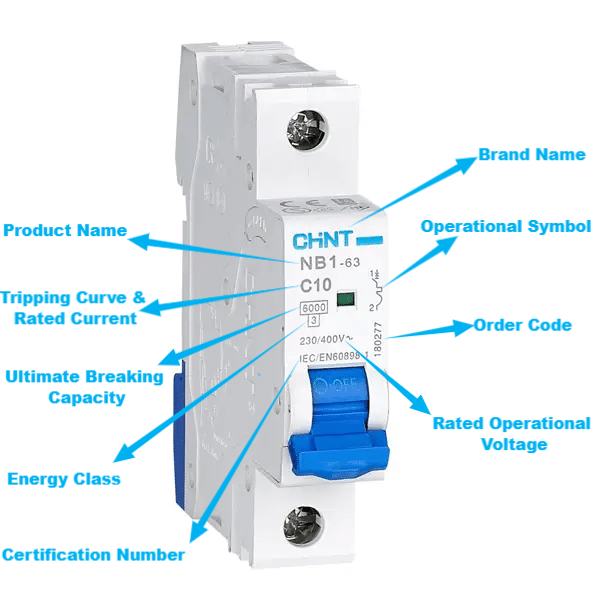
Image Source: www.chintglobal.com
Navigating Your Electrical Hub: Locating Your Panel
Before you can decipher what’s happening within your electrical system, you need to locate the breaker panel. This is the first crucial step in grasping circuit breaker functionality. Most homes have one central panel, but some might have sub-panels in different areas like garages or basements.
Common Panel Locations:
- Basement: Often mounted on a wall in an unfinished area.
- Garage: Frequently found on a wall near the entrance or service door.
- Utility Room: Sometimes located in a dedicated space for appliances.
- Closet: Less common, but possible, especially in older homes.
- Hallway: Occasionally found on a wall in a main hallway.
Tips for Finding Your Panel:
- Look for a metal box with a door that opens to reveal rows of switches.
- It’s usually near where the electrical service enters your home (e.g., where the power company’s wires come in).
- Check utility bills or consult your home’s blueprints if you’re unsure.
Deciphering the Labels: What Each Switch Controls
Once you’ve found your panel, the next step is to understand breaker labels. These small, often handwritten or printed tags are your roadmap to identifying which circuit powers what. Without clear labels, troubleshooting becomes a guessing game.
The Importance of Labeling:
- Safety: Knowing which switch controls a specific area prevents accidental power shut-offs to essential equipment like medical devices or security systems.
- Troubleshooting: When an outlet or light stops working, clear labels help you quickly identify the affected circuit.
- Efficiency: During renovations or when adding new appliances, labels help you avoid overloading existing circuits.
How to Read and Improve Labels:
- Existing Labels: Examine the labels carefully. They might be printed, handwritten, or even color-coded.
- Test and Label: The most reliable method is to test each circuit. Go to a light or outlet controlled by a particular breaker, turn the breaker off, and see what loses power. Then, label the breaker accordingly (e.g., “Living Room Lights,” “Kitchen Outlets,” “Master Bedroom”).
- Use Clear, Concise Language: Avoid vague terms. Be specific about the area or appliance.
- Consider a Label Maker: For a professional and long-lasting solution, use a label maker.
Breaker Types Explained: A Look at Different Switches
Not all circuit breakers are the same. Knowing how to identify breaker types is key to understanding their function and ensuring you use the right ones. The breaker types explained section will cover the most common varieties you’ll encounter.
Standard (Thermal-Magnetic) Breakers:
This is the most common type found in residential panels. They protect circuits from overcurrents through two mechanisms:
- Thermal Trip: A bimetallic strip heats up due to sustained high current. When it bends enough, it trips the breaker. This protects against overloads that build up heat over time.
- Magnetic Trip: An electromagnet uses the current flowing through it. If the current is very high (like in a short circuit), the magnetic field becomes strong enough to quickly pull a lever and trip the breaker. This provides fast protection against sudden surges.
GFCI (Ground Fault Circuit Interrupter) Breakers:
GFCI breakers are designed to protect people from electrical shock. They monitor the balance of current flowing in and out of a circuit. If they detect an imbalance (meaning some current is leaking out, potentially through a person), they trip almost instantaneously.
- Where You Find Them: Typically required in areas where water is present, such as bathrooms, kitchens, garages, and outdoor outlets.
- Identifying GFCI Breakers: They often have “Test” and “Reset” buttons on the breaker itself.
AFCI (Arc Fault Circuit Interrupter) Breakers:
AFCI breakers protect against fires caused by electrical arcs. Arcing is a dangerous electrical discharge that can occur due to damaged wires or faulty connections. These arcs can generate enough heat to ignite nearby combustible materials.
- How They Work: They detect the characteristic electrical noise of an arc fault and quickly shut off the power.
- Where You Find Them: Increasingly mandated in living areas like bedrooms, living rooms, and dining rooms.
- Identifying AFCI Breakers: Similar to GFCI breakers, they usually have “Test” and “Reset” buttons. Some may have an indicator light.
Dual-Pole Breakers:
These breakers control 240-volt appliances, such as electric ranges, dryers, water heaters, and central air conditioners. They combine two single-pole breakers into one unit, ensuring that both hot wires of a 240-volt circuit are disconnected simultaneously for safety.
The Importance of the Breaker Amperage Rating:
Every breaker has an ampere rating (e.g., 15A, 20A, 30A). This number indicates the maximum amount of electrical current the breaker can safely handle before tripping.
- Matching Load to Rating: It’s crucial that the breaker’s amperage rating matches the wire size and the intended load of the circuit. Using a breaker with a higher amperage rating than the wire can support is extremely dangerous, as the wire could overheat and cause a fire before the breaker trips.
- Common Amperage Ratings:
- 15 Amp: Typically used for lighting and standard outlets in bedrooms, living rooms, etc. Uses 14-gauge wire.
- 20 Amp: Used for outlets in kitchens, bathrooms, and garages, as well as some lighting circuits. Uses 12-gauge wire.
- 30 Amp: Often used for higher-draw appliances like electric dryers, water heaters, or ovens. Uses 10-gauge wire.
- Higher Ratings: For large appliances like electric ranges or central air conditioners, even larger amperage breakers (e.g., 40A, 50A) and thicker wires are used.
Breaker Safety Tips: Prioritizing Your Well-being
Working around electricity requires extreme caution. Following breaker safety tips is paramount to prevent injury or electrocution.
Essential Safety Precautions:
- Never Touch Live Wires: Always assume wires are live until you’ve tested them.
- Turn Off the Main Breaker (If Necessary): For any work that requires touching components within the panel, turn off the main breaker first. This disconnects all power to the house.
- Use Insulated Tools: Employ tools with insulated handles for added protection.
- Dry Hands and Area: Ensure your hands and the area around the panel are completely dry. Never work on an electrical panel in damp conditions.
- Avoid Overloading Circuits: Don’t plug too many high-power devices into a single circuit. This can cause frequent tripping and damage.
- Replace with the Correct Breaker: If a breaker needs replacing, always use one with the exact same amperage rating and type.
- Don’t Bypass Breakers: Never defeat the purpose of a breaker by trying to bypass it or using a foreign object to keep it engaged.
- When in Doubt, Call a Professional: If you’re unsure about any electrical work or troubleshooting, it’s always best to contact a qualified electrician.
Troubleshooting Common Electrical Issues: A Step-by-Step Approach
When a light goes out or an appliance stops working, your circuit breaker panel is often the first place to look. Breaker troubleshooting involves a systematic approach to identify the problem.
Identifying a Tripped Breaker:
- Visual Inspection: Open the panel door. Tripped breakers typically sit in a position between “ON” and “OFF.” Sometimes they are visibly angled or have a red or orange indicator.
- Feel for Resistance: Gently push the breaker handle towards the “OFF” position. You should feel a slight resistance. Then, push it firmly to the “ON” position.
How to Reset a Tripped Breaker:
- Locate the Tripped Breaker: As described above, identify the breaker that is in the tripped position.
- Turn the Breaker Completely OFF: Push the switch firmly to the “OFF” position. This ensures the internal mechanism is fully reset.
- Turn the Breaker ON: Push the switch firmly back to the “ON” position.
What to Do If It Trips Again:
If the breaker trips immediately or shortly after resetting, there’s likely an ongoing issue:
- Identify the Load: Determine which outlets or appliances are on that circuit.
- Unplug Devices: Unplug all devices connected to that circuit.
- Reset the Breaker: Try resetting the breaker again with nothing plugged in.
- Plug Back In One by One: If it stays on, plug your devices back in one at a time, resetting the breaker if needed. The last device you plugged in before it tripped is likely the culprit or is drawing too much power.
- Check for Short Circuits: A short circuit means two wires have accidentally touched, causing a surge of electricity. This could be due to damaged wiring, a faulty appliance, or an improperly wired outlet.
- Check for Overloads: The circuit might simply be trying to power too many devices at once.
- Consider a Faulty Breaker: If the breaker trips even with no load connected, the breaker itself might be faulty and needs replacement.
Testing a Circuit Breaker: Ensuring Functionality
Sometimes, a breaker might not be tripping when it should, or you might suspect it’s faulty. Learning how to test circuit breaker functionality is a useful skill.
Simple Tests:
- The Reset Test: As described in troubleshooting, turning it off and then back on is a basic test. If it immediately trips again with no load, it’s likely faulty.
- The Load Test: Plug a known working appliance (like a lamp) into an outlet on the circuit you suspect. Then, plug in another appliance that might be causing issues. If the breaker trips, you can narrow down the cause.
Advanced Testing (Use Caution or Hire a Professional):
For more definitive testing, specialized equipment is needed:
- Circuit Breaker Tester: These devices can inject a precise amount of current to see if the breaker trips at its rated amperage.
- Multimeter: A multimeter can be used to check voltage and continuity, but this requires a good understanding of electrical testing and safety.
When to Call an Electrician for Testing:
- If you’re not comfortable performing any electrical tests.
- If a breaker repeatedly trips without an obvious cause.
- If you suspect a wiring problem beyond a simple overload.
- If you need to replace a breaker and want to ensure the correct type and rating is used.
A Glimpse into Breaker History: From Fuses to Modern Protection
The way we protect our homes from electrical hazards has evolved significantly. A brief look at breaker history reveals the progression from less reliable methods to the sophisticated devices we use today.
The Era of Fuses:
Before circuit breakers, fuses were the primary means of overcurrent protection.
- How Fuses Worked: A fuse contained a thin wire designed to melt and break the circuit when too much current flowed through it.
- Drawbacks of Fuses:
- One-Time Use: Once a fuse blew, it had to be replaced.
- Inconvenience: Finding the correct replacement fuse could be difficult.
- Fire Risk: Sometimes, people would use pennies or other conductive materials to bypass a blown fuse, creating a severe fire hazard.
The Advent of the Circuit Breaker:
The circuit breaker was invented to overcome the limitations of fuses.
- Early Innovations: Various inventors contributed to the development of circuit breakers, with patents dating back to the late 19th century.
- Thermal-Magnetic Design: The development of the thermal-magnetic trip mechanism, which combines overload and short-circuit protection, was a significant advancement.
- Modern Advancements: Today, we have sophisticated breakers like GFCI and AFCI, offering enhanced safety against shock and fire. The ongoing evolution of electrical safety standards continues to drive innovation in breaker technology.
Frequently Asked Questions (FAQ)
Q1: How often should I test my circuit breakers?
A1: It’s a good practice to test your circuit breakers at least once a year, and whenever you notice an unusual electrical issue.
Q2: Can I use a higher amperage breaker if the current one keeps tripping?
A2: Absolutely not. Using a breaker with a higher amperage rating than the circuit’s wiring is extremely dangerous and can lead to fires. Always match the breaker to the wire’s capacity.
Q3: What does it mean if a breaker is warm to the touch?
A3: A breaker that is warm to the touch can indicate that it’s handling a heavy load, which is normal for some appliances. However, if it’s excessively hot or has a burning smell, it could signal a problem with the breaker or the circuit, and you should have it checked by an electrician.
Q4: My lights flicker, what should I do?
A4: Flickering lights can be caused by several issues, including a loose connection at the breaker, a faulty bulb, or a problem with the wiring. First, try resetting the breaker. If the flickering continues, try swapping the bulb or checking the outlet. If the problem persists across multiple lights or outlets on a circuit, it’s time to call an electrician.
Q5: How do I know if I need GFCI or AFCI breakers?
A5: Building codes typically mandate GFCI protection in areas with water (bathrooms, kitchens, outdoors) and AFCI protection in living spaces. If your home was built recently, these may already be installed. If you have an older home, it’s a good idea to consult with an electrician about upgrading to these safety features.
By taking the time to learn how to read your circuit breaker panel, you empower yourself to manage your home’s electrical system more effectively and safely. Always prioritize safety and don’t hesitate to call a professional for any complex or potentially dangerous electrical tasks.