
What is the gauge of an extension cord? The gauge of an extension cord refers to the thickness of its wires, measured by the American Wire Gauge (AWG) system. A lower AWG number indicates a thicker wire, which can handle more electrical current and is better for heavier loads.
Choosing the right extension cord gauge is crucial for both safety and performance. Using an extension cord that’s too thin for the job can lead to overheating, fire hazards, and inefficient power delivery. This guide will walk you through deciphering extension cord gauges and selecting the perfect cord for your needs.
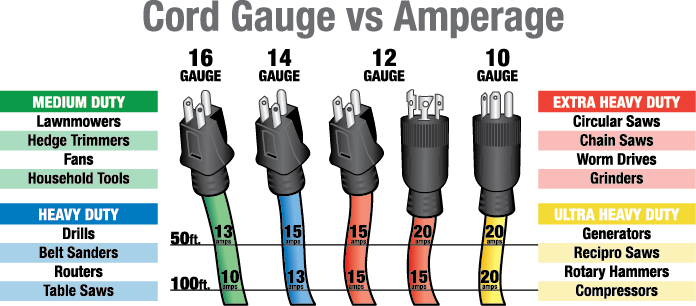
Image Source: blueprint.fastenal.com
The Importance of Wire Gauge
The wire gauge is the single most important factor when selecting an extension cord. It directly impacts the cord’s ability to safely carry electrical current. Think of it like water pipes: a wider pipe can carry more water without pressure loss. Similarly, a thicker wire (lower AWG number) can carry more electricity with less resistance.
Why Gauge Matters: Safety and Performance
- Overheating Prevention: Thinner wires have higher electrical resistance. When electricity flows through them, this resistance generates heat. If a cord is too thin for the electrical device it’s powering, it can overheat, melt its insulation, and potentially start a fire.
- Power Delivery: Resistance also causes voltage drop. This means less power reaches your device. For sensitive electronics or tools that require a consistent power supply, a voltage drop can lead to poor performance or even damage.
- Current Capacity: Each wire gauge has a specific current capacity, measured in amperes (amps). Exceeding this capacity is a serious safety risk.
- Durability: While not directly tied to electrical safety, thicker cords are often more robust and can withstand more physical stress, making them more durable for demanding environments.
Deciphering the AWG System
The AWG size is the universal standard for measuring wire thickness. It’s a bit counterintuitive: as the gauge number gets lower, the wire gets thicker.
Here’s a quick breakdown:
- AWG 10: Thickest wire, highest current capacity.
- AWG 12: Still thick, good for medium to heavy loads.
- AWG 14: Common for general-purpose use, lighter loads.
- AWG 16: Thinner, suitable for very light loads.
How the AWG System Works
The AWG system is based on the conductor diameter of the wire. It’s a standardized system where the diameter decreases as the gauge number increases.
Table: Common AWG Sizes and Their Characteristics
| AWG Size | Conductor Diameter (mm) | Approximate Current Capacity (Amps) – General Use | Typical Applications |
|---|---|---|---|
| 10 | 2.585 | 30 | Heavy-duty tools, large appliances, long extension cords |
| 12 | 2.052 | 20 | Power tools, medium-duty appliances, moderate length cords |
| 14 | 1.628 | 15 | Indoor lighting, small appliances, short cords |
| 16 | 1.291 | 10 | Lamps, holiday lights, very light loads |
Note: Current capacity can vary based on insulation type, temperature, and specific safety standards.
Where to Find the AWG Size
The AWG size is usually printed directly on the insulation of the extension cord itself. You might need to look closely, as it can be quite small.
- Look for “AWG” followed by a number: For example, you’ll see “14 AWG” or “12 AWG”.
- Check the plug and socket ends: The printing is often found on the cord’s jacket, sometimes near the molded plugs.
- Consider the packaging: If the cord is new, the AWG size will be prominently displayed on the product packaging.
Matching Extension Cord Gauge to Your Needs
The most critical factor in selecting the right gauge is the power rating of the appliance or tool you intend to plug in. You also need to consider the length of the extension cord.
Calculating Power Requirements
-
Find the Amperage (Amps): Check the label or nameplate on your appliance or tool. It will list the voltage (V) and wattage (W) or amperage (A). If it only lists wattage, you can calculate amperage using the formula:
Amps (A) = Watts (W) / Volts (V)
For standard household appliances in North America, the voltage is typically 120V. -
Consider the Wattage (Watts): If your appliance lists wattage, it’s often easier to work with. You’ll then need to convert this to amperage to match it with the cord’s capacity.
The Role of Cord Length and Voltage Drop
Voltage drop is a significant concern, especially with longer extension cords and thinner wires. As electricity travels through a wire, some energy is lost due to resistance. This loss is amplified over longer distances.
- Thicker wires (lower AWG) have less resistance: This means less voltage drop.
- Longer cords increase resistance: Even with a thicker wire, a very long cord will experience more voltage drop.
Table: Recommended AWG for Cord Length and Amperage
This is a general gauge chart for common 120V applications. Always err on the side of a thicker wire if you’re unsure.
| Appliance Amperage | Cord Length (Feet) | Recommended AWG |
|---|---|---|
| 0-10 Amps | 0-25 | 16 AWG |
| 0-10 Amps | 25-50 | 14 AWG |
| 0-10 Amps | 50-100 | 12 AWG |
| 10-15 Amps | 0-25 | 14 AWG |
| 10-15 Amps | 25-50 | 12 AWG |
| 10-15 Amps | 50-100 | 10 AWG |
| 15-20 Amps | 0-25 | 12 AWG |
| 15-20 Amps | 25-50 | 10 AWG |
If your appliance draws more than 15 amps continuously, you should use a dedicated circuit and not an extension cord.
Using a Wire Gauge Calculator
To simplify the process, you can use an online wire gauge calculator. These tools take your appliance’s wattage, the desired cord length, and the voltage as input and recommend the appropriate AWG size.
How a Wire Gauge Calculator Works:
- Input Appliance Wattage: Enter the total wattage your appliance uses.
- Input Cord Length: Specify the exact length of the extension cord you need.
- Input Voltage: Typically 120V or 240V for household use.
- Desired Voltage Drop: Most calculators allow you to set a maximum acceptable voltage drop (e.g., 3% or 5%).
The calculator will then suggest the minimum AWG size required to keep voltage drop within your specified limits and ensure safe operation.
Types of Extension Cords and Their Gauges
Extension cords come in various types, each designed for specific environments and uses. The gauge of the wire is a key differentiator.
General Purpose Indoor Cords
These are typically lighter-duty cords used for household appliances, lamps, and electronics. They are usually found in AWG 16 or 14.
- AWG 16: Suitable for very light loads like holiday lights, radios, or small fans.
- AWG 14: A good all-around choice for most indoor needs, including vacuum cleaners, computer setups, and portable heaters (check wattage).
Heavy-Duty Outdoor Cords
These cords are built to withstand harsh weather conditions, physical abrasion, and heavier electrical loads. They are usually thicker, in AWG 14, 12, or even 10.
- AWG 14: Can be used for moderate outdoor tasks like powering lawn mowers or stringing lights.
- AWG 12: Ideal for power tools like circular saws, drills, or powering outdoor equipment that draws more current.
- AWG 10: The thickest option, best for very demanding applications or when you need to run power over long distances outdoors without significant voltage drop, such as for large machinery or multiple power tools.
Speciality Cords
- Appliance Cords: Designed for specific high-wattage appliances like refrigerators or air conditioners. These often have a specific gauge and construction to handle the continuous load.
- Welding Cables: Extremely thick, often lower AWG numbers (e.g., 6 AWG, 4 AWG) due to the very high current demands of welding equipment.
Reading Extension Cord Markings and Labels
Extension cords are subject to strict safety standards to prevent hazards. These standards require manufacturers to label cords with essential information, including the gauge.
What to Look For on the Cord Label
- AWG Size: As mentioned, look for “AWG” followed by a number (e.g., 12/3, 14/3). The “3” in “12/3” indicates the number of conductors (wires) inside the cord, including a ground wire. A 12/3 cord has three 12-gauge wires.
- Maximum Amperage Rating: This tells you the maximum safe current the cord can handle.
- Voltage Rating: The voltage the cord is designed to work with (e.g., 125V).
- Manufacturer Information: Name and contact details.
- UL Listing (or equivalent): A mark from Underwriters Laboratories (or other recognized testing laboratories like ETL) indicates the product has been tested and meets safety requirements.
The Meaning of “X/3” and “X/2”
You’ll often see extension cords marked with numbers like “14/3” or “12/2”.
- The first number (e.g., 14 or 12): This is the wire gauge (AWG size) of the conductors carrying the current.
- The second number (e.g., 3 or 2): This indicates the total number of conductors within the cord.
- X/2: Typically means two conductors (hot and neutral). These cords often do not have a ground wire and are intended for tools or appliances with double insulation.
- X/3: Means three conductors (hot, neutral, and ground). These are the most common and safest for general use, as the ground wire provides an essential safety path in case of a fault.
Common Mistakes to Avoid
- Using the Wrong Gauge for the Load: This is the most dangerous mistake, leading to overheating and fire risk. Always match or exceed the appliance’s needs.
- Ignoring Cord Length: Longer cords require thicker wires to compensate for increased voltage drop.
- Damaged Cords: Never use a cord with frayed insulation, exposed wires, or damaged plugs.
- Overloading: Even with the correct gauge, don’t plug in multiple high-draw appliances into a single extension cord.
- Using Indoor Cords Outdoors: Indoor cords are not designed to withstand moisture, temperature fluctuations, or UV exposure, posing a safety hazard.
When to Upgrade Your Extension Cord
If you find yourself consistently needing to power high-draw appliances, run cords over long distances, or use them in demanding environments, it’s a clear sign you need a heavier-duty extension cord with a lower AWG number.
Consider upgrading if:
- Your current cord feels warm or hot to the touch during use.
- Your tools or appliances seem to perform weakly or intermittently.
- You need to connect appliances over 50 feet or more.
- You are using the cord for outdoor power equipment or in a workshop.
Frequently Asked Questions (FAQ)
Q: Can I use a 16-gauge extension cord for a window air conditioner?
A: Generally, no. Window air conditioners are high-wattage appliances. A 16 AWG cord is too thin and could overheat. You would typically need at least a 14 AWG cord for smaller units and a 12 AWG or even 10 AWG cord for larger units, especially for longer runs. Always check the air conditioner’s manual for specific cord requirements.
Q: What does it mean if an extension cord is rated for “continuous duty”?
A: “Continuous duty” means the cord is designed to safely carry its rated current for extended periods without overheating. Appliances like refrigerators or motors that run constantly require cords rated for continuous duty.
Q: How do I know if my extension cord is safe to use?
A: Inspect the cord regularly. Look for any cuts, nicks, or abrasions in the insulation, bent or broken prongs on the plug, or any signs of melting or scorching near the connections. If you find any damage, discard the cord immediately. Also, ensure it has a safety certification mark (like UL or ETL).
Q: Is a 12-gauge cord always better than a 14-gauge cord?
A: A 12-gauge cord is thicker and can handle more current and less voltage drop than a 14-gauge cord. However, it’s also thicker, heavier, and more expensive. For light-duty indoor tasks (lamps, charging phones), a 14-gauge cord is perfectly adequate and more convenient. For power tools or appliances that draw more power, or for longer cord runs, a 12-gauge cord is a safer and more efficient choice.
Q: Where can I find a reliable gauge chart for extension cords?
A: You can find reliable gauge chart information on electrical safety websites, from organizations like the National Electrical Code (NEC), or by using a reputable wire gauge calculator online. Manufacturers of extension cords also often provide detailed specifications.