
Can you safely trip a circuit breaker? Yes, you can safely trip a circuit breaker by intentionally causing an overload or short circuit, but it’s crucial to do so with proper safety precautions and knowledge to avoid injury or damage. This guide will walk you through the process and important considerations.
When your lights flicker or an appliance suddenly stops working, you might suspect a tripped circuit breaker. Circuit breakers are essential safety devices in your home’s electrical system. They protect your wiring from overheating, which can cause fires. When an electrical circuit draws too much power, or when there’s a fault like a short circuit, the breaker “trips,” shutting off the electricity to that specific circuit. Knowing how to safely trip a circuit breaker and then how to reset a circuit breaker is a valuable skill for any homeowner.
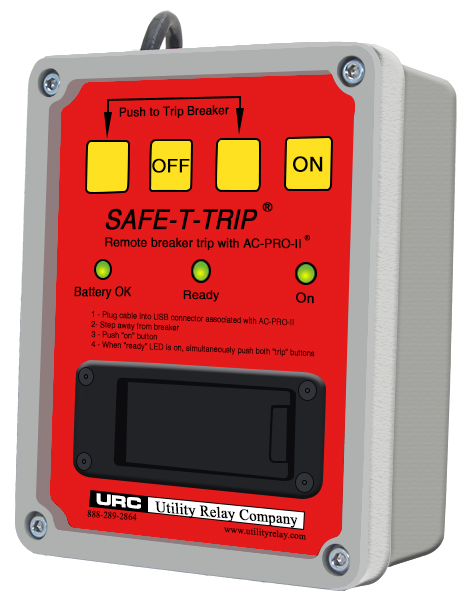
Image Source: www.utilityrelay.com
Why Would You Need To Trip A Circuit Breaker?
While most people encounter tripped breakers accidentally, there are legitimate reasons why you might want to intentionally trip one. These scenarios are usually related to maintenance, testing, or troubleshooting electrical issues.
- Testing GFCI Outlets: Ground Fault Circuit Interrupters (GFCIs) are special outlets designed to prevent electric shock, especially in wet areas like kitchens and bathrooms. They have a “Test” and “Reset” button. To ensure they are working correctly, you can test them by plugging a small appliance (like a lamp) into the outlet, then pressing the “Test” button on the GFCI. This should immediately trip the breaker and turn off the lamp.
- Appliance Troubleshooting: If a particular appliance is malfunctioning or you suspect it’s causing electrical problems, you might want to isolate it by tripping its dedicated circuit breaker. This allows you to work on the appliance or test its wiring without the risk of electrical shock.
- Electrical System Maintenance: Electricians might trip breakers to safely work on wiring, outlets, or fixtures. For a homeowner, this might be relevant if you’re doing minor DIY electrical work, like changing a light fixture or installing a new outlet (though it’s always recommended to consult a professional for more complex tasks).
- Learning About Your Electrical Panel: For those interested in home maintenance, intentionally tripping and resetting a breaker in a controlled environment can be a way to learn about how your electrical system works.
Identifying Tripped Breaker: What To Look For
Before you can learn to trip a breaker, it’s important to know how to identify one that has already tripped. This is a key step in troubleshooting circuit breaker issues.
- Visual Inspection: The most common sign of a tripped breaker is its position in the electrical panel. Most circuit breakers have a toggle switch that can be in one of three positions: ON, OFF, or TRIPPED. The tripped position is usually in the middle, between ON and OFF, or it may be fully in the OFF position. Look for any breaker handle that is out of alignment with the others.
- Loss of Power: The most obvious indicator is the lack of electricity to a specific outlet, light, or appliance. If a particular room or area of your house suddenly loses power, and other areas are unaffected, it’s a strong sign that a breaker has tripped.
- Distinctive Click: Sometimes, you can hear a faint “click” when a breaker trips, especially if it happens suddenly.
Methods for Safely Tripping A Circuit Breaker
When you need to intentionally trip a circuit breaker, safety is paramount. Here are a few methods, ranging from the most common and safe to those requiring more caution.
Method 1: Causing a Minor Overload (The Safest DIY Method)
This is the most common and generally safest way for a homeowner to trip a breaker without specialized tools.
What you’ll need:
- An appliance that draws a significant amount of power (e.g., a toaster, hairdryer, microwave, portable heater).
- An outlet on the circuit you wish to trip.
Steps:
- Locate the circuit: Go to your electrical panel and identify the breaker that controls the circuit you want to trip. Labels on the panel door or inside are very helpful here. If your panel isn’t labeled, you might need to do some trial and error (explained later).
- Ensure Safety: Make sure your hands are dry and you are not standing in water. Avoid touching any metal parts of the electrical panel or nearby appliances while performing this.
- Plug in the appliance: Plug your high-power appliance into an outlet on the circuit you want to test.
- Turn on the appliance: Turn the appliance ON.
- Increase the load: If the breaker doesn’t trip immediately, try to add more load to the circuit. For example, if you’re using a toaster, try toasting something. If you’re using a hairdryer, use it on a high setting. If you have another compatible appliance that can be plugged into the same outlet (using a splitter, but be cautious not to create too much of a tangled mess of cords), you can plug that in too. The goal is to draw more current than the breaker is rated for.
- Observe the breaker: Watch the breaker’s handle in the electrical panel. It should move to the tripped position (usually middle or OFF). If it trips, you have successfully caused an overload circuit breaker scenario.
- Turn OFF the appliance: Once the breaker has tripped, turn the appliance OFF immediately and unplug it to prevent it from drawing power again when you reset the breaker.
Caution: Do not use this method to deliberately overload circuits for extended periods. The purpose is to trigger the breaker, not to risk overheating the wiring.
Method 2: Creating a Controlled Short Circuit (For Advanced Users/Electricians ONLY)
This method involves deliberately creating a path for electricity to flow directly from the hot wire to the ground wire or neutral wire. This should only be attempted by experienced individuals with a thorough understanding of electrical safety and proper tools. Mishandling this can lead to severe electric shock, fire, or damage to your electrical system.
What you might need (and why you probably shouldn’t do it yourself):
- Insulated tools.
- A jumper wire.
- A multimeter to verify voltage.
- Extreme caution and knowledge.
The principle: A short circuit creates a very high current flow instantaneously. This massive surge of power is what causes the breaker to trip instantly and forcefully.
Why this is dangerous:
- High Risk of Shock: If you touch a live wire accidentally, the current will flow through you.
- Arc Flash Hazard: A short circuit can create a dangerous arc flash, which is an explosion of light, heat, and pressure that can cause severe burns and eye damage.
- Damage to Appliances and Wiring: A poorly controlled short circuit can damage the appliance you are working on or even the wiring within your walls.
For these reasons, it is strongly advised that homeowners do not attempt to create a controlled short circuit. If you need to test the response of a breaker to a short circuit, it is best left to a qualified electrician.
Method 3: Using a Dedicated Breaker-Tripping Tool (For Professionals)
Electricians sometimes use specialized tools designed to safely induce an overload or short circuit to test breaker functionality. These tools are designed with safety features and are not typically available to the general public.
Troubleshooting Circuit Breaker Issues: What If It Won’t Trip?
Sometimes, you might try to trip a breaker using Method 1, but it doesn’t trip. There are a few reasons this might happen:
- The breaker is faulty: The breaker itself might be worn out or damaged and no longer able to trip reliably.
- The appliance isn’t drawing enough power: Your appliance might not be powerful enough to exceed the breaker’s rating.
- The wrong circuit: You might be working on the wrong circuit.
If a breaker isn’t tripping when it should (e.g., during a GFCI test or when there’s a clear overload), it’s a sign of a potential problem that needs professional attention.
Resetting A Circuit Breaker: The Next Step
Once you’ve successfully tripped a circuit breaker, the next logical step is to know how to reset it. This is a fundamental skill in managing your home’s electricity.
How to reset a breaker:
- Go to your electrical panel.
- Locate the tripped breaker. You’ll notice its handle is in the “OFF” or middle position.
- Firmly push the handle all the way to the “OFF” position. This is a crucial step, even if it looks like it’s already off. This action resets the internal mechanism.
- Then, firmly push the handle all the way to the “ON” position. You should feel a distinct click.
Important Considerations for Resetting Household Breaker:
- Identify the Cause: Before resetting, try to determine why the breaker tripped in the first place. Was it an overload? A faulty appliance? If you don’t address the root cause, the breaker will likely trip again.
- Don’t Force It: If the breaker feels stiff or won’t move easily, don’t force it. This could indicate a more serious problem with the breaker or the panel.
- Repeated Tripping: If a breaker trips repeatedly after you reset it, this indicates a persistent problem. You should stop resetting it and call a qualified electrician to diagnose the issue. Continually resetting a tripping breaker can be dangerous.
Understanding Circuit Breaker Ratings and Types
Circuit breakers are designed to protect circuits based on the amount of electrical current (measured in amperes or amps) they can safely handle.
Common Breaker Ratings:
- 15 Amps: Typically used for lighting and general-purpose outlets in bedrooms, living rooms, and hallways.
- 20 Amps: Used for outlets in kitchens, bathrooms, garages, and other areas where higher-power appliances might be used.
- 30 Amps: Often used for high-demand appliances like clothes dryers, electric water heaters, or central air conditioning units.
Types of Circuit Breakers:
- Standard (Thermal-Magnetic) Breakers: The most common type. They use a bimetallic strip to detect sustained overloads (thermal) and an electromagnet to detect sudden short circuits (magnetic).
- GFCI (Ground Fault Circuit Interrupter) Breakers: These breakers detect imbalances in current between the hot and neutral wires, which can indicate current leaking to ground (like through a person). They provide enhanced protection against electric shock.
- AFCI (Arc Fault Circuit Interrupter) Breakers: These breakers detect dangerous electrical arcs, which can be caused by damaged wiring or loose connections and are a significant fire hazard.
Causes of Circuit Breaker Tripping
Knowing the common causes of circuit breaker tripping can help you prevent them and troubleshoot effectively.
- Overloading the Circuit: This is the most frequent cause. When you plug too many appliances into a single circuit, or when appliances draw more power than the circuit is designed for, the breaker trips.
- Example: Running a microwave, toaster, and coffee maker all at once on the same kitchen circuit.
- Short Circuits: This occurs when a “hot” wire (carrying current) touches a neutral wire or a ground wire. This creates a path of very low resistance, causing a massive surge of current that trips the breaker instantly.
- Causes: Damaged wire insulation, faulty appliance wiring, loose connections.
- Ground Faults: Similar to short circuits, but specifically when a hot wire touches a ground connection. GFCI breakers are designed to detect these.
- Example: A cord with frayed insulation touching a metal appliance casing.
- Faulty Appliances: An appliance with internal wiring issues or a malfunctioning component can draw excessive current, leading to a tripped breaker.
- Defective Circuit Breaker: Breakers, like any mechanical device, can wear out over time. A faulty breaker might trip too easily, not trip at all when it should, or even fail and pose a safety risk.
- Wiring Problems: Loose connections in outlets, switches, or the electrical panel itself can cause increased resistance and heat, potentially leading to a breaker trip or, worse, a fire.
Safety First: General Electrical Safety Tips
Working with electricity can be dangerous. Always prioritize safety.
- Always turn off the power: Before working on any electrical outlet, switch, or fixture, always go to your electrical panel and turn off the corresponding circuit breaker.
- Test for power: After turning off the breaker, use a non-contact voltage tester to confirm that the power is indeed off at the point where you will be working.
- Use insulated tools: If you are performing any electrical work, use tools with insulated handles.
- Never work on wet surfaces: Ensure your hands and the work area are dry.
- Don’t bypass safety devices: Never try to bypass or disable a circuit breaker or GFCI outlet.
- When in doubt, call a professional: For any electrical work you are not comfortable with or unsure how to perform safely, always hire a qualified electrician.
FAQ: Frequently Asked Questions About Tripping and Resetting Breakers
Q1: What is the difference between tripping a circuit breaker and tripping a fuse?
A: A circuit breaker is a reusable safety device that automatically interrupts the flow of electricity when it detects an overload or fault. A fuse is a disposable device with a wire that melts and breaks the circuit when overloaded. To restore power after a fuse blows, you must replace the entire fuse. Breakers can simply be reset.
Q2: Can I plug multiple high-wattage appliances into one outlet?
A: It depends on the circuit’s amperage rating and the appliances’ wattage. Most standard household circuits are 15 or 20 amps. If plugging in multiple devices causes the breaker to trip, you are overloading the circuit. It’s best to spread out high-draw appliances across different circuits.
Q3: Why does my circuit breaker keep tripping?
A: A frequently tripping circuit breaker usually indicates a persistent problem. Common causes include overloading the circuit, a faulty appliance drawing too much power, or an issue with the wiring or the breaker itself. You need to identify the root cause; otherwise, it’s a safety hazard.
Q4: How to reset a breaker that won’t stay on?
A: If a breaker trips immediately after you reset it, do not keep resetting it. This suggests a serious issue like a short circuit or a faulty breaker. Turn the breaker off and call a qualified electrician to diagnose and fix the problem.
Q5: Is it safe to reset a tripped breaker for my refrigerator?
A: Yes, it is generally safe to reset a breaker for your refrigerator if it has tripped due to a temporary overload or a brief power fluctuation. However, if it trips again, unplug the refrigerator and check for any obvious issues with the power cord or outlet. If the problem persists, it’s best to call an appliance repair technician or an electrician.
Q6: How do I find out which breaker controls which room or appliance?
A: The best way is to go to your electrical panel and start by turning off one breaker at a time. Then, check which lights or outlets in your home lose power. You can label the breaker according to the room or appliance it controls. If your panel isn’t labeled, this process is essential.
By following these guidelines, you can learn how to safely manage your home’s electrical system, including knowing how to trip a circuit breaker when necessary and how to safely reset it afterwards. Remember, when dealing with electricity, caution and knowledge are your most important tools.