
When your hot water heater circuit breaker keeps tripping, it’s a clear sign that something is wrong with the electrical system powering your water heater. This problem typically indicates an overloaded circuit, a faulty heating element, wiring issues, thermostat failure, or an electrical fault causing an excessive current draw. It’s also possible you have an undersized breaker or are experiencing GFCI tripping if it’s a GFCI breaker.
It’s a frustrating situation. You expect hot water, but instead, you find yourself facing a cold shower and a tripped breaker. This isn’t just an inconvenience; it can also point to potentially dangerous electrical problems. Figuring out why your breaker is tripping is the first step to getting your hot water back and ensuring your home’s safety. Let’s dive into the common culprits and how to address them.
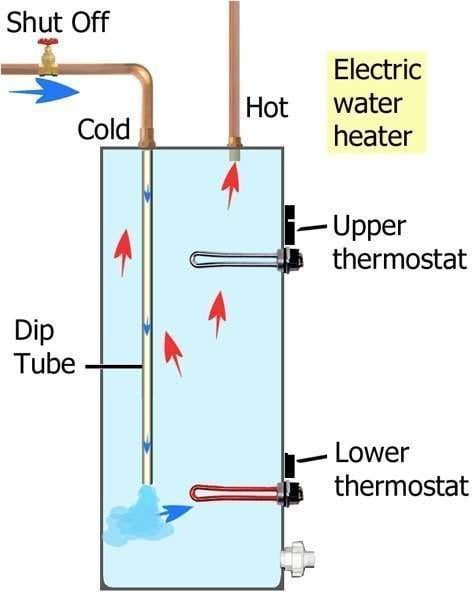
Image Source: georgebrazilplumbingelectrical.com
Common Reasons for a Tripping Breaker
A circuit breaker’s job is to protect your home’s wiring from damage due to too much electricity flowing through it. When it trips, it means it has detected an unsafe condition. With a water heater, several factors can trigger this protective action.
1. Overloaded Circuit
One of the most frequent reasons for a circuit breaker to trip is an overloaded circuit. This happens when too many appliances or devices are drawing power from the same circuit. Water heaters, especially electric ones, are significant power consumers. If other high-demand appliances, like a toaster, microwave, or even another heating device, are running on the same circuit as your water heater, it can easily exceed the breaker’s capacity.
- How it happens: Imagine a highway. A circuit breaker is like the speed limit. If too many cars (electricity) try to go too fast on that highway, it gets congested and can cause problems.
- Identifying an overload: Check what else is plugged into the same circuit. If you notice the breaker trips only when other appliances are running simultaneously, an overload is likely.
- The fix: The simplest solution is to redistribute power usage. Move high-draw appliances to different circuits. If this is a recurring issue, you might need an electrician to install a dedicated circuit for your water heater, which is often the best practice anyway.
2. Faulty Heating Element
Electric water heaters have one or two heating elements that heat the water. These elements are essentially large resistors. Over time, they can degrade, corrode, or develop internal shorts.
- How it happens: When a heating element fails, it can draw more electricity than it should, or it might create a short circuit. This surge in current triggers the breaker.
- Signs of a bad element:
- Water is not as hot as it used to be, or it’s not heating at all.
- You might hear unusual noises from the water heater tank.
- The breaker trips almost immediately after resetting.
- The fix: Replacing a faulty heating element is a task that requires caution due to the presence of water and electricity. It’s generally recommended to have a qualified electrician or plumber handle this. They will need to drain the tank, remove the old element, and install a new one.
3. Short Circuit
A short circuit occurs when an electrical current finds an unintended path, bypassing the normal flow. This typically happens due to damaged wiring or faulty components.
- How it happens: Wires can become frayed or damaged by age, pests, or improper installation. If a live wire touches a neutral wire or a ground wire, it creates a very low-resistance path for electricity, causing a massive surge of current that instantly trips the breaker to prevent a fire.
- Signs of a short circuit:
- The breaker trips immediately when you try to turn on the water heater or even just reset it.
- You might smell burning plastic or see scorch marks near the water heater or its wiring.
- The water heater might be making unusual buzzing or arcing sounds.
- The fix: A short circuit is a serious safety hazard. Do not attempt to reset the breaker repeatedly. You need to call a qualified electrician immediately. They will inspect the wiring, connections, and the water heater itself to locate and repair the source of the short.
4. Wiring Issues
Faulty or old wiring is a common cause of tripping breakers, not just for water heaters but for any appliance.
- How it happens: Over time, the insulation on electrical wires can become brittle and crack, exposing the conductive metal. Loose connections at the breaker panel, junction boxes, or the water heater itself can also create resistance and heat, leading to a tripping breaker or even a fire hazard.
- Signs of wiring problems:
- Flickering lights on the same circuit.
- Warm or hot outlets or switches.
- The breaker trips intermittently without a clear overload.
- The fix: Inspecting and repairing wiring issues requires expertise. An electrician will check the wire gauge, insulation integrity, and connection tightness throughout the circuit. They may recommend upgrading old wiring or replacing damaged sections.
5. Thermostat Failure
The thermostat in your water heater controls the water temperature. If it malfunctions, it can cause a variety of problems, including tripping the breaker.
- How it happens: A thermostat might fail in a way that causes it to continuously call for heat, even when the water is already hot. This constant demand can lead to an excessive current draw and trip the breaker. Alternatively, a short within the thermostat itself can cause a short circuit.
- Signs of thermostat failure:
- Water is too hot or not hot enough.
- The water heater runs constantly.
- The breaker trips without other apparent causes.
- The fix: Replacing a thermostat is a job for a qualified technician. They will test the existing thermostat and replace it if it’s found to be faulty.
6. GFCI Tripping
If your water heater is connected to a GFCI (Ground Fault Circuit Interrupter) outlet or circuit, it’s designed to protect against electric shock. GFCI outlets are more sensitive than standard breakers and can trip for reasons that don’t necessarily indicate a major fault but rather a potential ground fault.
- How it happens: A GFCI trips when it detects an imbalance in the electrical current, meaning some current is flowing somewhere it shouldn’t be – potentially through water or a person. This could be due to a small leak in the water heater, moisture around electrical components, or a fault within the heating element or wiring that is causing a slight current leak to ground.
- Signs of GFCI tripping:
- The GFCI outlet itself (or the associated breaker if it’s a GFCI breaker) trips.
- The tripping may occur even with minimal load on the circuit.
- There might be no other obvious signs of an overload or short circuit.
- The fix: If your GFCI is tripping, first check for any obvious signs of moisture or damage. Try resetting the GFCI. If it trips again immediately, it suggests a persistent ground fault. You’ll need to have an electrician inspect the water heater and the GFCI circuit for the source of the leak or fault. Sometimes, a faulty GFCI outlet itself can also cause nuisance tripping.
7. Undersized Breaker
This is less common if the water heater was installed correctly by a professional, but it’s possible. An undersized breaker is a breaker that has a lower amperage rating than the water heater’s electrical requirements.
- How it happens: If the circuit breaker installed for the water heater has an amperage rating that is too low for the water heater’s power draw, the breaker will trip frequently, even under normal operation. It’s essentially like trying to put too large a plug into a too-small socket.
- Signs of an undersized breaker:
- The breaker trips frequently, but the water heater seems to be functioning correctly otherwise.
- No other appliances are on the circuit, and there are no obvious faults.
- The breaker feels unusually hot to the touch, even when not tripped (this is a sign of strain).
- The fix: This requires an electrician to verify the correct breaker size for your water heater’s specifications and replace the existing breaker with one that has the appropriate amperage rating. Never replace a breaker with one of a higher amperage than specified, as this can lead to dangerous overheating of wires and a fire risk.
8. Water Heater Malfunction (Other Issues)
Beyond the specific components, a general water heater malfunction can also cause the breaker to trip. This can include issues with internal wiring, control boards (in more modern units), or even mineral buildup.
- How it happens: Internal shorts in control boards, loose connections within the unit, or excessive sediment buildup can create electrical resistance or unintended current paths, leading to the breaker tripping.
- Signs of general malfunction:
- Inconsistent heating.
- Leaks from the tank.
- Unusual noises.
- Breaker tripping without a clear cause identified by the above points.
- The fix: This often requires a professional diagnosis. Depending on the age and type of water heater, it might be more cost-effective to repair or replace the unit.
Diagnosing the Problem: A Step-by-Step Approach
When your water heater breaker trips, it’s important to approach the diagnosis methodically.
Step 1: Safety First!
Before doing any inspection, ensure the power to the water heater is turned OFF at the breaker panel. If you’re unsure which breaker controls the water heater, turn off the main breaker for the entire house.
Step 2: Check the Breaker Panel
* Locate the tripped breaker. It will usually be in the “off” position or somewhere between “on” and “off.”
* Attempt to reset it by pushing it firmly to the “off” position and then back to the “on” position.
* If it stays on, monitor the situation. If it trips again quickly, proceed to the next steps. If it trips immediately upon resetting, this strongly suggests a short circuit or a major fault.
Step 3: Examine the Water Heater and Its Wiring
* Visually inspect the area around the water heater. Look for any signs of damage, burnt wires, scorch marks, or loose connections.
* Check the junction box where the power supply connects to the water heater. Ensure the cover is secure and there are no exposed wires.
* If you have an electric water heater, access the panels covering the heating elements and thermostat. (Remember, power must be OFF). Look for any obvious signs of damage to the wires or elements.
Step 4: Consider Other Appliances on the Circuit
* As mentioned earlier, check if other high-demand appliances were running when the breaker tripped. Try running the water heater alone on the circuit to see if the breaker trips.
Step 5: Test the Heating Elements (Requires Caution and Tools)
For electric water heaters, you can test the heating elements with a multimeter to check for continuity and shorts.
| Component | Test Procedure | Expected Result (Good Element) | Expected Result (Faulty Element) |
|---|---|---|---|
| Heating Element | Disconnect wires from the element terminals. Set multimeter to Ohms (Ω). Touch probes to each terminal. Then, touch one probe to a terminal and the other to the element’s metal casing. | ~10-30 Ω resistance (varies) | Infinite resistance (OL): Open circuit (element is broken). Zero resistance (0 Ω): Short circuit. Continuity to casing: Short to ground. Very low resistance: May indicate imminent failure. |
| Thermostat | Disconnect wires. Set multimeter to Ohms (Ω). Test continuity across the thermostat’s contacts. For thermostats with a high-limit switch, test continuity across those contacts as well. | Continuity when “on” | Infinite resistance (OL) when it should be closed: Open circuit. Infinite resistance even when set to heat: Thermostat is stuck open. Continuity to casing: Short to ground. |
Important Note: Testing electrical components requires comfort with electrical testing and a good understanding of how to use a multimeter safely. If you are not experienced, it’s best to leave this to a professional.
When to Call a Professional Electrician
While some basic troubleshooting can be done by a homeowner, there are situations where calling a professional electrician is not just recommended, but essential for your safety and the integrity of your home’s electrical system.
- You are uncomfortable or unsure about any step. Electrical work can be dangerous. If at any point you feel out of your depth, stop and call an expert.
- The breaker trips immediately upon reset. This is a strong indicator of a serious short circuit or electrical fault.
- You see signs of burning, melting, or arcing. These are critical safety warnings.
- You suspect faulty wiring. This requires specialized knowledge and tools to diagnose and repair safely.
- You need to replace a breaker. Incorrectly sizing or installing a breaker can create a fire hazard.
- Testing components requires tools you don’t have or knowledge you lack. Multimeter testing of heating elements and thermostats requires careful execution.
- You have a GFCI tripping repeatedly. This suggests a ground fault that needs professional investigation.
An experienced electrician can quickly and safely identify the root cause of the tripping breaker, whether it’s an overloaded circuit, a faulty heating element, wiring issues, thermostat failure, a short circuit, water heater malfunction, or an undersized breaker. They have the diagnostic tools and expertise to resolve the issue without creating new problems.
Preventing Future Tripping
Once the problem is resolved, take steps to prevent it from happening again:
- Load Balancing: Ensure your water heater has a dedicated circuit. If not, avoid running other high-demand appliances simultaneously on the same circuit.
- Regular Maintenance: Have your water heater inspected annually by a qualified technician. They can check for wear and tear on heating elements, thermostats, and wiring.
- Use a Surge Protector: While not directly preventing breaker trips from internal faults, a good surge protector can protect the water heater’s electronics from power surges.
- Proper Installation: Ensure any new water heater or electrical work is performed by a licensed electrician.
Frequently Asked Questions (FAQ)
Q1: Can I just replace the circuit breaker with a larger one if it keeps tripping?
A1: Absolutely not. This is extremely dangerous. A larger breaker will allow more current to flow than the wiring is designed to handle, which can cause wires to overheat, melt, and start a fire. Always use the breaker size specified by the manufacturer.
Q2: My water heater is gas, but the breaker still trips. Why?
A2: Gas water heaters still use electricity for their ignition system, safety controls, and sometimes a small pump or fan. These components can also develop faults, draw too much current, or cause short circuits, leading to the breaker tripping. The principles discussed for electric heaters regarding wiring faults and component failures still apply.
Q3: How often should I check my water heater’s heating elements?
A3: There’s no strict schedule, but a visual inspection when you’re doing general maintenance can be helpful. Professional inspections are typically recommended every 1-2 years. You might consider testing them if you notice a decrease in hot water performance.
Q4: Is it normal for the breaker to trip if the water heater is leaking?
A4: If a water leak comes into contact with electrical components, it can cause a short circuit or a ground fault, leading to the breaker tripping. A leak is a separate problem that also needs immediate attention. Turn off the power and water supply to the unit and call a professional.
Q5: My water heater breaker trips, but the water is still hot. What does that mean?
A5: This is less common but can occur if the tripping is due to a brief surge or a fault that self-corrects momentarily. It could indicate intermittent wiring issues, a faulty thermostat that’s not consistently failing, or a faulty breaker itself. It still warrants a professional inspection, as the underlying issue could worsen.
Dealing with a tripping circuit breaker for your hot water heater can be a puzzle, but by systematically investigating the common causes—from an overloaded circuit to a faulty heating element, wiring issues, thermostat failure, a short circuit, or general water heater malfunction—you can pinpoint the problem. Remember that safety is paramount, and when in doubt, always call a qualified electrician. They are equipped to handle excessive current draw, potential GFCI tripping, and ensure your home’s electrical system is safe and sound.